
Top 5 Flap Procedures in 2024: Essential Guide
Introduction
If you’re seeking information on flap procedure, know that this surgical technique involves transferring living tissue from one part of the body to another. This method helps reconstruct areas damaged by trauma, disease, or congenital issues, ensuring the transferred tissue integrates well due to its own blood supply.
Flap procedures are a cornerstone of reconstructive surgery, providing vital options for restoring function and appearance with natural-looking results. These procedures are crucial, particularly in complex cases where simple sutures or skin grafts fall short, such as in extensive wound coverage or intricate areas like joints, neck, or face.
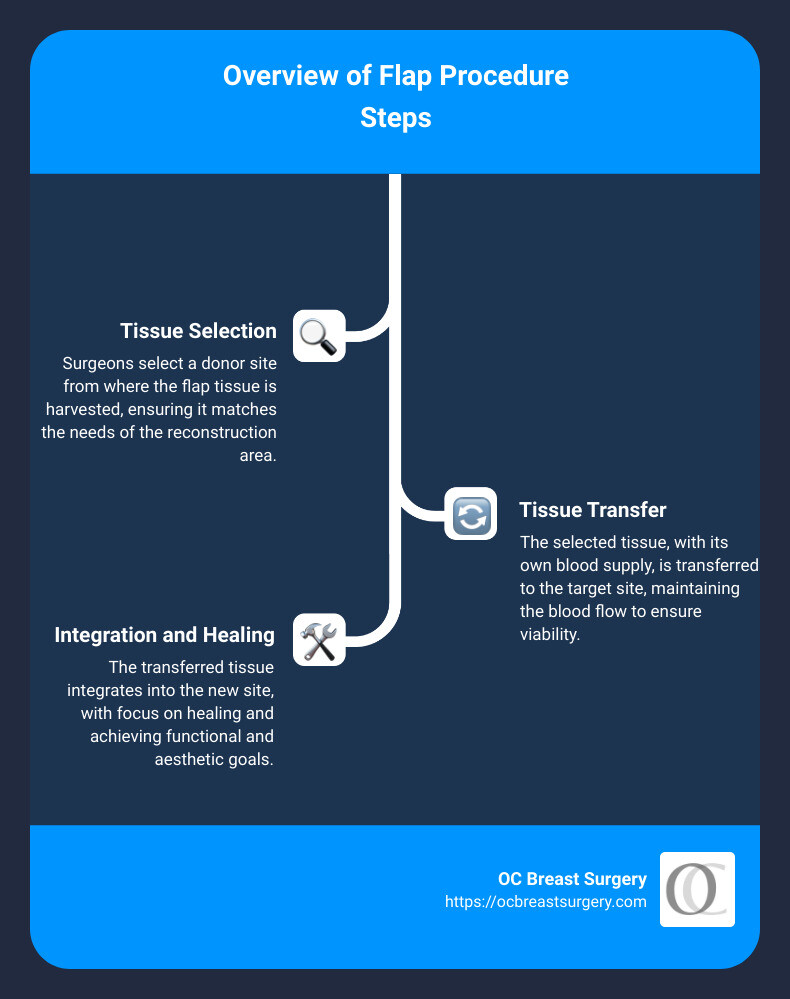
Understanding the different types of flap procedures and their applications can empower patients, particularly women in Newport Beach, California, who have experienced complications from previous surgeries. This introduction aims to outline the importance and versatility of flap procedures in reconstructive surgery, setting the stage for deeper exploration into specific types of flaps, key considerations, and advanced surgical techniques available at OC Breast Surgery.
Types of Flap Procedures
Flap procedures are a cornerstone of reconstructive surgery, offering solutions for restoring form and function after trauma, disease, or congenital issues. Each type of flap is uniquely suited to specific medical needs, based on factors like the location of the defect and the type of tissue required. Here, we delve into the primary types of flaps used in reconstructive surgery.
Local Flap
A local flap is often the first choice for covering wounds that are close to the donor site. The tissue remains connected at one end, maintaining its original blood supply. This method is advantageous for its simplicity and effectiveness in areas with ample tissue. Local flaps are commonly used for facial reconstruction, providing excellent color and texture match, which is crucial for aesthetic outcomes.

Regional Flap
Regional flaps utilize tissue from an adjacent area, connected by a specific blood vessel. This type is beneficial when the wound requires a larger or more specialized tissue segment that local flaps cannot provide. For instance, a regional flap might be used to reconstruct part of the head or neck after cancer surgery, where tissue characteristics like thickness and durability are critical.
Bone/Soft Tissue Flap
The bone/soft tissue flap is essential when reconstructing areas requiring both skeletal support and soft tissue coverage, such as in mandibular (jaw) reconstructions. These flaps are harvested from parts of the body where bone and associated soft tissue can be transferred together, maintaining viability through an intact blood supply.
Musculocutaneous Flap
A musculocutaneous flap includes both muscle and skin, providing bulk and a robust blood supply, which is crucial for healing. This type of flap is particularly useful in breast reconstruction post-mastectomy, as it helps to create a natural breast shape while ensuring sufficient blood flow for healing.
Microvascular Free Flap
The microvascular free flap represents a more complex and advanced option where tissue, including skin, muscle, or bone, is completely detached from its original site and reattached at a new location using microsurgery. This technique is vital for reconstructing areas where local or regional tissues are inadequate or unavailable. It’s often used in extensive reconstructions, such as after trauma or cancer resections.
These flap procedures are meticulously planned to match the defect in terms of tissue type, size, and requirements for blood supply, ensuring the best possible outcome for functionality and appearance. At OC Breast Surgery, our specialists are skilled in these advanced techniques, offering hope and restoration to those who have undergone significant surgical treatments or injuries.
Key Considerations Before Flap Surgery
Before undergoing flap procedure surgery, several critical factors must be considered to ensure the safety and success of the operation. Here, we outline the key considerations that surgeons and patients need to discuss.
Patient Eligibility
Not every patient is a candidate for flap surgery. Eligibility is determined based on overall health, the specific area needing reconstruction, and the patient’s medical history. Factors such as blood flow and the presence of other health conditions like diabetes or vascular disease can influence outcomes. It’s essential that patients undergo a thorough preoperative evaluation to assess their suitability for this type of surgery.
Tissue Source
Choosing the right tissue source is crucial for the success of the flap procedure. The tissue selected must have a robust blood supply and be sufficient to cover the defect adequately. Surgeons at OC Breast Surgery consider the donor site’s location, the type of tissue available, and the potential impact on the donor site’s function and appearance. For instance, when reconstructing a breast, a DIEP flap might be preferred as it uses abdominal skin and fat, providing natural results with the added benefit of contouring the abdomen.
Blood Supply
Adequate blood supply is the lifeline of any flap. The chosen flap must have a reliable blood supply to survive in its new location. This is where the distinction between local, regional, and free flaps comes into play, each with varying degrees of complexity regarding vascular connections. Surgeons utilize detailed imaging techniques to map out the blood vessels and plan the surgery to minimize risks of flap failure.
Surgical Goals
Understanding and clearly defining the surgical goals with the patient is paramount. These goals should address both functional and aesthetic outcomes. Whether the surgery aims to restore mobility, protect vital structures, or improve appearance, each objective should guide the choice of flap type and surgical technique. At OC Breast Surgery, we ensure that our patients are well-informed about what the surgery entails and the expected outcomes.
By carefully considering these aspects, surgeons can plan the most effective flap procedure, tailored to meet the individual needs of each patient. This meticulous preparation leads directly into the diverse applications of flap procedures in reconstructive surgery, showcasing their critical role in enhancing patient lives post-trauma or disease.
Common Applications of Flap Procedures
Flap procedures play a pivotal role in reconstructive surgery, addressing a wide range of medical needs. Here, we delve into some common applications such as breast reconstruction, facial reconstruction, extremity wounds, and pressure wound reconstruction.
Breast Reconstruction
Breast reconstruction is a frequent application of flap procedures, particularly following mastectomy due to breast cancer. Surgeons often use microvascular free flaps like the DIEP flap, which involves taking skin and fat from the lower abdomen but leaves the muscle intact. This technique helps in creating a breast that looks and feels natural, while also minimizing recovery time and preserving abdominal strength.
Facial Reconstruction
Facial reconstruction employs flap procedures to repair defects caused by injury, surgery, or congenital issues. An example is the use of a free flap for rebuilding parts of the face, such as the nose or lips. Surgeons may choose a flap from a region that closely matches the color and texture of facial skin, like the forehead flap, to achieve a more discreet and natural-looking result.
Extremity Wounds
Flap procedures are crucial in treating complex wounds on the arms and legs that might occur due to severe trauma or after surgical removal of tumors. Local flaps are often used here to cover the exposed tissues and provide a robust blood supply that encourages healing. The choice of flap depends on the size and location of the wound, ensuring that the repair blends seamlessly with the surrounding tissue.
Pressure Wound Reconstruction
For patients suffering from bedsores or pressure ulcers, flap surgery can be a lifesaver. These wounds are common among those who are bedridden or use wheelchairs. Flap procedures, such as the musculocutaneous flap, provide not just coverage but also improve blood flow to the affected area, significantly enhancing healing and reducing the risk of infection.
By addressing these diverse needs, flap procedures underscore their versatility and effectiveness in reconstructive surgery. At OC Breast Surgery, we harness this potential to restore not just form but also function, helping our patients regain their confidence and quality of life after undergoing significant medical challenges. The advancements in flap surgery techniques continue to expand the possibilities for successful outcomes.
Advancements in Flap Surgery Techniques
Flap surgery has evolved significantly over the years, with each new technique offering more refined results and better outcomes for patients. Here, we explore some of the most notable advancements in flap surgery techniques.
Microsurgery
Microsurgery is a technique that involves the use of a microscope to perform intricate surgeries on tiny structures, such as blood vessels and nerves. This advancement has been a game-changer in flap procedures, allowing surgeons to perform precise anastomoses (connections) of small blood vessels and nerves. This precision significantly improves the survival rate of free flaps and enhances functional outcomes in reconstructive surgery.
Perforator Flaps
Perforator flaps represent a major advancement in the conservation of muscle and donor site morbidity. These flaps use skin and fat that are supplied by specific blood vessels (perforators). The key advantage is that they do not require the sacrifice of underlying muscles, leading to less postoperative pain and faster recovery. An example includes the deep inferior epigastric perforator (DIEP) flap, which is primarily used in breast reconstruction.
DIEP Flap
The DIEP flap uses blood vessels called deep inferior epigastric perforators. This type of flap is particularly popular in breast reconstruction because it involves taking skin and fat from the lower abdomen—similar to a tummy tuck—and relocating it to rebuild the breast. The absence of muscle transfer reduces postoperative pain and preserves abdominal strength.
TUG Flap
The transverse upper gracilis (TUG) flap is another innovative technique, particularly useful for women who do not have enough abdominal tissue for other types of breast reconstruction. It involves taking tissue from the upper thigh, which includes skin, fat, and a small portion of the gracilis muscle, to create a new breast. This flap is often chosen for its scar placement in the inner thigh, which can be easily concealed.
SIEA Flap
The superficial inferior epigastric artery (SIEA) flap is similar to the DIEP flap but uses a different set of blood vessels. These vessels are located just below the skin in the lower abdomen, making the procedure less invasive as it does not involve going as deep into the abdominal tissue. However, not all patients have suitable SIEA vessels, which makes preoperative imaging crucial to planning the surgery.
These advancements in flap surgery techniques not only provide more options for surgeons but also cater to the specific needs and conditions of patients, enhancing both aesthetic and functional outcomes. At OC Breast Surgery, we are committed to utilizing these advanced techniques to deliver the best possible results for our patients, helping them move forward with confidence and improved quality of life. As technology and techniques continue to evolve, the future of flap surgery looks even more promising, with the potential to offer even more precise and tailored reconstructive options.
Frequently Asked Questions about Flap Procedures
What is the difference between a flap and a graft?
A flap and a graft are both used in reconstructive surgery, but they differ mainly in how they receive their blood supply. A flap includes tissue that is moved from one part of the body to another with its own blood supply intact. This allows the transferred tissue to survive and integrate better at the new site.
On the other hand, a graft involves transferring tissue without its own blood supply. The survival of a graft depends entirely on the growth of new blood vessels from the recipient site. Because of this, grafts may have a higher failure rate and might not integrate as seamlessly as flaps.
How do surgeons choose the right type of flap?
Choosing the right type of flap procedure depends on several factors:
– Location and size of the defect: Different flaps are suited for different areas and sizes of wounds.
– Type of tissue needed: Depending on whether bone, muscle, skin, or a combination is required.
– Patient’s health and medical history: Certain conditions might influence the choice of flap, considering factors like blood flow and overall health.
Surgeons use their expertise to match the most appropriate flap type to each individual case, ensuring the best possible outcomes in terms of functionality and appearance.
What are the risks associated with flap surgery?
Like any surgical procedure, flap surgery comes with potential risks. These can include:
– Complications related to anesthesia
– Infection at the surgery site
– Blood clotting
– Partial or complete loss of the flap viability
– Poor healing, leading to scarring or the need for additional surgeries
It is crucial to discuss these risks with your surgeon at OC Breast Surgery to understand how they apply to your specific situation and how they can be managed.
As we continue to explore the advancements in flap surgery and the specific procedures offered at OC Breast Surgery, it’s clear that understanding these foundational elements is essential for anyone considering this type of reconstructive surgery. Moving forward, we will delve into the recovery expectations and postoperative care to ensure a comprehensive understanding of what to expect after undergoing a flap procedure.
Conclusion
Recovery Expectations
After undergoing a flap procedure, it’s crucial to set realistic expectations for recovery. Typically, the initial healing phase can take several weeks, during which you may experience discomfort, swelling, and bruising. Full recovery, where the flap fully integrates and heals, can take up to several months depending on the complexity of the surgery and the individual’s health. It’s important to follow all postoperative instructions to ensure the best possible outcome.
Postoperative Care
Effective postoperative care is key to a successful recovery. Here are essential steps we recommend:
- Follow your surgeon’s instructions carefully, including guidelines on wound care and activity restrictions.
- Attend all follow-up appointments so that your surgeon can monitor your healing and address any concerns.
- Manage pain according to your doctor’s advice, using prescribed medications as directed.
- Limit physical activity as recommended to avoid stress on the surgical site and promote healing.
- Watch for signs of infection such as increased redness, swelling, or drainage from the incision site. Contact your healthcare provider immediately if you notice any of these symptoms.
OC Breast Surgery
At OC Breast Surgery, we are committed to providing top-tier care and support throughout your reconstructive journey. Our team of board-certified surgeons specializes in advanced flap procedures and is dedicated to achieving the best outcomes while ensuring your comfort and safety.
Choosing OC Breast Surgery means partnering with experts who understand the intricacies of breast reconstruction and are equipped with the skills and knowledge to handle complex cases. We ensure that every patient receives personalized care tailored to their specific needs and goals.
Why Choose Us?
- Expertise and Specialization: Our surgeons are highly trained in the latest flap surgery techniques.
- Comprehensive Care: From initial consultation through recovery, we provide continuous support and guidance.
- State-of-the-Art Facilities: Our facilities are equipped with advanced technology to ensure high-quality care.
If you’re considering a flap procedure for breast reconstruction, contact us today to learn more about your options and how we can help you on your path to recovery. Our team is here to support you every step of the way, ensuring that you feel informed, comfortable, and confident in your care choices.