
Gynecomastia Surgery: Ultimate 2025 Confident Guide
Understanding Male Breast Reduction: Your Path to Confidence
Gynecomastia surgery is a procedure that removes excess breast tissue in men, creating a flatter, more masculine chest contour. This common condition affects up to 70% of men at some point in their lives, causing embarrassment and limiting activities like swimming or going shirtless.
Quick Facts About Gynecomastia Surgery:
- What it treats: Enlarged male breast tissue (gynecomastia) and excess chest fat
- Common techniques: Liposuction, gland removal, or both combined
- Recovery time: 1-2 weeks for work, 4-6 weeks for full activity
- Results: Permanent when performed correctly
- Cost range: $5,000-$12,000 in most areas
The emotional impact of gynecomastia goes far beyond physical appearance. Many men avoid situations where they might remove their shirt – from beach trips to locker rooms. They choose baggy clothes to hide their chest and feel self-conscious about their masculine appearance.
The good news? Modern surgical techniques can permanently correct this condition with minimal scarring and excellent results.
About 20,000 men undergo this procedure each year, making it one of the top five cosmetic surgeries for men. The surgery addresses both glandular breast tissue and excess fat, creating natural-looking results that boost confidence and quality of life.
As Dr. Mark Anton, I’ve spent over three decades specializing in breast surgery, including gynecomastia surgery for men seeking to restore their masculine chest contour. My experience in breast reconstruction and reduction techniques allows me to deliver natural-looking results that help patients regain their confidence.
Gynecomastia surgery further reading:
What is Gynecomastia? Causes, Symptoms, and Diagnosis

Gynecomastia is the medical term for enlarged male breast tissue – and if you’re reading this, you’re definitely not alone. This condition affects up to 70% of men at some point in their lives, making it far more common than most people realize.
The root cause comes down to a hormone imbalance between estrogen and testosterone. While we think of estrogen as a “female hormone,” men naturally produce small amounts too. When estrogen levels increase or testosterone decreases, breast tissue can grow and become enlarged.
Hormonal changes during puberty are the most common trigger, affecting 50-60% of adolescent boys. The good news is that this usually resolves naturally within 6 months to 2 years. However, when it persists into adulthood, it rarely goes away on its own.
Aging is another major factor. After age 50, testosterone levels naturally decline while estrogen can remain stable or even increase. This shift can trigger breast tissue growth later in life.
Heredity plays a role too – if your father or brothers have dealt with gynecomastia, you’re more likely to develop it. Obesity compounds the problem because fat tissue can actually convert testosterone to estrogen, creating a cycle that worsens the condition.
Certain medications can trigger gynecomastia, including heart medications, steroids, antidepressants, and prostate medications. Underlying health conditions like liver disease, kidney failure, and hyperthyroidism can also disrupt hormone balance.
According to the Mayo Clinic, substance use including alcohol, marijuana, and anabolic steroids can also contribute to the development of gynecomastia.
Here’s what’s crucial to understand: there’s a big difference between true gynecomastia (actual glandular tissue growth) and pseudogynecomastia (excess fatty tissue). True gynecomastia involves firm, rubbery tissue directly behind the nipple. Pseudogynecomastia is primarily soft fatty tissue that sometimes responds to diet and exercise – though often gynecomastia surgery is needed for complete correction.
Symptoms you might notice include swollen breast glands that feel firm to the touch, tenderness or pain in the chest area, and unilateral or bilateral presentation – meaning it can affect one or both sides. The severity varies significantly between individuals.
Understanding Puffy Nipples
One of the most frustrating presentations we see is what patients call “puffy nipples.” This creates a dome-shaped tissue appearance where the areola protrudes outward, even when the rest of the chest looks normal.
This puffy areola occurs when excess glandular tissue sits directly behind the nipple. It’s an incredibly common complaint among men seeking gynecomastia surgery because it can make the chest appear feminine or underdeveloped, especially when wearing fitted clothing.
The condition significantly impacts confidence – many men avoid situations where they might remove their shirt or feel self-conscious in tight-fitting clothes. Fortunately, surgical correction can address this specific concern with excellent results.
Important medical note: While gynecomastia is usually benign, have proper medical diagnosis to rule out male breast cancer. Any hard, fixed masses, nipple discharge, or enlarged lymph nodes require immediate medical evaluation. Male breast cancer is rare but can occur, particularly in men with certain genetic conditions.
At OC Breast Surgery in Newport Beach, CA, we always ensure a thorough evaluation to distinguish between different types of breast enlargement and rule out any serious conditions before recommending treatment.
The Solution: Candidacy and Gynecomastia Surgery Techniques
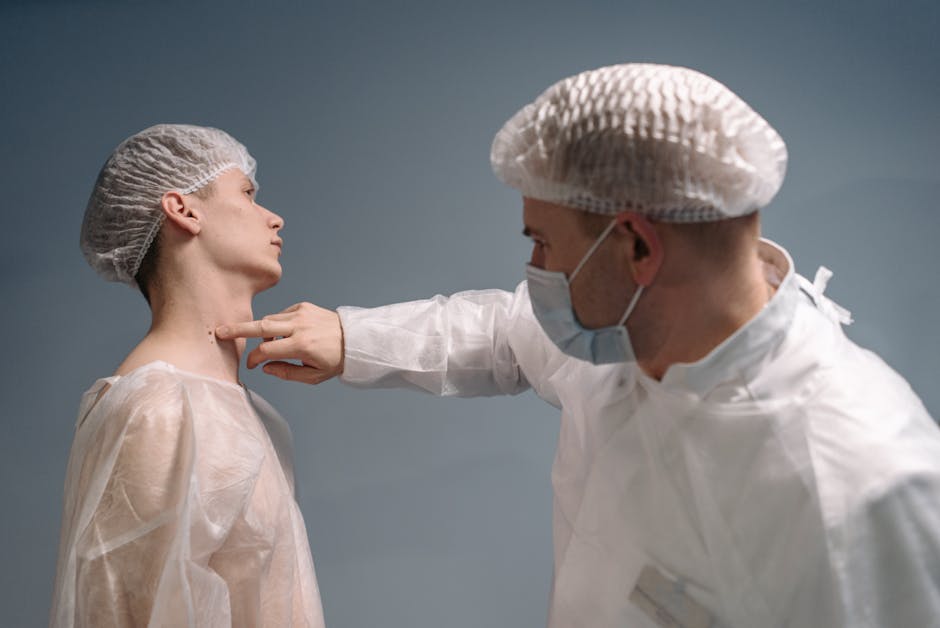
Here’s the truth about gynecomastia: not every man needs surgery. If you’re a teenager dealing with enlarged breast tissue, there’s a good chance it will resolve on its own as your hormones settle down. But when gynecomastia sticks around into adulthood or makes you avoid the beach, the gym locker room, or intimate moments, gynecomastia surgery becomes a life-changing solution.
The best candidates for surgery are physically healthy men who have reached a stable weight. If you’re still losing or gaining significant amounts of weight, it’s better to wait until your body stabilizes. Non-smokers heal much better than smokers, so if you light up, you’ll need to quit before surgery for the best results.
What matters most is how the condition affects your life. Are you the guy who never takes his shirt off at the pool? Do you wear baggy clothes to hide your chest? Have you tried diet and exercise but still can’t achieve the flat, masculine chest you want? These are the men who benefit most from surgical correction.
Realistic expectations are crucial. A skilled surgeon can create a natural-looking, masculine chest, but perfection doesn’t exist in any surgery. The goal is significant improvement that boosts your confidence and quality of life.
Choosing the right surgeon makes all the difference. You want a board-certified plastic surgeon with specific experience in male breast reduction. At OC Breast Surgery in Newport Beach, CA, we’ve spent years perfecting techniques that create natural-looking results while minimizing scarring.
The surgical approach depends entirely on what’s causing your enlarged chest. Some men have mostly fatty tissue, others have firm glandular tissue, and many have both. Let me walk you through the three main techniques we use.
Liposuction Technique
When your gynecomastia is primarily excess fatty tissue, liposuction alone might be all you need. This is the least invasive approach, and recovery is typically faster and easier.
We make small incisions – usually just 2-3 millimeters – in inconspicuous locations. Through these tiny openings, we insert a thin cannula (basically a hollow tube) that breaks up and suctions out the excess fat. The art is in the contouring – sculpting your chest to create natural masculine curves.
This technique works best if you have good skin elasticity and your enlarged chest is mainly soft, fatty tissue rather than firm glandular tissue. The procedure can be done under local anesthesia with sedation, though some men prefer general anesthesia for comfort.
Excision (Gland Removal) Technique
When you have firm, dense glandular tissue behind your nipples, liposuction alone won’t cut it – literally. That rubbery tissue needs to be surgically removed through direct excision.
We typically place incisions around the periareolar area (the border where your areola meets your chest skin). This placement is strategic – scars heal well here and blend into the natural color transition, making them much less noticeable.
During the procedure, we carefully remove the excess glandular tissue while preserving the natural shape of your chest. If your nipples have shifted position due to the enlarged tissue, we can reposition them for a more natural look. In cases where the condition has stretched your areolas, we can reduce their size as well.
This technique is essential for men with true gynecomastia – that firm tissue that sits directly behind the nipple and won’t budge no matter how much you diet or exercise.
Combination Technique for Male Breast Reduction
Most men benefit from a combination approach that addresses both fatty and glandular tissue. This is actually our most common technique because gynecomastia rarely involves just one type of tissue.
We combine liposuction and excision in the same procedure, giving you comprehensive chest reshaping. The liposuction removes excess fatty tissue and helps with overall contouring, while the excision takes care of that stubborn glandular tissue that’s been bothering you for years.
This approach allows us to achieve that flat, masculine contour that most men are looking for. By addressing all components of your gynecomastia in one surgery, we can create smooth, natural-looking results that dramatically improve your chest appearance.
The combination technique does require more surgical skill and experience, but the results are typically superior to using just one method alone. It’s why we’ve made it our specialty at OC Breast Surgery.
For more detailed information about our specific approach and to see before-and-after photos, visit our male breast reduction page. You can also find qualified surgeons in your area through the American Society of Plastic Surgeons directory.
The Patient Journey: Preparation, Recovery, and Results

Your journey to a more confident chest begins well before surgery day. At OC Breast Surgery in Newport Beach, CA, we believe that thorough preparation leads to the best possible outcomes and smoothest recovery experience.
Getting ready for your procedure involves several important steps that help ensure your safety and optimal results. During your comprehensive consultation, we’ll conduct a thorough medical evaluation and review your health history. You may need basic laboratory tests, and we’ll discuss any medications you’re currently taking—especially blood thinners that might need to be adjusted.
If you smoke, now’s the time to quit. We recommend stopping at least six weeks before surgery to promote proper healing. Don’t worry—we’ll support you through this process and can recommend resources to help.
Planning ahead makes recovery much easier. Arrange for someone to drive you home after surgery and stay with you for the first night. Stock up on comfortable, button-up shirts since pulling clothing over your head will be uncomfortable initially. Your compression garment will be provided, but having loose, comfortable clothing ready helps you focus on healing.
The day of your gynecomastia surgery typically unfolds smoothly as an outpatient procedure. Depending on your specific needs, you’ll receive either general anesthesia or local anesthesia with sedation. The surgery itself usually takes one to three hours, depending on the complexity of your case.
After surgery, you’ll spend time in our recovery area where our team monitors your initial healing. Most patients go home the same day with detailed care instructions and all necessary supplies.
The Recovery Process after gynecomastia surgery
Recovery from gynecomastia surgery is generally straightforward, but every patient heals at their own pace. Understanding what to expect helps you prepare mentally and physically for the journey ahead.
Those first few days can feel a bit challenging, but they pass quickly. Expect some soreness, swelling, and mild bruising—this is completely normal and shows your body is healing. Your prescribed pain medication will keep you comfortable, and most patients are pleasantly surprised that discomfort is quite manageable.
Your compression garment becomes your best friend during this time. It might feel snug initially, but it’s working hard to support your healing tissues and reduce swelling. You’ll wear it continuously for the first week, removing it only for gentle showers.
By the end of the first week, most of our patients feel ready to return to desk work. You’ll still be wearing your compression garment and avoiding heavy lifting, but you’ll notice significant improvement in how you feel. This is when many patients start to see glimpses of their new chest contour, even with residual swelling.
Weeks two through six mark the exciting phase when you can gradually return to normal activities. Light exercise like walking is usually fine at two weeks, but we’ll guide you on when it’s safe to return to your regular workout routine. Your compression garment continues working its magic for four to six weeks total.
The long-term picture reveals the true change. Final results become visible at three to six months as all swelling resolves. Your scars will continue to fade and mature over the following year, often becoming barely noticeable. Most importantly, the boost in confidence and quality of life begins immediately and continues growing.
For additional support during your recovery journey, we offer gynecomastia supportive therapy options to help optimize your healing process.
Benefits, Risks, and Costs
The benefits of gynecomastia surgery extend far beyond physical appearance. Our patients consistently report dramatic improvements in self-confidence and body image. Simple activities like buying fitted shirts, going to the beach, or changing in locker rooms become enjoyable rather than anxiety-provoking.
The physical comfort improves significantly too. Many men don’t realize how much discomfort they’ve been experiencing from enlarged breast tissue until it’s gone. The freedom to participate in sports, swimming, and other activities without self-consciousness is truly life-changing.
Most importantly, the results are permanent when you maintain a stable weight. Unlike non-surgical treatments that require ongoing maintenance, gynecomastia surgery provides a definitive solution.
Understanding the risks helps you make an informed decision. While complications are uncommon, they can include bleeding, infection, asymmetry, visible scarring, temporary numbness, or contour irregularities. Very rarely, patients may need revision surgery to achieve their desired results.
Anesthesia carries its own small risks, and some patients experience temporary changes in nipple sensation. The Cleveland Clinic provides a detailed overview of risks that we encourage you to review.
The investment in your confidence varies based on several factors. Your surgeon’s fee reflects their experience and expertise, while anesthesia and facility costs depend on the complexity of your procedure. Additional factors like skin removal or nipple repositioning can affect the total cost.
In Newport Beach, CA, patients typically invest between $7,000 and $12,000 for gynecomastia surgery. While this represents a significant financial commitment, most patients tell us it’s one of the best investments they’ve ever made in themselves. We offer financing options to help make this life-changing procedure more accessible.
The combination of improved physical appearance, increased self-confidence, and permanent results makes gynecomastia surgery an excellent value for men ready to reclaim their masculine chest contour.
Frequently Asked Questions about Male Breast Reduction
Is gynecomastia surgery painful?
Here’s what most of our patients tell us: the discomfort after gynecomastia surgery is much more manageable than they expected. While you’ll definitely feel some soreness and tenderness – especially during the first few days – severe pain is actually quite uncommon.
We make sure you go home with the right pain medication to keep you comfortable during those initial days of healing. Most men describe the sensation as similar to the muscle soreness you might feel after an intense workout, rather than sharp or unbearable pain.
That compression garment you’ll be wearing? It might feel snug at first, but it’s actually your friend. Think of it like wearing a really tight athletic shirt – it provides support and helps reduce both swelling and discomfort. Many patients find it reassuring rather than restrictive.
Will the scars be noticeable?
This is probably the question we hear most often, and I completely understand why. The good news is that we’ve gotten really good at hiding scars where no one will see them.
For gynecomastia surgery, we place incisions strategically along the areolar border – that’s the natural color transition around your nipple. It’s like nature gave us the perfect place to hide our work. The small liposuction incisions are tucked away in inconspicuous spots where they blend into your natural skin creases.
During the first few months, you’ll notice the scars as they heal. But here’s what’s amazing – over the next 12 to 18 months, they fade dramatically. With proper scar care (which we’ll teach you), most of our patients tell us their scars become barely noticeable.
The way I see it, it’s a pretty great trade-off: tiny, well-hidden scars in exchange for the confidence that comes with a masculine chest contour.
Can gynecomastia come back after surgery?
When gynecomastia surgery is performed correctly, your results are permanent. The glandular tissue we remove during surgery simply cannot grow back – it’s gone for good.
However, maintaining your great results does require some effort on your part. Keeping a stable weight is the most important factor. If you gain significant weight after surgery, the remaining fat cells in your chest can enlarge, which might affect your contour.
You’ll also want to avoid substances that can trigger gynecomastia, like anabolic steroids or certain medications that affect hormone balance. If you need to take any new medications, just let your doctor know about your surgery history.
The vast majority of our patients maintain their results long-term and continue to feel great about their decision years later. In my experience, men who undergo this procedure tend to take better care of themselves overall because they’re so happy with how they look and feel.
Conclusion: Take the Next Step Towards a Flatter, Firmer Chest
Gynecomastia surgery transforms more than just your physical appearance – it opens the door to a life where you feel truly comfortable in your own skin. When you can finally wear fitted shirts without self-consciousness, enjoy beach days without hesitation, and feel confident in intimate moments, the impact goes far beyond what you see in the mirror.
The men who walk into our Newport Beach practice often share similar stories. They’ve tried everything – countless hours at the gym, strict diets, compression shirts, and baggy clothes. But when the underlying issue is excess glandular tissue, no amount of exercise can create the flat, masculine chest they’re seeking.
The physical change is just the beginning. Our patients consistently tell us that the psychological boost is the most rewarding aspect of their journey. They refind activities they’d avoided for years, feel more present in relationships, and experience a confidence that radiates into every area of their lives.
What makes the difference between good results and exceptional ones? Choosing a board-certified plastic surgeon with specialized expertise. At OC Breast Surgery, Dr. Mark Anton’s decades of experience in breast surgery – from reconstruction to reduction – translates directly into superior outcomes for men seeking gynecomastia correction.
This isn’t just about removing tissue. It’s about understanding male anatomy, creating natural contours, and achieving results that look like you were simply born with a great chest. Our focus on correcting complications from previous surgeries means we understand exactly what it takes to get things right the first time.
The investment you make today pays dividends for a lifetime. When performed correctly, gynecomastia surgery provides permanent results that maintain their appearance for decades. The confidence you gain, the activities you can enjoy, and the comfort you feel in your own body – these benefits compound over time.
Your journey doesn’t have to be complicated. It starts with a simple conversation about your goals and concerns. We’ll examine your specific situation, explain your options clearly, and help you understand exactly what to expect.
Ready to move forward? Schedule your consultation for gynecomastia surgery and find how we can help you achieve the masculine chest you’ve been hoping for.
The confident, comfortable version of yourself is waiting. Let’s help you get there.