
Will my man boobs go away on their own
Will Man Boobs Go Away on Their Own? Here’s What You Need to Know

Is gyno permanent — and the honest answer is: it depends.
| Scenario | Does It Go Away? |
|---|---|
| Newborns | Yes — usually within 2-3 weeks |
| Puberty (teens) | Yes — in most cases within 6 months to 2 years |
| Adults (12+ months) | Unlikely — often becomes fibrous and permanent |
| Medication-induced | Sometimes — may resolve after stopping the drug |
| Steroid-induced | Often permanent — even after stopping steroids |
For most teenage boys, gynecomastia is temporary. But for many men, it doesn’t go away — and waiting it out can make treatment harder down the road.
Gynecomastia affects 35 to 40 percent of men at some point in their lives. Yet it’s one of the most misunderstood conditions in men’s health. Many men assume it will disappear on its own. Sometimes it does. But not always.
The difference between temporary and permanent gyno comes down to what’s causing it, how long it’s been there, and what type of tissue is involved.
I’m Dr. Mark Anton, a breast surgery specialist based in Newport Beach, CA, with over 33 years of experience helping patients understand and treat conditions like gynecomastia — including answering the critical question of is gyno permanent for their specific situation. In this guide, I’ll walk you through exactly what determines whether your gynecomastia will resolve on its own, and what your options are if it won’t.

Is gyno permanent word list:
Understanding Gynecomastia: Is Gyno Permanent?
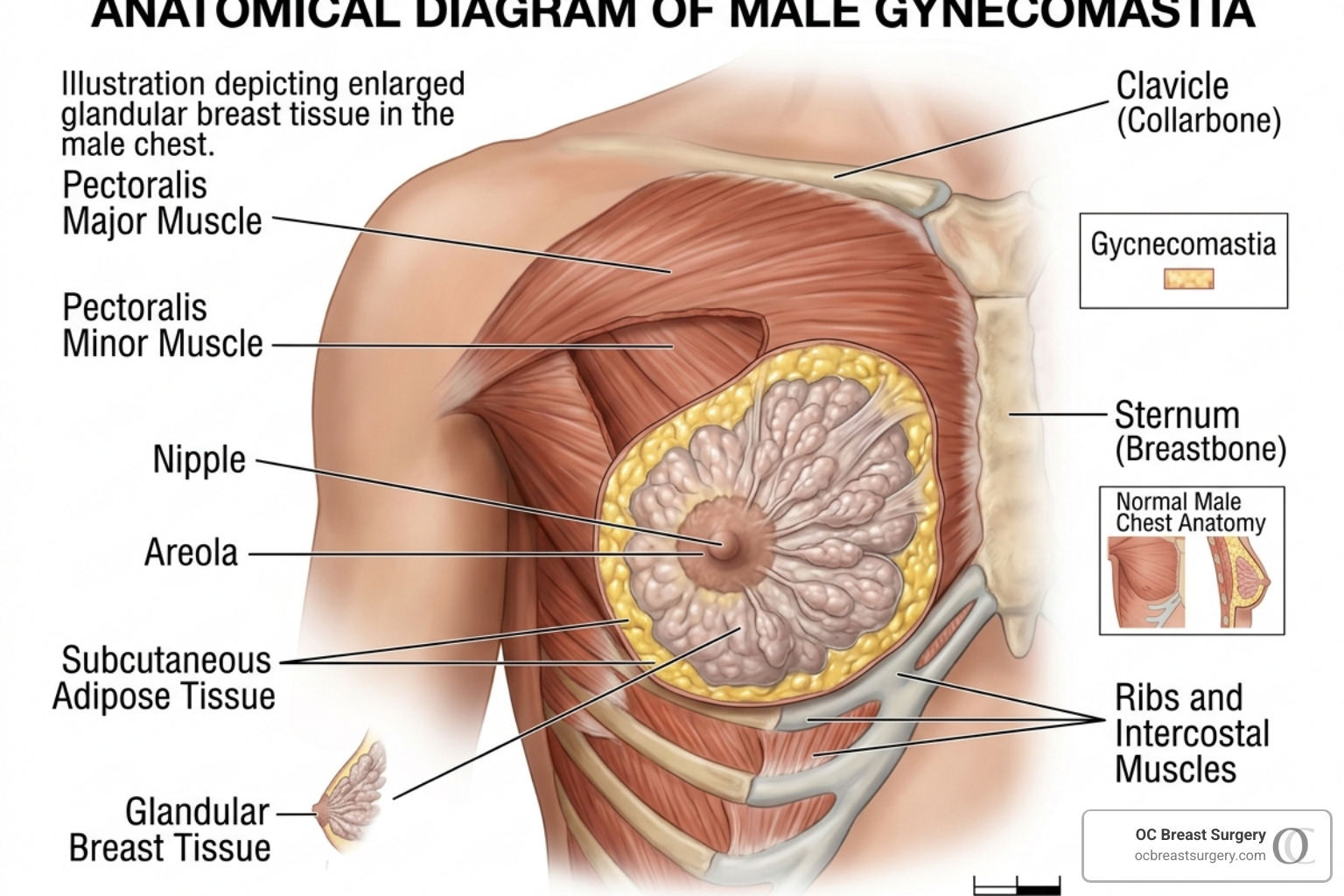
To understand if your condition is a passing phase or a lifelong companion, we first have to look at what is actually happening under the skin. Gynecomastia is the medical term for the enlargement of breast gland tissue in males. It isn’t just “extra weight”; it is a physical change in the glandular structure of the chest.
The root cause is almost always an imbalance between two hormones: estrogen and testosterone. While we often think of estrogen as a “female” hormone, all men produce it. However, when the ratio shifts—either because testosterone levels drop or estrogen levels spike—the breast tissue reacts by growing.
So, is gyno permanent? In the early stages, the tissue is often soft and inflamed. If the hormonal balance is restored quickly, the tissue can shrink back down. However, if the imbalance persists for a long period (usually over a year), the tissue can undergo a process called fibrosis. Once the tissue becomes fibrous, it is essentially like a internal scar; it becomes tough, rubbery, and permanent. At this stage, no amount of hormone stabilization or weight loss will make that glandular tissue disappear.
If you are unsure what you are feeling, learning how to know if you have gyno is the first step toward finding a solution in Newport Beach.
True Gynecomastia vs. Pseudogynecomastia
One of the most common points of confusion we see at OC Breast Surgery is the difference between “true” gyno and “pseudo” gyno. They might look similar through a t-shirt, but they are biologically very different.
| Feature | True Gynecomastia | Pseudogynecomastia |
|---|---|---|
| Primary Tissue | Glandular (Firm/Rubbery) | Adipose (Soft Fat) |
| Cause | Hormonal Imbalance | Weight Gain/Genetics |
| Location | Directly behind the nipple/areola | Spread across the whole chest |
| Response to Diet | Minimal to none | Usually improves with fat loss |
| Texture | May feel like a hard knot or disk | Soft and squishy |
True gynecomastia often involves gynecomastia puffy nipples, where the gland pushes the areola outward. Pseudogynecomastia is simply the accumulation of fat in the chest area, which is much more likely to resolve with lifestyle changes.
The Inflammatory Phase
When gynecomastia first develops, it usually enters an “inflammatory phase.” During this time, which typically lasts between 6 to 12 months, you might notice tenderness, sensitivity, or a dull ache in the chest. This is the “active” stage where the tissue is proliferating.
According to the Mayo Clinic, many cases resolve during or shortly after this phase. However, if the inflammation continues without being addressed, the body begins to replace that soft, active tissue with dense, fibrous scar tissue. Once this transition occurs, the condition is considered chronic and is much less likely to go away on its own.
When Gynecomastia Resolves Naturally
The good news is that for a large portion of the population, gynecomastia is a fleeting visitor. Nature has a way of balancing things out during major life transitions.
Why pubertal gyno is permanent for some
Puberty is a hormonal rollercoaster. It is estimated that up to 50% to 70% of adolescent boys experience some degree of gynecomastia as their bodies figure out how to manage surging hormones. This typically happens around Tanner stages 3 and 4 (the middle of puberty).
In about 90% of these cases, the condition resolves naturally within 6 months to 2 years as testosterone levels eventually dominate and stabilize the breast tissue. We often recommend gynecomastia supportive therapy during this time to help with the emotional and physical discomfort.
However, for the remaining 10%, the tissue doesn’t regress. This can happen if the hormonal spike was particularly high or if the tissue was especially sensitive to estrogen. If a young man reaches the age of 18 or 19 and the tissue is still present and firm, it is likely that the symptoms and causes have led to a permanent change that will require intervention.
Resolution in Newborns and Older Men
Gynecomastia also follows a “U-shaped” curve across the lifespan:
- Newborns: Up to 90% of baby boys are born with palpable breast tissue due to the mother’s estrogen crossing the placenta. This almost always resolves within 2 to 4 weeks.
- Older Men: Between the ages of 50 and 80, about 65% of men experience gynecomastia. This is often due to declining testosterone levels and increased body fat (which converts testosterone to estrogen). While some cases in older men are temporary, many become persistent due to underlying health conditions or medications. The AAFP notes that while common, it should still be evaluated to rule out other issues.
Factors That Make Gynecomastia Persistent
If you’ve passed the two-year mark and your chest hasn’t flattened out, you are likely dealing with persistent gynecomastia. Several external factors can “lock” this condition in place, making it permanent.
How to tell if your gyno is permanent
We generally use the “12-month rule” here in Newport Beach. If the tissue has been present for more than a year, the chances of it resolving on its own drop significantly. Here are the signs that your gyno has become permanent:
- Texture: The tissue feels like a firm, rubbery mass directly behind the nipple rather than soft fat.
- Lack of Tenderness: The initial “soreness” has disappeared, but the size remains the same.
- Stability: Your weight has fluctuated, but the “man boobs” stay exactly the same size.
- Fibrosis: A physician identifies dense, fibrous tissue during an exam.
Understanding these gynecomastia treatments and what you need to know can help you decide when it’s time to stop waiting and start acting.
Lifestyle and Health Triggers
Sometimes, the reason is gyno permanent in your case is due to ongoing triggers that keep the estrogen-testosterone balance skewed.
- Anabolic Steroids: This is a major cause of permanent gyno. When men take synthetic testosterone, the body often converts the excess into estrogen. This can cause rapid, irreversible glandular growth.
- Medications: Common drugs for blood pressure, anxiety, and even some antibiotics can trigger growth. If the medication isn’t changed, the gyno stays. Check out our guide on gynecomastia puffy nipples treatment for more on medication-related cases.
- Substance Use: Marijuana and excessive alcohol consumption have been linked to hormonal disruptions that favor breast tissue growth.
- Health Conditions: Chronic liver disease, kidney failure, or pituitary disorders can keep the body in a state where gynecomastia treatment becomes necessary because the body cannot regulate its own hormones.
Treatment Options for Lasting Results
If you’ve determined that your condition isn’t going away on its own, don’t worry. There are highly effective ways to restore a masculine chest contour.
Non-Surgical Management
In some cases, especially if caught during the early inflammatory phase, medications may help. Doctors sometimes prescribe Tamoxifen or Raloxifene (off-label) to block the effects of estrogen on the breast tissue. This can be effective in reducing size and pain in about 80-90% of pubertal cases if started early enough.
However, for most adults with established tissue, gynecomastia treatment without surgery is often limited. Weight loss and exercise can help reduce the “pseudo” component (the fat), but they won’t touch the actual gland.
Surgical Permanence and Recurrence
For those with permanent, fibrous gynecomastia, surgery is the gold standard. At OC Breast Surgery, we specialize in gynecomastia surgery in Orange County to provide a definitive solution.
The procedure typically involves:
- Liposuction: To remove excess fatty tissue and sculpt the chest.
- Glandular Excision: Also known as a subcutaneous mastectomy, where we physically remove the firm gland through a small incision.
Is gyno surgery permanent? Generally, yes. Once the glandular tissue is removed, it does not grow back. Research shows that about 90% of patients remain gynecomastia-free a decade after surgery. There is a small (12.5%) recurrence rate, but this is usually due to significant weight gain or the continued use of triggering substances like steroids. When performed correctly by a specialist, male breast reduction in Orange County provides a lifetime of confidence.
Frequently Asked Questions about Gynecomastia
Can diet and exercise get rid of gyno?
If you have pseudogynecomastia (just fat), then yes—diet and exercise can make a massive difference. However, if you have true glandular gynecomastia, no amount of bench pressing will “burn” that tissue away. In fact, building large pectoral muscles can sometimes push the glandular tissue further out, making it more noticeable. Our mens breast reduction complete guide explores this dynamic in detail.
Is there a risk of breast cancer with gyno?
While gynecomastia itself is benign (non-cancerous), the hormonal imbalance that causes it can slightly increase the risk of male breast cancer. The absolute risk remains very low—about 2,000 cases are diagnosed in the US annually. However, men with Klinefelter syndrome have a significantly higher risk (up to 30 times higher). Regular self-examination is always recommended. The Mayo Clinic emphasizes that while the risk is small, any new, hard, or fixed lumps should be checked immediately.
When should I see a doctor for chest swelling?
You should schedule a consultation in Newport Beach if you experience:
- Significant swelling or rapid growth.
- Pain or extreme tenderness.
- Nipple discharge.
- A firm or hard lump that feels “fixed” to the skin.
- Tissue that has persisted for more than two years.
Getting an accurate diagnosis is the only way to truly know how to know if you have gyno or something else.
Conclusion
So, is gyno permanent? For many young men, it is a temporary hurdle that clears up by the end of high school. But for many others, it is a persistent condition that impacts self-esteem, clothing choices, and quality of life for decades.
If you are tired of waiting for “man boobs” to go away on their own, we are here to help. At OC Breast Surgery in Newport Beach, Dr. Mark Anton and our team specialize in providing natural-looking, permanent results that help you feel like yourself again. We focus on precision, ensuring that the chest is contoured correctly so you can head to the beach with total confidence.
Don’t spend another summer hiding under baggy shirts. Whether you need a diagnosis or are ready to discuss gynecomastia in Newport Beach, reach out to us today to schedule your consultation. Let’s find out if your gyno is permanent—and if it is, let’s fix it for good.