
Breast Fat Transfer 1 Year Later: Top Results in 2024
Natural Enhancement: Breast Fat Transfer 1 Year Later
For those considering breast augmentation, breast fat transfer 1 year later offers natural-looking results with added benefits. This minimally invasive procedure involves transferring fat from one area of your body to your breasts, enhancing their size and shape without synthetic implants.
Quick Answer:
– Procedure Overview: Transferring your body’s fat to your breasts.
– Natural Augmentation: Uses your fat for a natural look.
– 1 Year Results: Stable, natural-looking breasts.
– Potential Side Effects: Some fat loss, possible calcifications or oil cysts.
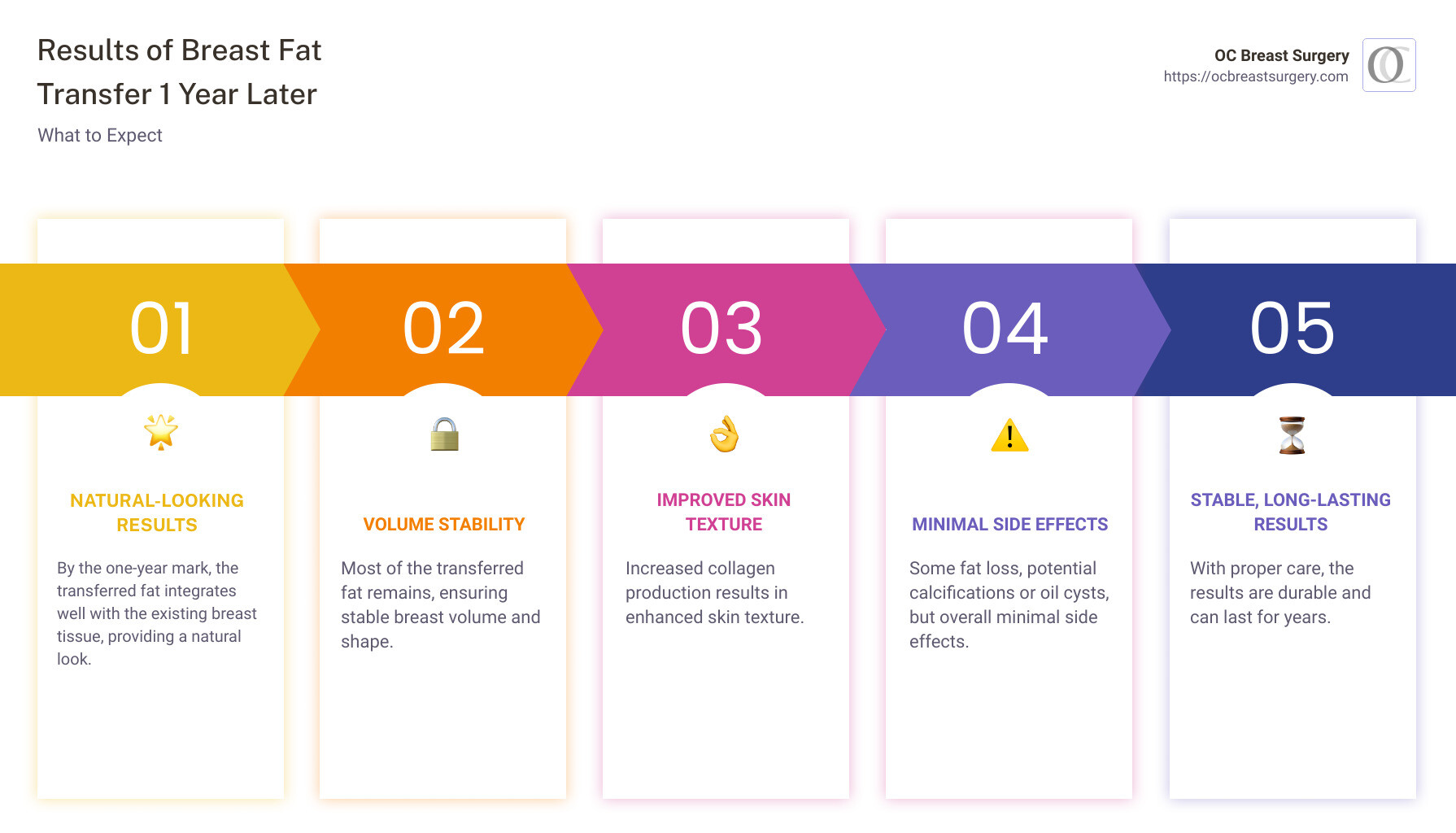
Breast fat transfer continues to grow in popularity due to its natural enhancement method. This procedure not only increases the volume of your breasts but also improves skin texture, thanks to increased collagen production.
By the one-year mark, most patients see that the newly transferred fat has integrated well with their existing breast tissue. Despite a slight reduction in volume as some fat cells do not survive, the results remain durable and look more natural compared to traditional implants.
I’m Dr. Mark Anton, founder of OC Breast Surgery, with over 33 years in practice specializing in breast surgeries, including breast fat transfer 1 year later. My experience underscores the stability and natural look this procedure offers, making it a worthy alternative to traditional implants.
What to Expect from Breast Fat Transfer 1 Year Later
Stability of Results
One year after a breast fat transfer, most patients are very satisfied with their results. By this time, the transferred fat cells have fully integrated with the existing breast tissue. This integration ensures that the new volume and shape are maintained.
Swelling Reduction: Initial swelling from the procedure typically subsides within the first few weeks. By the one-year mark, you should see the final results.
Permanent Changes: The fat cells that survive the transfer become a permanent part of your breast tissue. This means the changes in volume and shape are long-lasting, assuming there are no significant weight fluctuations.
Natural Feel: Many patients report that their breasts feel soft and natural. The fat cells blend seamlessly with the existing tissue, offering a more natural look and feel compared to synthetic implants.
Potential Side Effects
While the majority of patients enjoy stable and satisfying results, it’s essential to be aware of potential side effects:
Fat Necrosis: This occurs when some of the transferred fat cells do not receive adequate blood supply. These cells can harden and form lumps. Although usually harmless, they may require medical attention if they become painful or bothersome.
Calcification: Calcifications are small, hardened areas that can develop within the breast tissue. They are generally benign but can appear on mammograms, sometimes causing unnecessary concern.
Oil Cysts: These are pockets of liquefied fat that can form after the procedure. Small cysts often resolve on their own, but larger ones might need drainage or surgical removal.
Sensation Changes: Some patients experience changes in nipple sensation, such as increased sensitivity or numbness. These changes are typically temporary but can persist in some cases. If they do, it’s advisable to consult your doctor.

By understanding these potential side effects, you can better prepare for what to expect and know when to seek medical advice.
In the next section, we’ll discuss the long-term effects and how to maintain your results.
Long-Term Effects and Maintenance
Impact of Weight Fluctuations
Maintaining a stable weight is crucial for long-lasting results after a breast fat transfer. Significant weight gain or loss can affect the volume of your breasts.
Weight Gain: If you gain weight, the fat cells in your breasts may expand, potentially increasing breast size. While this might sound appealing, uneven weight gain can lead to asymmetry.
Weight Loss: On the flip side, losing weight can cause the fat cells in the breasts to shrink, reducing the volume and possibly altering the shape. This can make the breasts appear smaller and less full over time.
Therefore, keeping your weight stable helps in maintaining the desired breast volume and shape.
Aging and Breast Fat Transfer
Aging naturally impacts the results of a breast fat transfer. As you age, your skin loses elasticity, and collagen production slows down. This can lead to sagging, even if the fat cells remain stable.
Skin Elasticity: Over time, the skin around the breasts may become less firm. This can cause the breasts to droop, even if the volume remains consistent.
Sagging: Gravity and aging skin can cause the breasts to sag. This is more noticeable in women with larger breasts or poorer skin elasticity.
Collagen Production: Reduced collagen production means the skin and tissues won’t be as supportive as they once were, contributing to a less youthful appearance.
While these changes are natural, maintaining a healthy lifestyle can help mitigate some of the aging effects. Regular exercise and a balanced diet can improve skin health and overall physical condition, helping you maintain your results longer.
In the next section, we’ll share tips for ensuring long-lasting results.
Tips for Ensuring Long-Lasting Results
Post-Operative Care
Proper post-operative care is crucial for maintaining the results of your breast fat transfer. Here are some essential tips:
Compression Garments: Wear compression garments as instructed by your surgeon. These garments help reduce swelling and support the areas where fat was harvested.
Sleeping Positions: Sleep on your back to avoid putting pressure on your breasts. This helps the new fat cells integrate better into your breast tissue.
Avoid Smoking: Smoking can hinder the healing process and reduce the effectiveness of the surgery. Avoid smoking before and after your procedure to ensure optimal results.
Follow Surgeon’s Instructions: Adhere strictly to the aftercare plan provided by your surgeon. This includes taking prescribed medications, attending follow-up appointments, and avoiding strenuous activities until cleared by your doctor.
Healthy Lifestyle Choices
Maintaining a healthy lifestyle is essential for long-lasting results. Here are some lifestyle tips to follow:
Balanced Diet: Eat a balanced diet rich in fruits, vegetables, lean proteins, and whole grains. Proper nutrition supports overall health and aids in the healing process.
Regular Exercise: Engage in regular exercise to maintain your weight and improve your overall health. However, avoid high-impact activities until your surgeon gives you the green light.
Avoid Weight Fluctuations: Drastic weight changes can affect the volume and shape of your breasts. Aim to maintain a stable weight to preserve your results.
By following these tips and taking good care of your body, you can enjoy the benefits of your breast fat transfer for many years to come.
In the next section, we’ll address some frequently asked questions about breast fat transfer 1 year later.
Frequently Asked Questions about Breast Fat Transfer 1 Year Later
How Long Does Breast Fat Transfer Last?
Breast fat transfer results are generally long-lasting. After one year, most patients find their results stable. The transferred fat cells that survive the initial transfer become permanent. They behave like any other fat cells in your body, adapting to weight changes and aging naturally.
However, touch-ups might be needed in some cases. Factors like weight fluctuations or aging can affect the appearance of your breasts over time. Regular follow-ups with your surgeon can help maintain your desired results.
What Are the Risks of Breast Fat Transfer?
Like any procedure, breast fat transfer has some risks. Here are a few potential complications:
- Infection: Although rare, infections can occur. Surgeons typically prescribe antibiotics to prevent this.
- Fat Reabsorption: Some of the transferred fat may be reabsorbed by your body, which can lead to a decrease in breast volume.
- Lumps: Fat necrosis or the formation of oil cysts can cause lumps. These are usually benign but may require treatment.
Discuss these risks with your surgeon to understand how they apply to your specific case.
How Much Can Breast Size Increase?
With breast fat transfer, most patients can expect an increase of about half to one full cup size. This is typically less than what can be achieved with implants but offers a more natural look and feel.
The amount of fat available for transfer also plays a role. Patients with more excess fat can potentially achieve larger increases. However, realistic expectations are crucial. Discuss your goals with your surgeon to understand what’s achievable for you.
In the next section, we’ll cover the long-term effects and maintenance of breast fat transfer.
Conclusion
At OC Breast Surgery in Newport Beach, we pride ourselves on delivering natural-looking results through breast fat transfer. Our lead surgeon, Dr. Mark Anton, brings years of expertise and a commitment to patient satisfaction. His approach ensures that each procedure is tailored to meet the unique needs and goals of our patients.
Dr. Anton’s experience in breast surgery allows him to achieve results that not only enhance your appearance but also feel natural. Patients often report a boost in self-confidence and a renewed sense of body acceptance following their procedures.
Our focus is on providing high-quality care with minimal risks and complications. By choosing an experienced surgeon like Dr. Anton, you increase the likelihood of successful, long-lasting results.
If you’re considering breast fat transfer, we invite you to learn more about our breast procedures and schedule a consultation with Dr. Mark Anton. Let us help you achieve the natural enhancement you desire with the expertise you can trust.