
Breast Implant Rupture: Definitive 2025 Guide
What You Need to Know About Breast Implant Rupture
Breast implant rupture occurs when an implant’s outer shell tears, causing the filling to leak.
Key Facts About Implant Rupture:
- Saline implants deflate quickly, causing a noticeable size change in hours or days.
- Silicone implants often have a “silent” rupture, where the gel stays inside the scar tissue capsule, requiring imaging to detect.
- Rupture rates are 1.1% to 17.7% at 6-10 years post-surgery, varying by implant type.
- MRI scans are over 90% accurate for detecting silicone implant ruptures.
- Treatment involves removing the ruptured implant and the surrounding capsule.
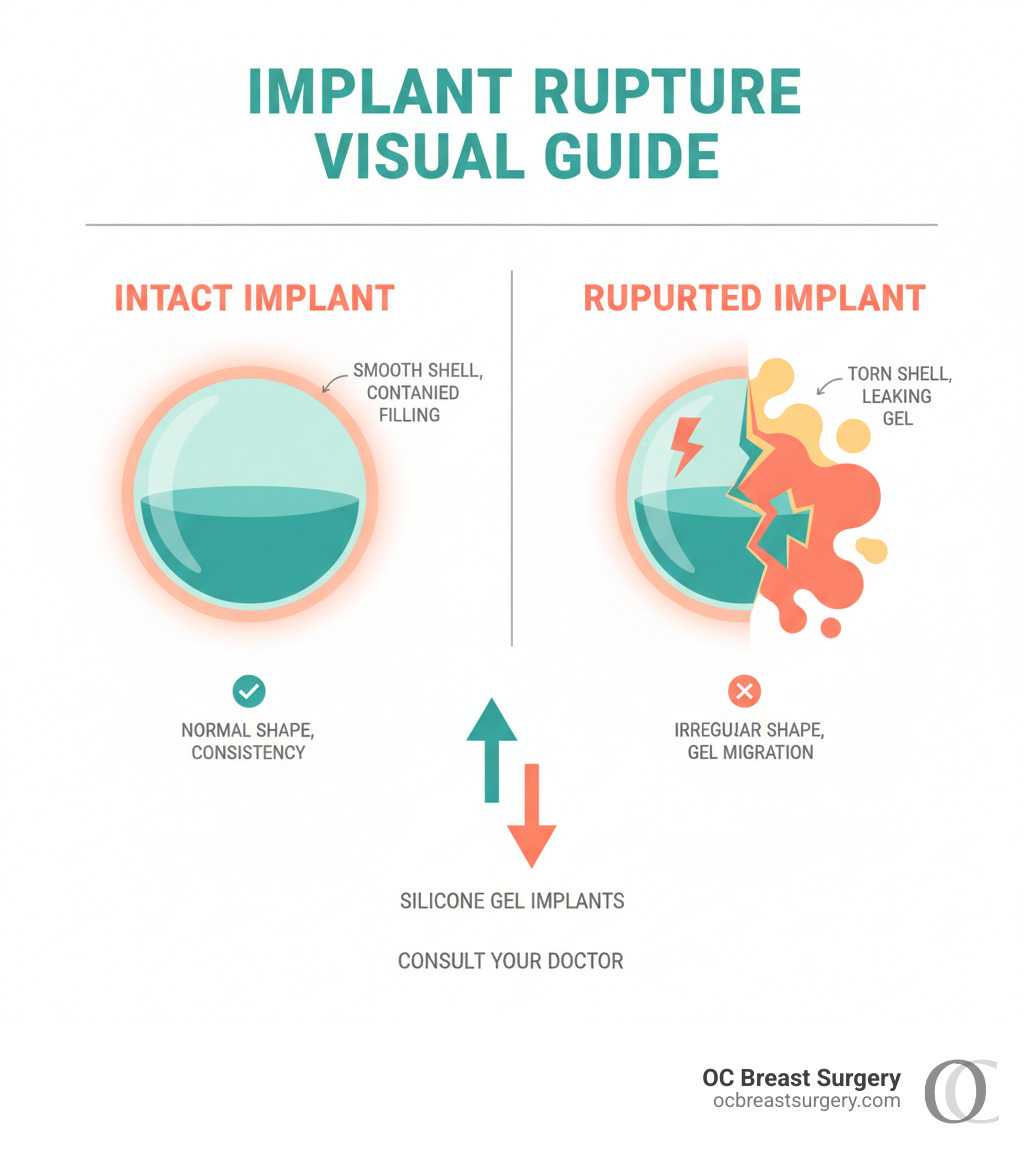
Understanding rupture is vital because implants aren’t lifetime devices; the longer you have them, the higher your risk of complications. While a ruptured saline implant is mainly a cosmetic issue, a ruptured silicone implant requires prompt attention to prevent gel from spreading into surrounding tissue.
This guide covers the warning signs, diagnosis, and treatment options for breast implant rupture.
With over 33 years of experience in breast surgery in Newport Beach, I’m Dr. Mark Anton. My career has focused on helping patients with breast implant complications. My specialized training in breast reconstruction and revision surgery provides the expertise needed to diagnose and treat ruptures, ensuring the best possible outcomes.
Understanding Implant Types and Rupture Risk
Understanding your breast implants is key, as these medical devices are not designed to last a lifetime. The two main types are saline and silicone gel-filled implants, and their composition affects how they behave when they rupture.
- Saline implants have a silicone shell filled with sterile saltwater after placement.
- Silicone gel implants have a silicone shell pre-filled with a thick, cohesive gel. Modern “gummy bear” implants use a gel that holds its shape, preventing it from oozing if the shell is compromised.
As implants age, their shells naturally degrade. While they can last 12 to 35 years, any rupture before 20 years is considered premature for modern implants.
Here’s how saline and silicone implants differ when they rupture:
| Characteristic | Saline Implant Rupture | Silicone Implant Rupture |
|---|---|---|
| Appearance | Immediate, noticeable deflation; breast becomes smaller or misshapen | Often subtle or “silent”; breast may look normal or have slight changes in shape/size |
| Feel | Softness, feeling of emptiness, potential tenderness | Can range from normal to firm; may feel lumpy or have hard knots |
| Health Risk | Saline solution is harmlessly absorbed by the body; primarily a cosmetic concern | Silicone gel may remain contained (intracapsular) or migrate (extracapsular); no proven systemic health risks, but local irritation and granulomas can occur |
| Detection | Visually obvious, typically within hours or days | Requires imaging (MRI, ultrasound) for definitive diagnosis, as it’s often asymptomatic |
How Implant Type Affects Rupture
The filling material dictates how a breast implant rupture presents. With a saline implant, the saltwater leaks out quickly, causing the breast to deflate within hours or days. Your body harmlessly absorbs the saline, making this a cosmetic issue that requires implant removal or replacement.
Silicone gel implants behave differently. The thick gel usually stays within the fibrous capsule your body forms around the implant, leading to a “silent rupture” with no obvious symptoms. If the gel escapes the capsule (an “extracapsular rupture”), it can cause local irritation or lumps of scar tissue called granulomas. Importantly, studies show no link between silicone implants and systemic health problems like connective tissue disease.
Learn more about your options in our guide on implant types, sizing, and placement.
Common Causes of Implant Rupture
Several factors can cause a breast implant rupture:
- Implant age: This is the biggest risk factor. Shells weaken over time, with rupture risk increasing significantly after 6 years. About 15% of modern implants are expected to rupture between years three and ten.
- Surgical instrument damage: A tiny nick during the original surgery can cause a rupture years later, accounting for up to 64% of silicone implant ruptures.
- Capsular contracture: The tightening of the scar tissue capsule around the implant can cause it to fold and wear through the shell. Learn more in our resource on capsular contracture.
- Other causes: Severe chest trauma, manufacturing defects (rare), and underfilling of saline implants can also lead to rupture.
Regular monitoring is crucial, as the aging process affects every implant differently.
Signs and Symptoms of a Breast Implant Rupture
Knowing the signs of a breast implant rupture is crucial, as symptoms can range from obvious to nearly invisible. Regular self-examination is your first line of defense. Monthly, check your breasts for any changes in texture, firmness, or shape. If anything feels different, trust your instincts and seek a professional evaluation from a plastic surgeon in Newport Beach.

Symptoms of a Ruptured Saline Implant
A ruptured saline implant is typically obvious. The sterile saltwater leaks out, causing the implant to deflate over a few hours or days.
- Deflation: This is the primary sign. The breast will noticeably lose volume.
- Change in breast size and shape: The affected breast will become smaller, creating asymmetry, and may look misshapen.
- Tenderness: You might feel some tenderness as the breast tissue adjusts.
The leaked saline solution is harmlessly absorbed by your body. A saline rupture is not a medical emergency, but it requires surgical correction to address the cosmetic change.
Symptoms of a Ruptured Silicone Implant
Silicone implant ruptures are often called “silent ruptures” because the thick gel tends to stay within the scar tissue capsule around the implant, producing no symptoms. This is why regular imaging is essential for anyone with silicone implants.
However, some women do experience subtle, gradual symptoms:
- Pain or tenderness in the breast.
- Swelling or a feeling of fullness.
- Lumps or hard knots (siliconomas) if gel escapes the capsule.
- Changes in sensation, such as numbness.
- Breast hardening, which may be related to capsular contracture.
- Subtle changes in breast shape or size.
If you have silicone implants and notice any of these changes, seek medical advice. Some symptoms can overlap with other conditions, like those described in our guide on Learn about Breast Implant Illness Symptoms, making professional evaluation critical.
Diagnosis and Potential Health Implications
If you suspect a breast implant rupture, an accurate diagnosis is the first step. A surgeon must determine if the rupture is intracapsular (contained within the scar tissue capsule) or extracapsular (leaked into surrounding tissue). This distinction guides treatment and clarifies potential health implications.

How is a breast implant rupture diagnosed?
Diagnosis combines a physical exam with advanced imaging, especially for silicone implants.
- Physical Examination: A surgeon checks for changes in breast size, shape, symmetry, and feels for lumps or hardening. However, a physical exam alone only detects about 30% of ruptures.
- MRI: This is the gold standard for evaluating implant integrity, with over 90% accuracy. It can show a rupture and whether gel has leaked. A key indicator is the “linguine sign,” where the collapsed shell floats in the gel.
- Ultrasound: This is useful for detecting extracapsular ruptures, which create a distinctive “snowstorm sign.” It can sometimes detect intracapsular ruptures as well.
- Mammography: While vital for cancer screening, it is not the primary tool for diagnosing ruptures and may be avoided if a rupture is suspected to prevent worsening the leak.
The FDA provides recommendations for implant screening, suggesting screening for silicone implants at three years post-op and every two to three years thereafter.
Are There Health Risks from a Ruptured Implant?
Health implications depend on the implant type.
- Saline Implants: A rupture is not a medical danger. The sterile saltwater is harmlessly absorbed by the body. The primary concern is cosmetic.
- Silicone Implants: An intracapsular rupture, where the gel is contained, poses no immediate health risk. An extracapsular rupture, where gel migrates into breast tissue or lymph nodes, can cause local irritation, inflammation, and hard lumps called granulomas.
Regarding systemic health, extensive research has found no evidence linking silicone implants to an increased risk of connective tissue disease or other autoimmune diseases.
Breast Implant-Associated Anaplastic Large Cell Lymphoma (BIA-ALCL) is a rare immune system cancer that can develop in the scar tissue around implants, particularly textured ones. While rupture doesn’t cause BIA-ALCL, persistent swelling or pain requires immediate evaluation.
Many women also report systemic symptoms like fatigue and joint pain, often called Breast Implant Illness (BII). While research is ongoing, many patients report symptom relief after implant removal. We take these concerns seriously and can discuss them further. Learn more from our resources on More on Breast Implant Illness.
Treatment and Recovery for Ruptured Implants
Surgery is the standard treatment for a breast implant rupture. The specific approach depends on your implant type, the nature of the rupture, your health, and your personal goals. In Newport Beach, Dr. Mark Anton and our team specialize in guiding women through this process with expert care.
Surgical treatment for a breast implant rupture
The primary treatment is the surgical removal of the compromised implant (explantation) and the surrounding scar tissue capsule (capsulectomy). For a saline rupture, this involves removing the deflated shell. For a silicone rupture, the surgeon carefully removes the shell, any free gel, and often the entire capsule to ensure all silicone particles are gone. The breast pocket is then thoroughly washed out.
After removal, you have several options:
- Implant Replacement: Many women choose to have new implants placed during the same surgery to maintain breast volume. We often recommend replacing both implants for symmetry and to prevent a future rupture on the other side.
- Breast Lift (Mastopexy): If you choose not to replace your implants, a breast lift can reshape the remaining breast tissue and address skin laxity.
- Autologous Reconstruction: This procedure uses your own body tissue to reconstruct the breast, eliminating future implant-related concerns.
We will help you explore all your options. For more details, visit our page on Explore Breast Implant Revision Surgery.
Recovery and Long-Term Outlook
Recovery involves some initial discomfort, swelling, and bruising, which are managed with medication. You will need to avoid strenuous activity for several weeks and wear a supportive surgical bra. Most patients return to light activities within a couple of weeks, with a full recovery taking about six to eight weeks.
Long-term monitoring is essential, especially if you get new silicone implants. Regular follow-up appointments and screenings are necessary to monitor implant integrity.
Insurance coverage for rupture surgery varies. Most plans cover the medically necessary removal of the implant and capsule, but often do not cover cosmetic aspects like replacement or a breast lift. It’s crucial to check with your provider about your specific coverage.
Even new implants have a limited implant lifespan and will likely require attention or replacement in the future. For more on the removal process, see our guides on Details on Breast Implant Removal and The Definitive Guide to Breast Implant Removal.
Frequently Asked Questions about Breast Implant Rupture
Here are answers to common questions about breast implant rupture we hear from patients in Newport Beach.
How long do breast implants last?
Breast implants are not lifetime devices. Their shells weaken over time, and longevity varies. While some last 12 to 35 years, the risk of breast implant rupture increases significantly after 6 years, with about 15% of modern implants rupturing between years 3 and 10. We recommend a check-up around the 10-year mark. The FDA has recommendations for implant screening for silicone implants, suggesting an MRI 3 years post-op and every 2-3 years after.
Can a ruptured implant be replaced in the same surgery?
Yes, this is a common and practical approach. In a “one-stage” revision, we remove the ruptured implant and capsule, then place a new implant immediately. This minimizes downtime with a single surgery and recovery. However, the best approach depends on your specific case, such as the extent of the rupture and the health of your breast tissue. We discuss all options in our guide to Explore Breast Implant Revision Surgery.
Is surgery for a ruptured implant covered by insurance?
Coverage varies widely. Insurance often covers the medically necessary removal of a ruptured implant and its capsule. However, the replacement of the implant or a subsequent breast lift is typically considered cosmetic and not covered. We advise contacting your insurance provider directly for specifics on your plan. Our team can assist with the necessary documentation for pre-authorization. For more on this, see our page on Details on Breast Implant Removal.
Conclusion: Taking the Next Step in Newport Beach
You now understand what breast implant rupture is, how to recognize it, and what your options are. The most important takeaway is that breast implants don’t last forever and require monitoring. If you notice changes in size, shape, or sensation, or experience pain or lumps, trust your instincts and don’t wait to seek help.
Prompt evaluation by an experienced plastic surgeon is critical. Early diagnosis leads to more treatment options and better outcomes. This is where a specialist in breast implant complications is invaluable. At OC Breast Surgery in Newport Beach, Dr. Mark Anton has over three decades of expertise in breast revision and reconstruction surgery. His experience with everything from simple ruptures to complex cases ensures you receive a customized solution for your unique situation.
We understand that facing another surgery can be daunting. Our team is here to support you through every step, from diagnosis to recovery, ensuring you feel confident and informed. Whether you have a confirmed rupture, are experiencing symptoms, or simply want an evaluation for peace of mind, we are here to help.
For more information on your options, including complete removal, please read The Definitive Guide to Breast Implant Removal. Your health and peace of mind are our priority. Let us help you achieve the best possible outcome.