
Breast Reconstruction Surgery: Top 2024 Procedures Explained
Introduction
Breast reconstruction surgery helps restore the look and feel of breasts after mastectomy or lumpectomy. It’s a journey many women take to regain confidence and improve their body image. Here are the key takeaways at a glance:
- Restores breast shape and appearance after cancer treatment
- Can start immediately after mastectomy or be delayed
- Two main types: Implant-based reconstruction and flap reconstruction
- Factors influencing your choice: Type of mastectomy, other cancer treatments, and personal body type
Breast reconstruction often requires several steps, sometimes over months. You can begin this process at the time of your mastectomy or at a later date.
OC Breast Surgery in Newport Beach, California, is known for helping patients find the right options for them, whether it’s their first surgery or a revision of a previous one. Dr. Mark Anton and his team specialize in creating natural-looking results tailored to each individual’s needs.
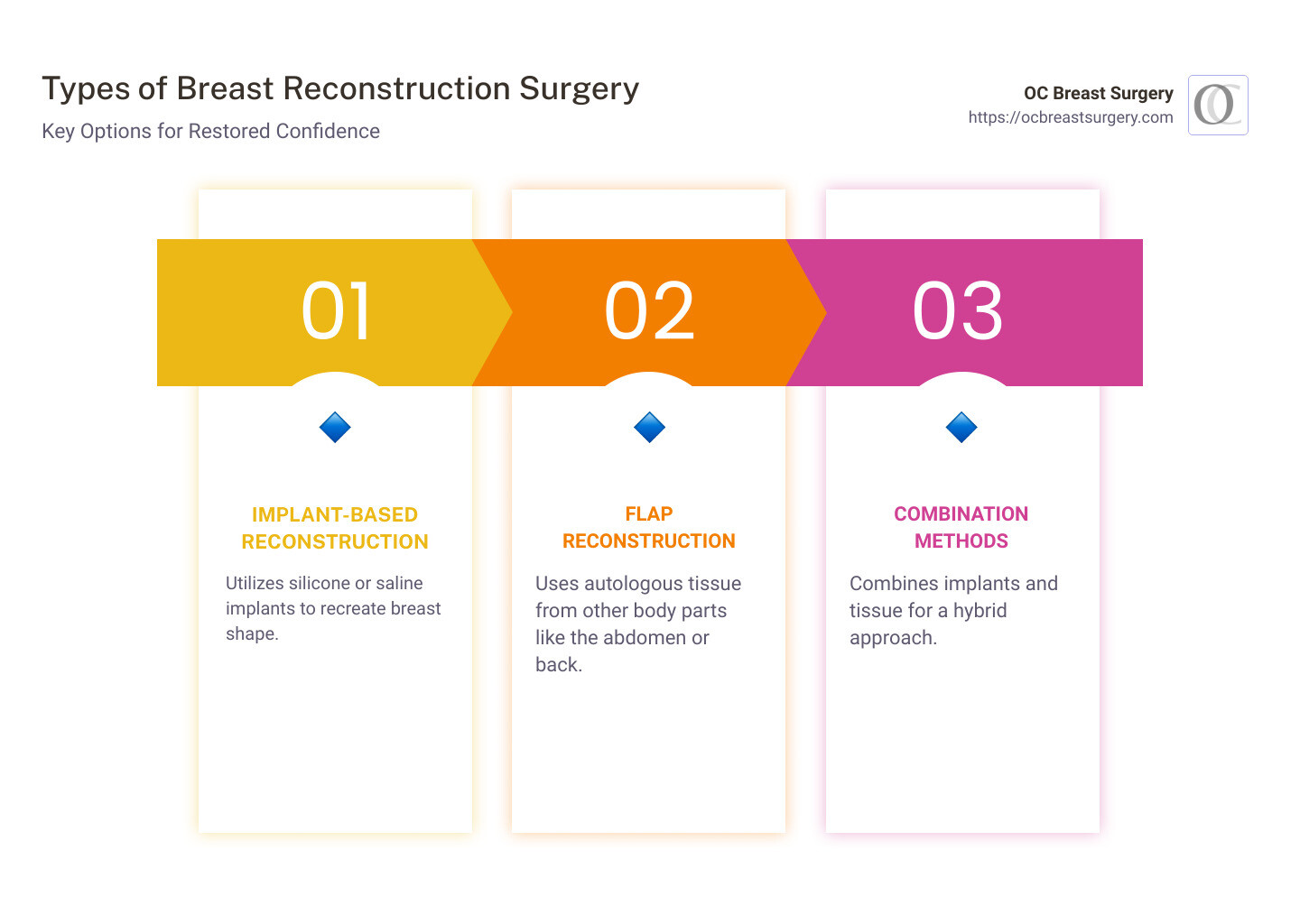
Types of Breast Reconstruction Surgery
When considering breast reconstruction surgery, you have several options. Your choice will depend on your body type, health, and personal preferences. Let’s dive into the main types of breast reconstruction surgery: implant-based reconstruction, flap reconstruction, and combination methods.
Implant-Based Reconstruction
In implant-based reconstruction, surgeons use silicone or saline implants to recreate the breast mound. This method is often simpler and involves fewer surgeries than other types.
Advantages:
– Less scarring: No need to take tissue from other body parts.
– Stable size: The reconstructed breast won’t change size with weight fluctuations.
– Quick recovery: Typically has a shorter recovery period.
Disadvantages:
– Foreign body: Implants may cause long-term issues like capsular contracture, where scar tissue hardens around the implant.
– Less natural feel: Implants can feel colder and less mobile.
– Radiotherapy complications: Implants may not be suitable if you’ve had or will have radiotherapy.
– Multiple surgeries: Sometimes, you may need two operations: one to stretch the skin and another to place the implant.

Flap Reconstruction
Flap reconstruction uses your own (autologous) tissue to form a new breast. This tissue can come from various body parts like the lower abdomen, back, thigh, or bottom.
Types of Flap Surgery:
- Pedicled Flap: Some blood vessels are cut, but others remain intact. The tissue is tunneled under the skin to the chest.
- Free Flap: The tissue is completely detached and reconnected to blood vessels in the chest using microsurgery.
Common Flap Procedures:
- TRAM Flap (Transverse Rectus Abdominis Muscle): Uses tissue from the lower abdomen. Can be pedicled or free.
- DIEP Flap (Deep Inferior Epigastric Perforator): Similar to TRAM but spares the muscle, retaining more abdominal strength.
- Latissimus Dorsi Flap: Uses tissue from the back.
- Other Sites: Less commonly, tissue from the thigh or buttocks.
Advantages:
– Natural feel: The reconstructed breast feels warmer and more natural.
– Versatile: Suitable for women with different breast sizes.
Disadvantages:
– Longer surgery: More complex and time-consuming than implant-based reconstruction.
– More scars: Leaves scars at both the donor and breast sites.
– Physical impact: Potential weakness in the donor site, affecting activities like lifting or sports.
Combination Methods
Combination methods use both implants and your own tissue to reconstruct the breast. This hybrid approach can offer the benefits of both techniques.
Advantages:
– Enhanced shape and feel: Combines the natural feel of tissue with the shape provided by implants.
– Versatility: Can address specific needs, like adding volume or improving symmetry.
Disadvantages:
– Complexity: More intricate than using implants or tissue alone, requiring specialized surgical skills.
– Recovery: May involve a longer recovery period due to the dual approach.
By understanding these types of breast reconstruction surgery, you can make a more informed decision that aligns with your goals and lifestyle. Next, we’ll look at how to choose the right option for you.
Choosing the Right Breast Reconstruction Surgery
Choosing the right breast reconstruction surgery is a personal decision. Here are some key factors to consider:
Factors to Consider
Mastectomy Type: The type of mastectomy you have can influence your reconstruction options. For example, a skin-sparing mastectomy may allow for more natural-looking results.
Cancer Treatments: Treatments like radiation can affect the timing and type of reconstruction. Radiation can make the skin less elastic and complicate healing.
Body Type: Your body shape and size can determine the best reconstruction method. For instance, women with larger breasts may need a reduction on the natural breast for symmetry.
Symmetry: Achieving symmetry between your reconstructed and natural breast is important. Some women may need additional surgery on the natural breast for a balanced look.
Patient Goals: Your personal goals and desired outcomes are crucial. Do you want a breast that looks natural under clothing, or are you more concerned with how it feels?
Lifestyle: Your daily activities and hobbies matter. Some reconstruction methods may not be ideal for very active women or athletes.
Health Conditions: Chronic conditions like diabetes or a suppressed immune system can complicate surgery and recovery. Smokers and overweight women also face higher risks of complications.
Immediate vs. Delayed Reconstruction
Immediate Reconstruction: This happens at the same time as the mastectomy. It can offer psychological benefits, as you wake up with a breast mound already in place. However, not all women are candidates for immediate reconstruction.
Delayed Reconstruction: This occurs months or even years after the mastectomy. It allows time for other treatments, like radiation, and gives your body time to heal. Delayed reconstruction can be less stressful because it separates the cancer treatment from the reconstruction process.
Timing: The timing of your reconstruction depends on several factors, including your overall health, the need for additional cancer treatments, and your personal preferences. Discuss these with your plastic surgeon, breast surgeon, and oncologist to make an informed decision.

By considering these factors, you can choose a breast reconstruction method that aligns with your medical needs and personal goals. Next, we’ll delve into the surgical process, including what to expect before, during, and after surgery.
The Surgical Process
Pre-Surgery Preparation
Before your breast reconstruction surgery, you’ll have a comprehensive examination. This includes reviewing your health history and current medications. Your surgeon may take photographs to plan your surgery and track your progress.
You’ll also meet with an anesthesiologist to discuss anesthesia options. Make sure to follow all pre-surgery instructions from your doctor, such as fasting or stopping certain medications.
During Surgery
The type of surgery you have will depend on your chosen reconstruction method. If you’re having a mastectomy or lumpectomy, your surgeon will remove the breast tissue first.
Implant Placement: For implant-based reconstruction, the surgeon will insert either silicone or saline implants to create the breast mound.
Tissue Transfer: If you’re opting for flap reconstruction, tissue from another part of your body (like your abdomen, thigh, or back) will be used. The surgeon will carefully connect blood vessels to ensure proper blood flow to the new tissue.
Surgical Drains: After the surgery, small tubes called surgical drains may be placed to remove excess fluid from the surgical site. You’ll learn how to care for these drains before you leave the hospital.
Post-Surgery Recovery
Hospital Stay: After surgery, you’ll likely stay in the hospital for a few days. The length of your stay depends on the complexity of your procedure.
Surgical Bra: You’ll need to wear a special surgical bra to support your new breast as it heals. This helps reduce swelling and provides comfort.
Pain Management: Expect some pain and discomfort after surgery. Your doctor will prescribe pain medications to help manage this. It’s important to take these as directed to avoid unnecessary pain.
Follow-Up Care: Regular follow-up visits with your surgeon are crucial. These checkups ensure that your healing process is on track and help catch any potential complications early.
Activity Restrictions: For the first few weeks, avoid activities that raise your blood pressure or heart rate. This includes bending, lifting, and strenuous sports. Most women can return to normal activities within 8 weeks, but always follow your surgeon’s specific advice.
By understanding what to expect before, during, and after your surgery, you can better prepare for your breast reconstruction journey. Next, we’ll explore the potential risks and complications associated with these procedures.
Risks and Complications
Breast reconstruction surgery, like any major surgery, carries certain risks and complications. It’s important to be aware of these to make an informed decision and take steps to manage them effectively.
Managing Risks
Infection: Infections can occur after surgery. Signs include redness, swelling, and fever. To prevent infection, follow your surgeon’s instructions on wound care and take prescribed antibiotics. Regular checkups are crucial to catch infections early.
Bleeding: Some bleeding is normal post-surgery, but excessive bleeding can be a problem. Your surgeon will place surgical drains to help manage this. Keeping an eye on the amount of fluid and following post-op care instructions can help mitigate this risk.
Sensation Loss: It’s common to experience numbness in the chest area after a mastectomy. Some feeling may return over time, but it won’t be the same as before surgery. Researchers are exploring nerve grafts to improve sensation, but this is still in the early stages.
Implant Rupture: Silicone implants can rupture, leading to changes in breast shape and size. Regular MRI scans are recommended to check for silent ruptures. If a rupture is detected, surgery may be needed to replace the implant.
Capsular Contracture: This occurs when scar tissue around the implant hardens, causing discomfort and changes in breast appearance. Treatment may involve medication or additional surgery to remove the scar tissue.
Anaplastic Large Cell Lymphoma (ALCL): Although rare, BIA-ALCL is a type of lymphoma linked to breast implants. Regular checkups and monitoring for symptoms like swelling or lumps around the implant are essential for early detection.
Hernias and Donor Site Weakness: For those opting for flap reconstruction, hernias can occur at the donor site, especially if tissue is taken from the abdomen. This may result in weakness and require further surgery to repair.
Long-Term Considerations
Sensation Loss: As mentioned, sensation loss is common and usually permanent. While some feeling may return, it won’t be the same as before. This can affect your overall satisfaction with the surgery.
Implant Replacement: Implants are not lifetime devices. They may need to be replaced every 10-20 years due to ruptures or other complications. Regular checkups and imaging tests can help monitor the condition of your implants.
Cancer Recurrence: The primary goal of breast reconstruction is to improve quality of life, but it’s crucial to continue regular cancer screenings. This includes mammograms and other imaging tests as recommended by your healthcare provider.
Regular Checkups: Follow-up care is essential to monitor for complications like implant rupture, capsular contracture, and cancer recurrence. Regular visits to your surgeon will help keep you on track and address any issues promptly.
Emotional Impact: Adjusting to a reconstructed breast can be emotionally challenging. It’s normal to experience a range of emotions. Social support and counseling can be very beneficial during this time.
By understanding the risks and long-term considerations, you can take proactive steps to manage your health and achieve the best possible outcome from your breast reconstruction surgery.
Frequently Asked Questions about Breast Reconstruction Surgery
How long does it take to recover from breast reconstruction?
Recovery time varies, but most women can expect to return to light activities within six weeks. Full physical recovery can take up to eight weeks.
During this period, it’s crucial to follow your doctor’s instructions. Avoid heavy lifting, strenuous sports, and overhead activities for at least 4 to 6 weeks. Your doctor will also advise on when you can resume work and other daily tasks.
Pain management is a key part of recovery. You may experience bruising and swelling that can last up to 8 weeks. Your surgeon will prescribe pain medications to help manage discomfort.
Do reconstructed breasts ever feel normal?
Reconstructed breasts will never have the same sensation as natural breasts. Immediately after surgery, you may experience numbness across your chest, from your collarbone to the top of your rib cage. This numbness usually doesn’t go away completely.
Over time, some sensation may return, but it will be different from before surgery. You might also feel pins and needles as nerves heal, but this varies from person to person.
Is breast reconstruction a major surgery?
Yes, breast reconstruction is considered a major surgery. It often involves a hospital stay and multiple surgeries over several months to achieve the final result.
The initial surgery can be extensive, especially if it involves both implant and tissue flap methods. Follow-up surgeries may be needed to refine the reconstruction and address any complications.
Your overall health and the complexity of the reconstruction will determine the length of your hospital stay and recovery time. Always discuss with your surgeon to get a clear understanding of the process and what to expect.
By understanding the recovery process, sensation changes, and the nature of the surgery, you can make informed decisions and prepare for your breast reconstruction journey.
Conclusion
At OC Breast Surgery in Newport Beach, we understand that breast reconstruction surgery is a deeply personal decision. Our mission is to provide expert care and guide you through every step of the process.
Dr. Mark Anton, our medical director, has performed thousands of breast surgeries and is renowned for his expertise and dedication to patient education. He has been recognized with top honors by Castle Connelly Top Doctors and Global Top Doctors, ensuring you are in capable hands.
Whether you’re considering breast revision, reconstruction, augmentation, or reduction, our team is committed to achieving natural-looking results that restore your confidence and body image. We offer personalized consultations to help you understand your options and set realistic expectations.
Our goal is to ensure you feel supported and informed throughout your journey. From the initial consultation to post-surgery recovery, we prioritize your health, comfort, and satisfaction.
Ready to take the next step? Contact us at OC Breast Surgery to schedule your consultation and begin your journey to feeling whole again.
