
How Long Until You Can Hit the Road After Breast Implant Removal
When Is It Safe to Start Driving After Explant Surgery?
Driving after explant surgery is something most patients can do within 1 to 2 weeks — but only when two key conditions are met:
- You have been off narcotic pain medications for at least 24 hours
- You feel fully alert and can move your arms without pain or restriction
Here is a quick overview of typical driving timelines:
| Procedure Type | Earliest You Can Drive |
|---|---|
| Simple explant (no capsulectomy) | ~7 days post-op |
| Explant with capsulectomy | 1-2 weeks post-op |
| Explant with lift or fat transfer | 2+ weeks post-op |
Always get your surgeon’s clearance before getting back behind the wheel.
Getting back to normal life after breast implant removal feels exciting — but driving too soon is one of the most common mistakes patients make during recovery. Between prescription pain medications, limited arm mobility, and chest wall sensitivity, operating a vehicle carries real risks in those first critical days after surgery.
This guide walks you through exactly what to expect, what to watch for, and how to know when your body is truly ready.
I’m Dr. Mark Anton, founder of OC Breast Surgery in Newport Beach, CA, and after more than 33 years performing thousands of breast surgeries — including complex explant and revision procedures — I’ve guided countless patients through safe recovery plans that include questions around driving after explant surgery. In the sections ahead, you’ll find the clear, practical information you need to recover safely and confidently.

Driving after explant surgery terms explained:
Key Factors for Driving After Explant Surgery
Determining when you can safely operate a vehicle isn’t just about the number of days that have passed since your procedure. At OC Breast Surgery, we look at several physiological and pharmacological factors to ensure you aren’t a danger to yourself or others on the road in Newport Beach.
Cognitive Alertness and Mental Clarity
Surgery involves anesthesia, which can leave you feeling “foggy” for several days. Even if you feel physically capable, your reaction times may be significantly delayed. Driving requires split-second decision-making. If you aren’t 100% mentally sharp, you should remain in the passenger seat. General road safety guidance from the National Highway Traffic Safety Administration reinforces how important alertness and unimpaired reaction time are whenever you drive.
Physical Mobility and Range of Motion
Think about the physical actions involved in driving: reaching for the ignition, turning a heavy steering wheel, shifting gears, and checking your blind spots. All of these require use of the pectoral muscles and a certain range of motion in the arms. If rotating the steering wheel causes a sharp pain in your chest, you are not ready.
Surgeon Clearance
Every patient heals at a different rate. While general guidelines suggest one week, your specific surgical complexity-such as whether you had an en bloc capsulectomy-will dictate your timeline. We always provide specific Post-Operative Patient Instructions that must be followed before you resume driving.

Impact of Pain Medications on Driving After Explant Surgery
This is perhaps the most critical factor. The 24-hour rule is non-negotiable. You must be off all narcotic pain medications (such as Percocet, Vicodin, or Norco) for at least 24 full hours before touching a steering wheel.
Narcotics severely impair judgment, coordination, and depth perception. In the eyes of the law, driving while taking these medications is considered driving under the influence (DUI). Most patients find they can manage their discomfort with Tylenol (not exceeding 4,000 mg in 24 hours) after the first few days, which is much safer for cognitive function. However, even non-narcotic meds can sometimes cause drowsiness, so use your best judgment.
Physical Requirements and Range of Motion
Driving after explant surgery requires more upper body strength than most people realize. When you turn the wheel, you engage your chest muscles. If those muscles have been manipulated during surgery-especially if your implants were under the muscle (submuscular)-any sudden movement can be excruciating.
- Steering Control: You must be able to perform a “hand-over-hand” turn without hesitation.
- Shifting Gears: If you drive a manual transmission, the repetitive motion of shifting can put undue strain on the surgical site.
- Emergency Maneuvers: Could you swerve suddenly to avoid an accident? If the answer is “no” because of stiffness or pain, you aren’t ready to drive.
Typical Recovery Timeline for Resuming Driving
Resuming your daily commute or running errands in Newport Beach should be a gradual progression. Here is what a typical timeline looks like according to standard recovery protocols:
| Recovery Phase | Activity Level | Driving Status |
|---|---|---|
| Days 1–3 | Bed rest and light walking | Strictly No Driving |
| Days 4–7 | Off narcotics; increased mobility | Passenger only |
| Week 1 | First post-op follow-up | Possible clearance for short trips |
| Week 2 | Resuming desk work | Most patients can drive comfortably |
Driving After Explant Surgery with Capsulectomy or Lift
If your surgery involved a total capsulectomy (removing the scar tissue capsule) or was combined with a breast lift (mastopexy), your “return to road” timeline will likely be longer. These procedures involve more extensive tissue trauma and longer incisions.
Patients undergoing breast implant removal in Newport Beach with these added complexities often have surgical drains. Driving with drains is not only uncomfortable but can be dangerous if the tubing gets snagged on the seatbelt or gear shift. Usually, we recommend waiting until drains are removed—typically 3 to 7 days post-op—before considering driving.
Safety Risks of Getting Behind the Wheel Too Soon
Pushing yourself to drive before your body is ready can lead to serious medical complications:
- Hematoma Risk: Sudden, jerky movements or the strain of steering can cause a blood vessel to break, leading to a painful collection of blood (hematoma) that may require additional surgery.
- Incision Dehiscence: Stretching your arms too far to reach the top of the steering wheel can put tension on your incisions, causing them to pull apart.
- Airbag Deployment: In the unfortunate event of a minor fender bender, an airbag deploying against a freshly operated chest can cause catastrophic internal damage.
- Insurance Issues: If you are involved in an accident while on prescription pain meds or against medical advice, your insurance provider may refuse to cover the claim.
- Sudden Braking Impact: The force of the seatbelt locking against your chest during a hard brake can damage the underlying tissue and disrupt the healing process.
Tips for a Comfortable Return to the Road
When you finally get the green light for driving after explant surgery, use these tips to make the experience safer and less painful:
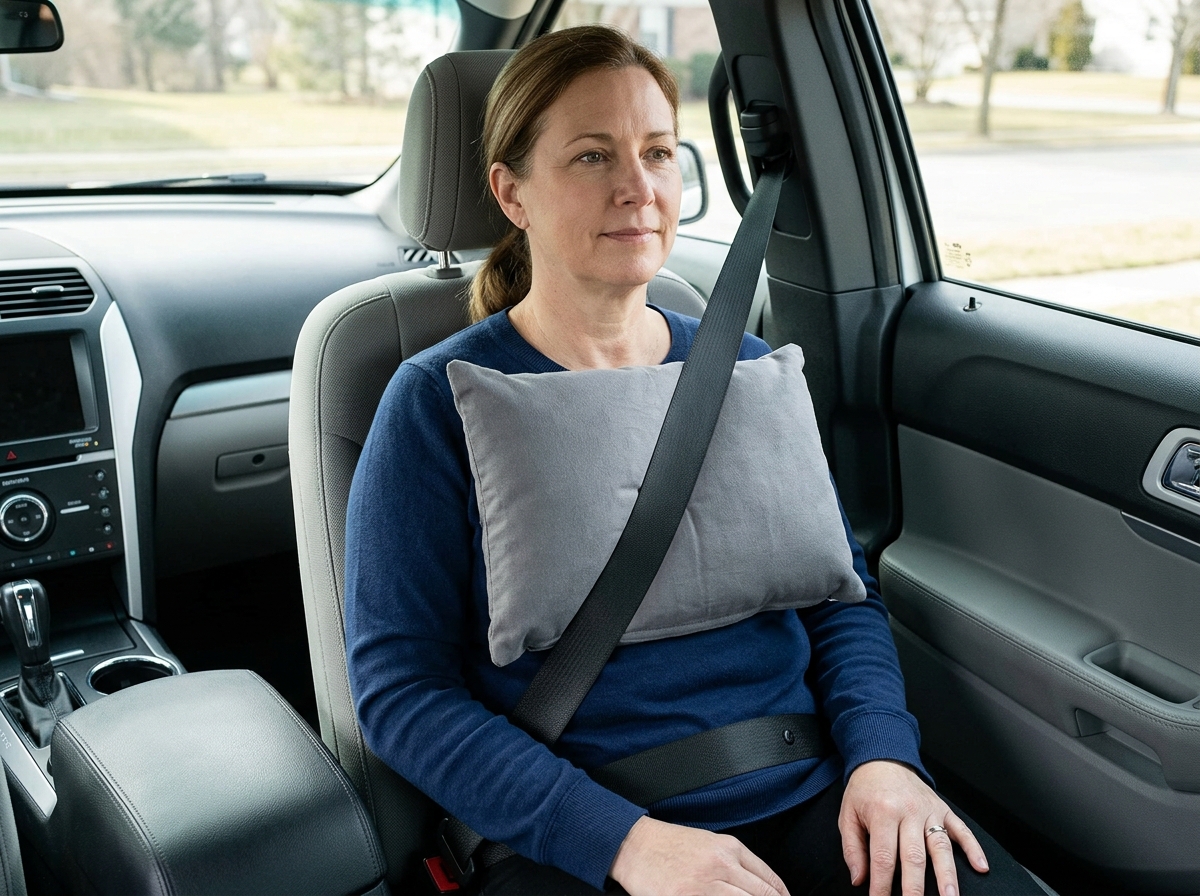
- The Mastectomy Pillow: Place a small, soft pillow between your chest and the seatbelt. This cushions the pressure and prevents the belt from rubbing against your incisions.
- Adjust Your Mirrors: Set your side and rearview mirrors before you start driving so you don’t have to twist your torso as much to see your surroundings.
- Short Trips Only: Your first few drives should be no longer than 10–15 minutes. Surgery fatigue is real, and it can hit you suddenly.
- Wear Your Surgical Bra: Ensure you have your supportive, non-underwire surgical bra on. This minimizes “bounce” and movement of the breast tissue while driving over bumps.
- Avoid Rush Hour: Don’t test your skills in heavy Newport Beach traffic. Choose quiet times of day for your first few outings.
Frequently Asked Questions about Post-Explant Driving
How do surgical drains affect my ability to drive?
Drains are often used to prevent fluid buildup (seromas). We generally advise against driving while drains are in place. They limit your range of motion, and the bulb reservoirs can be bulky under a seatbelt. Most recovery guides suggest waiting until drainage is less than 30cc over a 24-hour period before removal. Once they are out, your comfort and mobility will improve significantly.
What physical tests can I do to see if I’m ready?
Before you actually start the engine, sit in your parked car and try these movements:
- Rotate the steering wheel fully to the left and right.
- Practice a “mock” emergency brake (stomp on the brake pedal).
- Turn your head and torso to check your blind spots.
- Reach for the radio or climate controls. If any of these cause sharp pain or a “pulling” sensation at your incision sites, wait another two to three days.
Can I be a passenger in a car immediately after surgery?
Yes, you will need a designated driver to take you home from our Newport Beach facility. For the first week, you can be a passenger, but we recommend keeping trips short. For longer rides, remember to do “ankle pumps” and take breaks every hour to walk around; this is vital for preventing blood clots (DVT).
Conclusion
Resuming driving after explant surgery is a major milestone in your recovery journey, but it isn’t one that should be rushed. By prioritizing safety, staying off narcotics, and listening to your body’s signals, you ensure a smoother, faster path back to your normal routine.
At OC Breast Surgery, Dr. Mark Anton and our specialized team are dedicated to providing the highest level of care throughout your entire explant experience. From the initial consultation to your final post-operative check-up, we provide personalized recovery plans tailored to your unique needs and lifestyle.
If you are considering breast implant removal or have questions about your upcoming recovery, we are here to help. Schedule a consultation for breast implant removal at our Newport Beach, CA office today and take the first step toward a healthier, more comfortable you.