
How to avoid animation deformity: Top 3 Stable Steps
What You Need to Know About Animation Deformity
How to avoid animation deformity is a critical concern for women considering breast augmentation or reconstruction. Also called dynamic breast deformity, it occurs when breast implants move unnaturally with chest muscle contractions, creating visible distortion, rippling, or a “flexing” appearance when you move your arms.
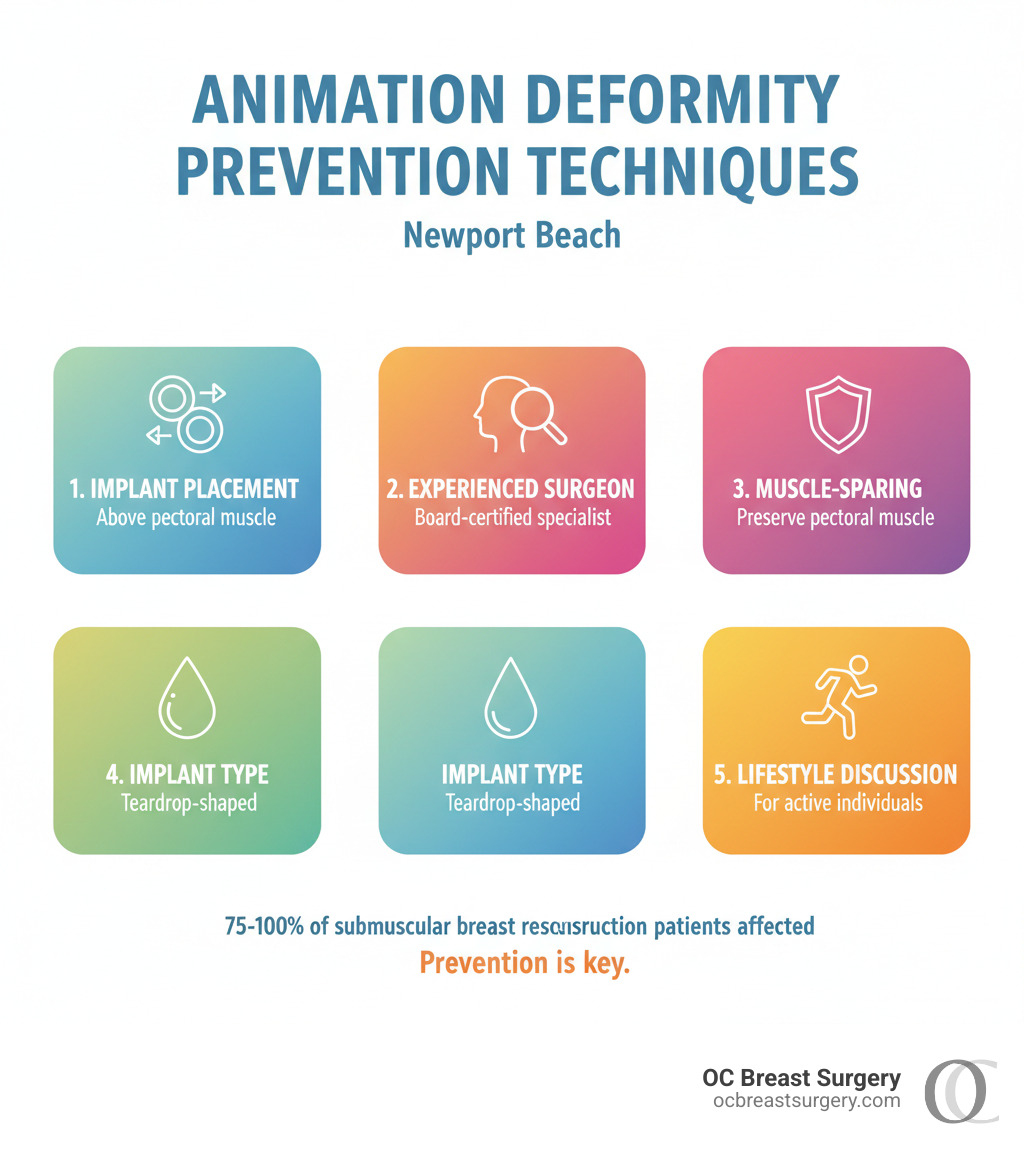
Quick Answer: Key Ways to Prevent Animation Deformity
- Choose the right implant placement – Subfascial or pre-pectoral placement keeps implants above the pectoral muscle, eliminating muscle-related movement
- Work with an experienced surgeon – A board-certified specialist can assess your anatomy and select the optimal technique
- Consider muscle-sparing procedures – Techniques that preserve or avoid disrupting the pectoralis major muscle significantly reduce animation risk
- Select appropriate implant types – Teardrop-shaped implants with subfascial placement often provide the most natural, stable results
- Discuss your lifestyle – Active individuals who regularly engage chest muscles benefit most from placement techniques that avoid the pectoral muscle
Research shows animation deformity affects an estimated 75-100% of patients with submuscular breast reconstruction. Up to 80% of these patients report being bothered by it, with nearly half stating it affects them daily. The emotional impact is significant, affecting personal relationships for one-fourth of patients and causing negative psychological effects for 40%.
The good news is that animation deformity is largely preventable. By choosing a surgical approach that minimizes muscle interaction with your implants, you can achieve beautiful, natural-looking results. As Dr. Mark Anton, I’ve focused on this issue throughout my 33-year career, especially in revision cases. Understanding how to avoid animation deformity starts with proper surgical planning and selecting the right implant placement for your anatomy and lifestyle.
Understanding the Cause: Why Do Implants “Animate”?
To understand how to avoid animation deformity, you need to know its cause. Imagine placing a water balloon under a rubber band; when the band contracts, the balloon distorts. This is what happens when implants are positioned under an active chest muscle.
Animation deformity occurs when the pectoral muscle contracts and squeezes the implant, causing it to compress, shift, bulge, or ripple. This can happen when lifting, exercising, or even just reaching for something.
The root cause is almost always submuscular implant placement, where the implant sits beneath the pectoralis major muscle. While this position offers good tissue coverage, it creates a direct interaction between the contracting muscle and the implant, leading to distortion.
This issue affects reconstruction patients far more severely than those undergoing cosmetic augmentation. In fact, animation deformity appears in 75-100% of submuscular breast reconstructions. In contrast, cosmetic breast augmentation patients experience moderate to severe animation deformity about 15% of the time.
The numbers are sobering. Our patient studies show an average nipple displacement of 2.12 cm during muscle contraction. About 80% of our patients were bothered by this, with nearly half affected daily and one in four reporting an impact on personal relationships.
These aren’t just cosmetic concerns—they’re quality-of-life issues that affect confidence, intimacy, and daily comfort. For a comprehensive look at this challenge, you can read more in this overview of animation deformity in prosthetic breast reconstruction.
The good news is that understanding these causes helps us make better decisions from the start. When you know why animation happens, you can work with your surgeon to choose techniques that minimize or eliminate muscle interaction entirely. This knowledge is essential when determining what is the best placement for breast implants for your unique anatomy and lifestyle—and it’s the foundation for preventing animation deformity before it ever becomes an issue.
Surgical Techniques for How to Avoid Animation Deformity
Modern breast surgery offers proven ways to prevent animation deformity. The key is choosing an implant placement that avoids direct interaction with the chest muscle. When I consult with patients about how to avoid animation deformity, I explain that by keeping the implant from sitting under an active muscle, we eliminate the cause of the distortion.

For decades, submuscular placement (under the muscle) was standard. While it offered good coverage, it came with a significant trade-off: the implant sat beneath an active muscle, causing visible distortion or “jumping” with every chest contraction.
Today, we have better options. Pre-pectoral placement positions the implant entirely above the chest muscle, eliminating animation deformity. This technique can be paired with an acellular dermal matrix (ADM)—a supportive mesh that acts like an internal bra for extra stability.
Another excellent option is subfascial placement, which I’ll discuss in detail in just a moment. This technique places the implant above the muscle but beneath a thin, protective layer called the fascia, offering the best of both worlds.
The dual-plane technique places the implant partially under the muscle. While this allows for a natural drape, it doesn’t completely eliminate muscle interaction, and some patients may still experience mild animation deformity.
Beyond choosing the right plane, muscle-sparing procedures have revolutionized our ability to prevent animation deformity. When some muscle coverage is needed, we can preserve the lower muscle fibers to keep it stable and reduce movement. Newer approaches that place the implant in the subcutaneous space without touching the muscle at all are even more promising. Research on pectoralis-sparing subcutaneous direct-to-implant immediate breast reconstruction showed zero instances of postoperative animation deformity.
Every patient is different, and the right approach for you depends on your anatomy, lifestyle, and aesthetic goals. That’s why we take the time during your consultation to discuss all your options and create a personalized surgical plan. You can learn more about the various techniques we offer on our Breast Augmentation Surgery page.
The Subfascial Approach Explained
The subfascial technique is one of my preferred approaches for patients in Newport Beach seeking beautiful results without animation deformity. The fascia is a thin, strong tissue layer covering the pectoralis muscle. In subfascial placement, we position the implant beneath this layer but above the muscle fibers.
This positioning offers several advantages. Most importantly, since the implant is above the muscle, it doesn’t move during contractions. The fascia and your breast tissue provide excellent coverage, creating a smooth, natural transition and helping to prevent visible rippling.
Patients often report less pain and a faster recovery compared to submuscular techniques because the muscle isn’t cut. This approach also allows implants to settle into a more natural position, creating better cleavage than submuscular placement, which can sometimes push implants apart.
This technique represents a thoughtful middle ground, using the protective benefits of tissue coverage while eliminating the animation problems that come with muscle interaction. If you’re interested in learning more about placement options above the muscle, our page on Over the Muscle Breast Implants provides additional details.
Key Considerations for How to Avoid Animation Deformity
While surgical technique is crucial, several other factors influence your final result. During your consultation, we’ll discuss these considerations to ensure we choose the best approach for your unique situation.
Implant shape plays an important role. While round implants work well for many, teardrop-shaped implants (anatomical implants) often pair beautifully with subfascial placement. They mimic the natural slope of a breast and, when combined with subfascial placement, create an exceptionally natural-looking result.
Your individual anatomy is a key factor. Your breast tissue, skin thickness, and chest structure determine the best approach. For instance, patients with thin skin benefit from the extra coverage of subfascial placement to prevent rippling. I assess these characteristics to predict how different options will work with your body.
Your lifestyle and activity level are crucial. If you regularly engage your chest muscles through activities like weightlifting or yoga, you are at high risk for animation with submuscular placement. For active women, avoiding muscle interaction is essential to ensure you can continue your activities without aesthetic compromise.
By carefully evaluating these factors, we create a surgical plan specifically designed for you. The goal is breasts that look beautiful, feel natural, and allow you to live your life fully. For more insights into achieving natural results, I invite you to explore our guide on Natural Looking Breast Implants.
Comparing Implant Placements for a Stable Result
Choosing where to place your implants is one of the most important decisions in your breast augmentation plan. It impacts your risk of animation deformity, the naturalness of your results, and your recovery. Understanding the differences between submuscular, subglandular, and subfascial placement is key to creating a plan that works for your body and lifestyle.
Submuscular placement (under the muscle) provides excellent tissue coverage, which is helpful for patients with thin skin and may reduce capsular contracture risk. However, it is the primary cause of animation deformity, affecting 75-100% of reconstruction patients and about 15% of cosmetic patients. Recovery is also typically longer and more uncomfortable, and mammograms can be more difficult to read.
Subglandular placement (above the muscle) eliminates animation deformity because there is no muscle interaction. Recovery is faster and less painful. The main trade-off is less tissue coverage, which can increase the risk of visible rippling or palpable implant edges in patients with thin skin.
Subfascial placement offers the best of both worlds for patients wanting to avoid animation deformity. The implant is placed above the muscle but beneath the fascia (the muscle’s protective covering). This provides significant advantages:
- Minimal Animation Deformity: The fascia acts as a buffer, so the muscle doesn’t distort the implant. This is ideal for active patients in Newport Beach, CA.
- Excellent Coverage: The fascia and breast tissue provide a robust layer, reducing rippling risk and creating a natural feel.
- Comfortable Recovery: Without cutting the muscle, post-operative pain is reduced and recovery is often faster than with submuscular placement.
- Natural Aesthetics: The implant settles naturally, creating smooth contours and attractive cleavage. It provides structural support without the unwanted movement.
Every patient is unique. Your anatomy, lifestyle, and goals will determine the best placement for you. During your consultation, we’ll perform a thorough examination and discuss these factors to decide if subfascial placement—or another approach—is your best path to stable, beautiful results. What matters most is choosing the technique that aligns with your anatomy and your life. For a comprehensive look at all your options, explore our guide on Breast Implant Surgery Sizing Placement and Types of Implants.
Correcting Existing Animation Deformity: Your Options for Revision
If you’re living with animation deformity from a previous surgery, know that you’re not alone and it can be fixed. Up to 28% of breast reconstruction patients request revision surgery for this issue. At OC Breast Surgery, corrective procedures are a cornerstone of our practice. Revision surgery offers lasting solutions by relocating the implant away from the muscle. These corrections are remarkably successful at restoring comfort and confidence.
The most definitive solution is changing the implant pocket from submuscular to pre-pectoral (or subfascial) placement. We move the implant from under the muscle to a new, more stable pocket above it. By removing direct contact with the pectoral muscle, the animation stops.
During this conversion, we often use an Acellular Dermal Matrix (ADM). This biological scaffold integrates with your tissues to provide robust support and coverage, acting like an “internal bra” to stabilize the implant. This is especially valuable for patients with thin or compromised tissue.
For certain patients, selective nerve ablation presents another option. This technique involves deactivating the pectoral nerves that control the portion of the muscle causing the animation, which can eliminate the movement while keeping the implant in a submuscular position.
Finally, Botox injections offer a non-surgical, temporary alternative. Injected into the pectoralis muscle, Botox weakens the contractions that cause animation. The effects last only a few months, making it a good trial run before committing to a surgical solution.
The right correction method for you depends on the severity of your deformity, your anatomy, and your goals. Our specialization in revision cases means we have seen and fixed virtually every complication. Learn more about our approach on our Breast Augmentation Revision Surgery page.
Your Surgeon’s Role in How to Avoid Animation Deformity
The surgeon you choose is the most critical decision in this process. Preventing or correcting animation deformity requires a surgeon with deep anatomical knowledge and experience. As a board-certified plastic surgeon with over three decades of experience, I know that success starts long before the operating room, with a thorough understanding of you as a patient.
Our patient assessment is comprehensive. We review your medical history and records from any previous surgeries. The physical examination is just as detailed. I assess your chest anatomy, tissue quality, and muscle structure to determine how different techniques will work for your body. For revision patients, I evaluate how the current implants move and the condition of the surrounding tissue.
We also spend considerable time discussing your aesthetic goals and setting realistic expectations. We need to understand your vision and lifestyle needs to create a plan. My goal is to be honest about what’s achievable and help you make an informed decision you’ll be happy with long-term.
Based on this complete picture, we choose the right technique. For primary augmentations, this might mean advocating for subfascial placement. For revisions, it might mean a pocket conversion with ADM. Our experience in Newport Beach, CA, particularly with complex revision cases, has taught us that the right technique is the one that fits your body and your life.
What sets OC Breast Surgery apart is our commitment to natural-looking results. You want breasts that move gracefully with your body, not ones that jump with every movement. That philosophy guides every decision we make. Whether you’re considering your first augmentation or seeking a revision, your choice of surgeon is paramount. You can learn more about our qualifications on our Breast Reconstruction Surgeons page.
At the end of the day, my job is to be your partner and your advocate. Together, we’ll create a plan that gives you the beautiful, animation-free results you deserve. Explore your options for Breast Implant Revision and let’s start that conversation.
Your Next Steps Toward a Natural-Looking Breast Augmentation
Understanding how to avoid animation deformity is the first step; the next is a personal consultation. At OC Breast Surgery, we believe this starts with a conversation, not a sales pitch.

During your consultation at our Newport Beach practice, we will listen to your concerns and work with you to create a personalized surgical plan that fits your body, lifestyle, and goals. It’s a partnership where you bring the vision and we bring the expertise.
We’ll conduct a thorough physical examination to assess your unique anatomy, including your breast tissue, skin quality, and muscle structure. For revision patients, we’ll evaluate the cause of your animation deformity. This assessment helps us determine what will work best for your body.
We’ll also discuss your aesthetic goals in detail. What do you hope to achieve? How do you want to look and feel? Understanding your situation allows us to find the right path forward.
Candidacy factors are straightforward. Generally, you’re a good candidate if you’re a healthy individual who’s dissatisfied with your breast appearance and has realistic expectations about what surgery can accomplish. We’ll be completely honest with you about what’s possible.
Dr. Mark Anton has spent over 33 years perfecting his approach, with a focus on complex revision cases. Our expert evaluation will guide you through all your options, explaining the pros and cons of each in plain English.
What makes OC Breast Surgery different is our commitment to getting it right. We are passionate about helping women achieve the natural-looking results they deserve. Animation deformity is preventable and correctable; with careful planning, you can have beautiful breasts that move naturally with your body.
Ready to take the next step? Contact us today to schedule your consultation at OC Breast Surgery in Newport Beach. Let’s talk about how we can help you feel like yourself again.
For more information about how we approach revision cases and correct complications from previous surgeries, visit our page on Breast Implant Revision. We’re here to answer your questions and help you move forward with confidence.