
The first night home after breast surgery is often when the worry sets in. You're tired, sore, and ready to rest, but suddenly your normal sleep position feels off-limits. Side sleepers wonder how they'll stay put. Stomach sleepers often feel stuck before bedtime even starts. Most patients aren't just asking how to get comfortable. They're asking how to protect their result while they heal.
That concern is reasonable. Sleep after surgery isn't a small detail. It affects swelling, pressure on healing tissue, and how supported the chest feels during the earliest part of recovery. A clear plan helps remove guesswork, especially when you're already dealing with a new routine, a surgical bra, and limited upper-body movement.
If you're looking for a practical recovery roadmap, this guide walks through what usually works from the first night through the transition back to more normal sleep. For a broader overview of healing milestones, the recovery from implant surgery guide is also helpful.
Table of Contents
- Your Guide to Restful Recovery After Breast Surgery
- Why Your Sleep Position Is Non-Negotiable for Healing
- Your Post-Surgery Sleep Timeline and Positions
- Essential Tools and Tips for Comfortable Recovery
- How Sleep Guidance Varies by Breast Procedure
- Red Flags During Recovery When to Call Your Surgeon
Your Guide to Restful Recovery After Breast Surgery
Most patients don't struggle with sleep because they're doing something wrong. They struggle because recovery asks them to do something unnatural for several weeks. A patient who has always curled onto one side now has to stay propped up and centered. Another patient falls asleep on their back just fine, then wakes up worried they shifted overnight.
That early frustration is common after breast augmentation, breast implant revision, breast implant removal, breast reduction, breast reconstruction, or a lift-based procedure. The body wants rest, but the chest needs protection. The answer isn't to “just try your best.” The answer is to make sleep structured enough that your body has support even when you're half asleep.
The patients who do best usually simplify the process. They set up their sleeping space before bedtime, keep the position consistent, and don't test limits too early.
A timeline matters because the safest position during the first nights after surgery isn't the same as the safest position later in healing. What feels restrictive in the beginning often becomes much easier once swelling settles and getting in and out of bed doesn't feel like a project.
Why Your Sleep Position Is Non-Negotiable for Healing
Sleep position after breast surgery is a treatment issue, not just a comfort issue. The chest is healing, tissues are adjusting, and implants, if placed, are still early in the settling process. That's why surgeons give such specific directions instead of vague advice.
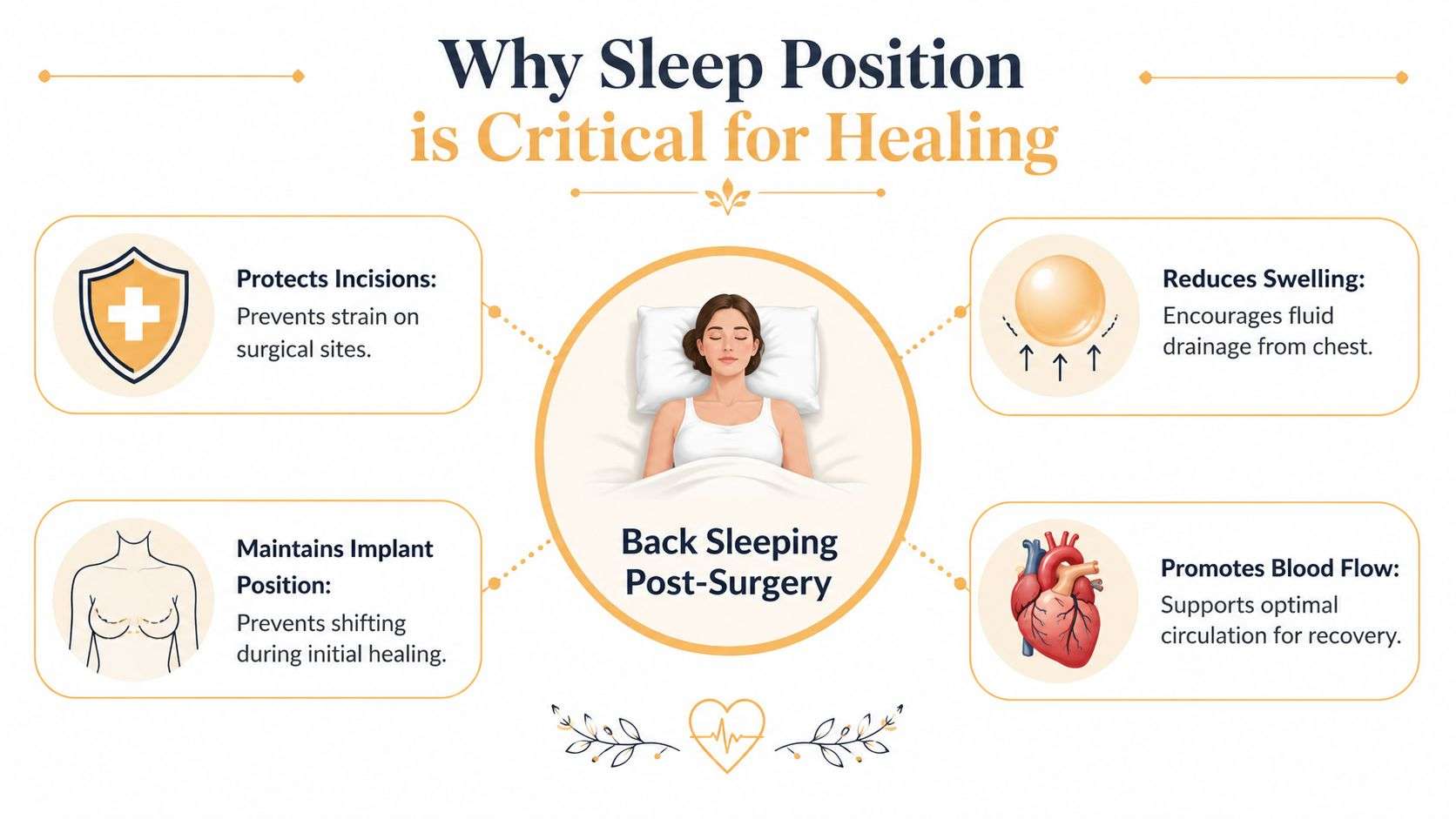
The core rule is straightforward. The gold-standard methodology for sleeping after breast implants is to sleep exclusively on your back with your upper body inclined at a strict 30 to 45-degree angle for the first 4 to 6 weeks post-surgery, because this inclined position uses gravity to minimize hydrostatic pressure on the surgical sites, reducing swelling and helping prevent implant shifting before capsule formation, according to guidance on sleeping comfortably after breast augmentation.
Why elevation matters
When the upper body is raised, fluid is less likely to pool in the chest. That can make the area feel less tight and help keep postoperative swelling from becoming more pronounced than it needs to be. Patients often notice that nights are easier when they maintain a stable incline instead of sliding flatter as the night goes on.
Sleeping flat too soon usually causes problems, not progress. It can increase pressure across the chest and make it harder to get up without straining sore muscles and incisions.
A useful setup often includes:
- A stable incline: A wedge pillow or recliner is more reliable than loose stacked pillows.
- Lower-back support: A pillow under the knees can make the raised position easier to tolerate.
- Movement control: Side bolsters or rolled blankets help reduce accidental turning.
Why back sleeping protects your result
The healing chest doesn't respond well to uneven pressure. Side sleeping can place more load on one breast than the other, and stomach sleeping places direct pressure across the front of the chest. Early on, that's exactly what you want to avoid.
Back sleeping also protects the incision line from unnecessary strain. That matters whether the surgery involved implants, revision work, a lift component, or tissue reshaping. The less torque and compression across healing tissue, the smoother recovery tends to feel.
Practical rule: If a position makes you brace, twist, or push through your chest to stay comfortable, it's probably not the right position for this stage of healing.
Your Post-Surgery Sleep Timeline and Positions
Recovery is easier when you think about sleep in phases. The position that protects you in the first several days is still important later, but your routine becomes more manageable once soreness decreases and your surgeon starts assessing readiness for transition.

The first two weeks
This is usually the most structured part of the process. Patients must sleep on their back with their upper body propped up at a 30 to 45-degree angle for the first four to six weeks following breast augmentation to minimize swelling and ensure proper implant placement, and they should avoid sleeping on their side completely until their surgeon provides clearance, according to post-surgery sleep guidance after breast augmentation.
For the first nights, many patients find that a recliner is simpler than a bed because it keeps the torso at an incline and discourages rolling. If you're deciding between setups, this overview of the benefits of sleeping in a recliner can help you think through what makes that option easier during recovery.
What usually works best in this phase:
- Sleep centered on your back. Don't rotate your hips and shoulders into a half-side position.
- Keep the chest raised. A wedge pillow or recliner should hold the angle consistently.
- Wear the support bra exactly as directed. Early support matters while swelling is still active.
- Keep essentials at arm's reach. Water, medications, your phone, and a small snack can prevent unnecessary reaching at night.
If you wake up and realize you shifted slightly, don't panic. Gently reposition yourself and re-establish support under your upper body and arms.
Many patients also do better if they rehearse how they'll get in and out of bed before surgery. Log rolling to the side and using lower-body momentum is often more comfortable than trying to sit straight up through the chest.
For a broader healing roadmap beyond sleep, the week-by-week breast augmentation recovery guide can help you understand how these early restrictions fit into the rest of recovery.
Weeks three through six
This phase feels better, but it still requires discipline. The most common mistake here is assuming less soreness means the tissue is ready for normal sleep. Comfort improves before healing is complete.
During this period, the goal is consistency. Continue sleeping on your back at an incline and avoid side sleeping unless your surgeon specifically clears it. The compression bra also remains part of nighttime support during the early recovery window. The routine can feel repetitive, but this is the stretch when “testing” side sleeping often creates setbacks in comfort.
A few trade-offs become obvious in these weeks:
| What feels easier | What usually works better |
|---|---|
| Lying flatter because swelling seems improved | Maintaining elevation until cleared |
| Loosening support because the chest feels less tender | Keeping steady nighttime support |
| Turning partway onto one side for comfort | Using pillows to stay centered |
Patients who plan for boredom do better than patients who negotiate with the process each night. A reliable setup, a front-closing top, and the same bedtime arrangement every evening reduce the urge to experiment.
After six weeks and the transition period
Recovery becomes more individualized. Some patients are cleared to start transitioning earlier than others, while some need more time depending on swelling, incision healing, implant position, or the specifics of the procedure.
The shift back to side sleeping should be gradual, not abrupt. The transition from strict back-sleeping to side-sleeping typically requires a minimum wait of 6 to 8 weeks, and stomach sleeping is usually later than that. When patients are cleared, the first attempts should be supported and brief rather than a full return to an old sleep habit.
A smart transition often looks like this:
- Start slightly reclined: Don't move from inclined back sleeping straight to a flat side position.
- Protect the breast: Use support around the chest so gravity doesn't pull on healing tissue.
- Stop if you feel pulling or pressure: Discomfort is useful information.
Stomach sleeping belongs much later in recovery than most patients hope. Even when the chest feels normal during the day, direct nighttime pressure can still be too much.
Essential Tools and Tips for Comfortable Recovery
A good recovery setup should do two things at once. It should protect the chest and make the night tolerable enough that you can sleep. Most patients need more than one pillow and more than one strategy.

Build a recovery nest
Think in layers rather than single items. A wedge creates incline. Side pillows keep you from rolling. A pillow under the knees reduces lower-back tension. A small neck pillow can help if the inclined position makes your neck feel stiff.
If you're shopping before surgery, this guide to choosing the right bed support pillow can help you compare support styles in a practical way.
The most useful setup usually includes:
- A wedge pillow or recliner: This creates the base position.
- Side barriers: Body pillows or firm pillows on each side reduce rolling.
- Knee support: A pillow under the knees often makes the incline easier to maintain.
- Bedside essentials: Water, lip balm, medication, tissues, and a charger save unnecessary movement.
Small adjustments that make nights easier
Clothing matters more than patients expect. Soft, front-closing sleepwear is easier than anything you need to pull overhead. It also makes late-night bra adjustments less awkward.
Once you're cleared to move toward side sleeping, support becomes more specific. The transition from strict back-sleeping to side-sleeping typically requires a minimum wait of 6 to 8 weeks. When cleared, patients should use a “tuck and prop” technique by placing a firm pillow directly under their breasts to support the weight and holding another pillow to prevent rolling forward onto the chest, according to guidance on sleeping after breast augmentation surgery.
The guide on when to sleep without a bra after breast augmentation is also worth reviewing, because nighttime support often changes in stages rather than all at once.
Set your room up so you can move less, not more. The fewer times you have to reach, twist, or brace with your chest, the easier the night usually goes.
How Sleep Guidance Varies by Breast Procedure
Generic sleep instructions miss an important point. Not every breast procedure creates the same recovery pattern. The basic goal is still to protect healing tissue and avoid pressure, but the reason a patient feels discomfort at night can differ depending on what was done.
Breast augmentation
After breast augmentation, positioning is closely tied to swelling control and implant settling. Patients are protecting the newly created pocket and avoiding pressure that could affect early positioning. That's why surgeons tend to be strict about incline, back sleeping, and avoiding side pressure in the early phase.
Patients with larger implants or tighter tissues may also feel more chest tightness at night. In those cases, comfort tools matter even more because the position has to be maintained consistently.
Breast implant revision and implant removal
Revision recovery can be more nuanced than primary augmentation. Some patients are healing from capsule work, pocket adjustment, implant exchange, or correction of visible asymmetry or malposition. According to Dr. Mark Anton's professional profile, Dr. Mark Anton, the medical director of OC Breast Surgery, specializes in correcting capsular contracture through surgical capsulectomy followed by strategic implant selection to restore softness and natural breast contour.
That matters for sleep because revision tissue may be less forgiving early on. If a pocket has been adjusted or scar tissue has been removed, side pressure can feel wrong quickly. Patients recovering from breast implant removal may not be protecting implant position, but they still need to protect reshaped tissue, incisions, and swelling patterns.
A few practical differences often show up:
- Revision patients: Need to be especially careful about uneven pressure if pocket position was corrected.
- Implant removal patients: Often need support for tenderness and contour adjustment even without implants in place.
- Exchange patients: May feel both swelling and tightness from the new implant and from internal revision work.
Super Breast Lift breast reduction and reconstruction
Lift-based procedures, including the Super Breast Lift, can change how the chest feels when lying down because tissue has been repositioned and supported in a new shape. One recovery comfort point is that Dr. Mark Anton's signature Super Breast Lift procedure eliminates the need for postoperative drains due to his precise internal tissue suspension technique, as described on the Super Breast Lift page. For many patients, not having drains can make early sleep setup more manageable.
Breast reduction and breast reconstruction also bring their own considerations. The position may be similar, but the reasons differ. Reduction patients often need to limit pull across reshaped tissue. Reconstruction patients may have tighter chest mechanics and may need especially careful support when getting in and out of bed.
Red Flags During Recovery When to Call Your Surgeon
Most sleep discomfort after breast surgery is expected. Trouble finding a comfortable position, mild tightness, and waking up stiff are common. What matters is recognizing when symptoms move beyond normal recovery and need direct medical attention.
Symptoms that deserve a call
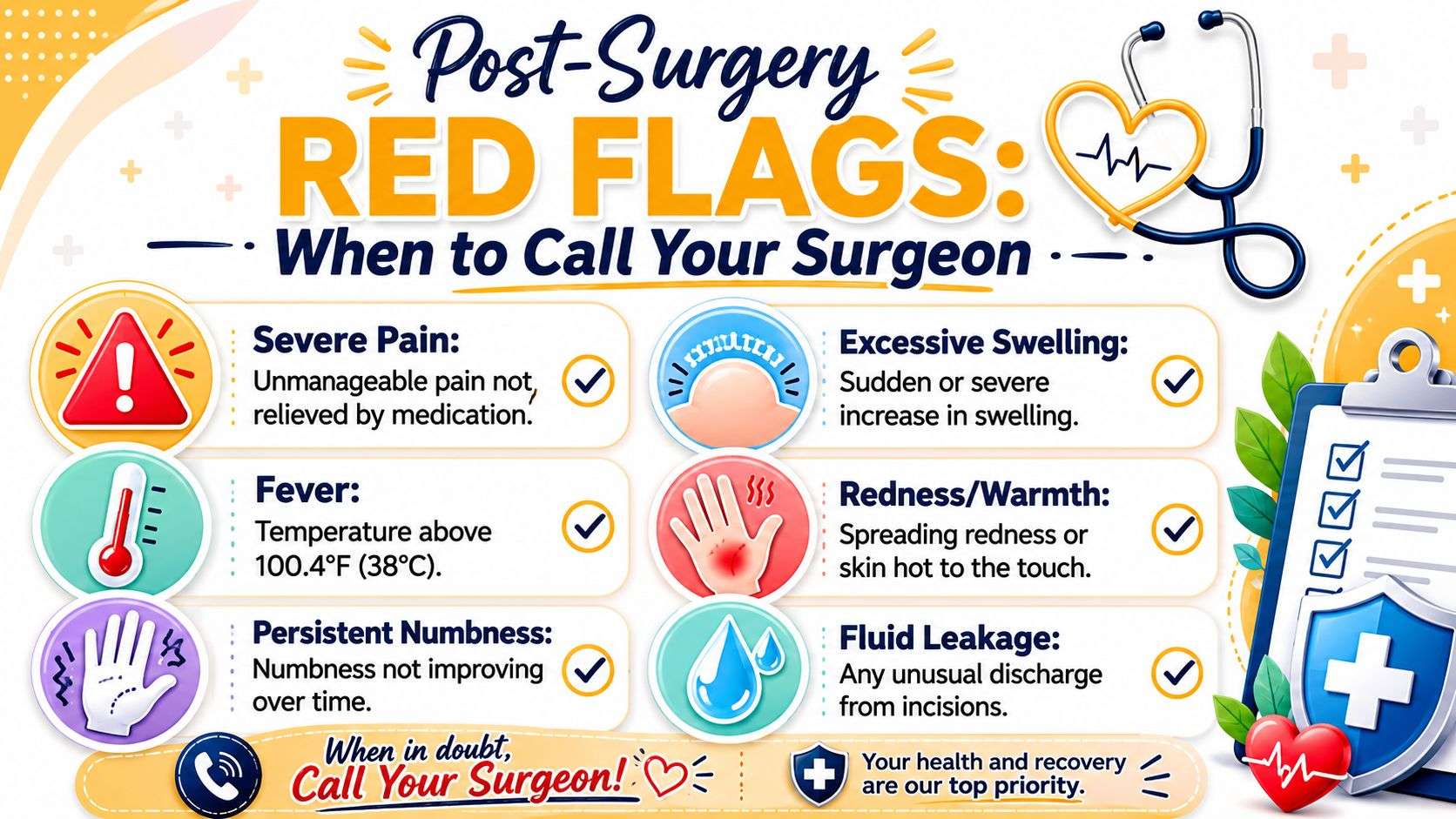
Contact your surgeon if you notice any of the following:
- A sudden increase in pain: Especially if one breast becomes much more painful than the other or pain isn't responding as expected.
- Rapid swelling: New fullness, tightness, or visible enlargement that seems to appear quickly.
- Spreading redness or unusual warmth: Skin that looks increasingly inflamed or feels hot to the touch.
- Fever: A temperature above 101°F deserves prompt attention.
- Fluid or drainage from an incision: Especially if it's new, persistent, or appears abnormal.
- A visible change in shape or position: If one breast suddenly looks higher, firmer, more distorted, or otherwise different.
Why early communication matters
Patients sometimes hesitate because they don't want to overreact. That's understandable, but it's safer to ask than to wait and wonder. A brief call can clarify whether what you're feeling fits the expected recovery pattern or needs to be examined sooner.
New asymmetry, escalating pain, or sudden swelling shouldn't be treated as a sleep-position problem until your surgeon says it is.
Recovery instructions online are general education, not a replacement for personalized care. If you're unsure whether your sleeping position is contributing to a symptom or masking something more important, reach out to your own surgical team.
Schedule a consultation with OC Breast Surgery in Newport Beach to learn which breast surgery option may be right for your goals.