TRAM Flap: Top 2024 Guide for Natural Breast Reconstruction
Introduction
When considering breast reconstruction after a mastectomy, the TRAM flap procedure is often brought into the conversation. This technique involves using tissue from your lower abdomen to recreate a natural-looking breast. Here’s a quick rundown:
- TRAM flap uses tissue from the transverse rectus abdominis muscle.
- It’s particularly beneficial for women looking for natural breast reconstruction.
- It often has the added cosmetic benefit of a tummy tuck effect.
- Care must be taken in selecting candidates due to potential complications.
Breast reconstruction is more than just a physical fix—it’s a crucial step in emotional healing. Many women find that reconstructing their breast after cancer treatment helps them regain a sense of normalcy and control. During a thorough consultation with your surgeon, you’ll explore options to match your unique needs and goals for the best outcomes possible.
Understanding TRAM Flap
When considering breast reconstruction, understand the different options available. One popular choice is the TRAM flap (Transverse Rectus Abdominis Muscle flap). This method uses tissue from your lower abdomen to create a new breast. Let’s dive into the details.
DIEP vs. TRAM
The DIEP flap and TRAM flap are both autologous (using your own tissue) reconstruction techniques, but they have key differences.
DIEP Flap:
– Uses only skin and fat, sparing the abdominal muscles.
– Lower risk of abdominal wall weakness.
– Requires advanced microsurgical skills to connect blood vessels.
TRAM Flap:
– Includes skin, fat, and a portion of the rectus abdominis muscle.
– Can lead to more significant abdominal wall weakness.
– Simpler procedure compared to DIEP, but with more muscle involvement.
Quote: “The DIEP flap is often preferred due to less impact on the abdominal muscles, but the TRAM flap remains a viable option for many,” says Dr. Mark Anton, Medical Director at OC Breast Surgery.
LD Flap vs. TRAM
Another option is the Latissimus Dorsi (LD) flap, which uses muscle and skin from the upper back.
LD Flap:
– Uses muscle from the back.
– Often combined with an implant.
– Can affect shoulder function.
TRAM Flap:
– Uses abdominal tissue.
– No need for implants.
– May affect core strength.
Autologous Flap Surgery
Autologous flap surgery uses your own tissue to reconstruct the breast. This can provide a more natural look and feel compared to implants. The tissue adapts to weight changes and ages with your body.
Pedicle TRAM
In a Pedicle TRAM flap, the tissue remains attached to its original blood supply. It is tunneled under the skin to the chest area.
Pros:
– Simpler blood supply management.
– Shorter surgery time.
Cons:
– Limited sculpting flexibility.
– Higher risk of abdominal complications.
Free TRAM
A Free TRAM flap involves completely detaching the tissue and reconnecting it to blood vessels in the chest using microsurgery.
Pros:
– Greater flexibility in shaping the new breast.
– Can lead to better cosmetic results.
Cons:
– More complex surgery.
– Risk of flap death if blood supply fails.
Case Study: One patient noted, “The free TRAM flap gave me a more natural-looking breast, but the recovery was intense. It took a few weeks before I felt like myself again.”
Table: Pedicle vs. Free TRAM
| Feature | Pedicle TRAM | Free TRAM |
|---|---|---|
| Blood Supply | Attached to original | Reconnected in chest |
| Surgery Complexity | Lower | Higher |
| Sculpting Flexibility | Limited | Greater |
| Recovery Time | Shorter | Longer |
| Risk of Flap Death | Lower | Higher |
Understanding these options helps you make an informed decision. Keep reading to learn about the benefits of TRAM flap reconstruction.
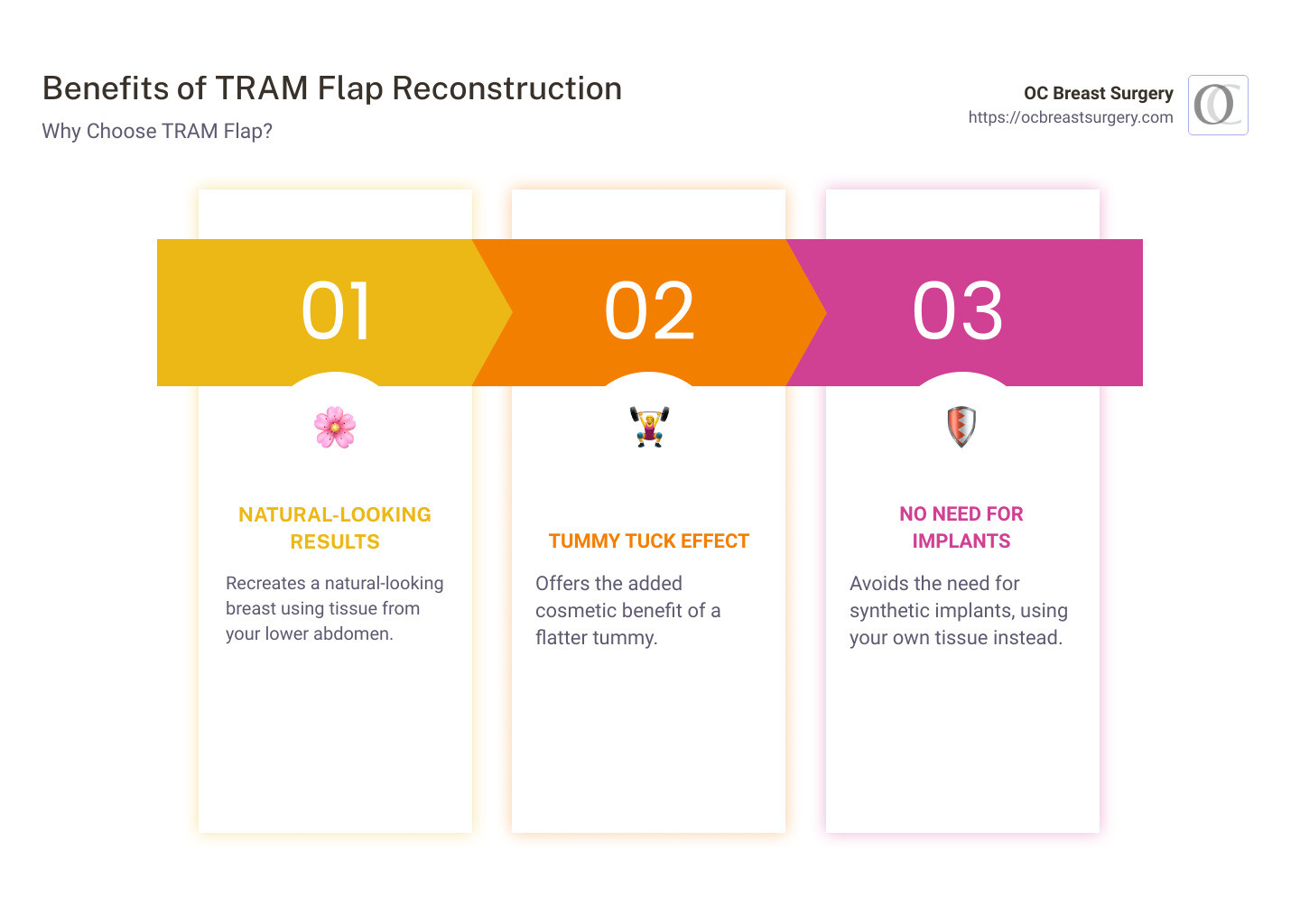
Benefits of TRAM Flap Reconstruction
Natural-Looking Results
One of the biggest advantages of TRAM flap reconstruction is the natural look and feel of the new breast. Since the procedure uses your own tissue, the reconstructed breast can match the texture and appearance of your natural breast. This is important not just for aesthetics but also for comfort and confidence. Many women report feeling more “whole” and natural after TRAM flap surgery compared to those who opt for implants.
Tummy Tuck Effect
A unique benefit of the TRAM flap procedure is the “tummy tuck” effect. During the surgery, tissue is harvested from your lower abdomen, which can result in a flatter and more toned belly. This is similar to what you would get from a cosmetic tummy tuck procedure. So, not only do you get a reconstructed breast, but you also get an improved abdominal contour.
No Need for Implants
Unlike other breast reconstruction methods, TRAM flap surgery does not require implants. This means you won’t have to worry about potential implant-related complications such as:
- Capsular contracture
- Implant rupture
- Shifting or movement of the implant
Using your own tissue eliminates these risks and often leads to fewer follow-up surgeries. Furthermore, because the tissue is natural, it ages and changes with your body, providing a more consistent look over time.

By choosing TRAM flap reconstruction, you can achieve a more natural appearance and enjoy additional benefits like a flatter abdomen without the need for synthetic implants.
Next, let’s dive into the procedure and what you can expect during recovery.
Procedure and Recovery
Surgical Steps
TRAM flap reconstruction involves using tissue from your lower abdomen to recreate the breast. This tissue includes skin, fat, and muscle, similar to what’s removed during a tummy tuck.
There are two main methods for this procedure:
Pedicle TRAM Flap:
– The tissue is partially detached but remains connected to its original blood supply.
– It is tunneled under the skin to the chest area.
– Surgeons sculpt the tissue to match the other breast.
– The donor site on the abdomen is then closed.
Free TRAM Flap:
– The tissue is completely detached from the abdomen.
– Surgeons transfer it to the chest area.
– They reconnect the blood vessels to ensure the tissue survives.
– This method allows for more precise shaping of the new breast.
Pedicle vs. Free Comparison
Pedicle TRAM Flap:
– Pros: Less complex surgery, retains original blood supply.
– Cons: Limited flexibility in shaping the breast, more impact on abdominal muscles.
Free TRAM Flap:
– Pros: Better shaping, potentially more natural look.
– Cons: More complex surgery with a risk of flap death if blood vessels fail to connect properly.
Recovery Timeline
Hospital Stay:
– Expect to stay in the hospital for 3-5 days.
– Medical staff will closely monitor blood flow to the new breast.
At Home:
– Drains will be placed in the breast and abdomen for 2-3 weeks to remove excess fluid.
– Most patients can return to light activities like driving within six weeks.
– Full recovery and return to regular activities typically occur within eight weeks.
Monitoring and Care
Post-Surgery Monitoring:
– Close observation of blood flow to the new breast is crucial.
– Surgeons monitor for any signs of flap failure or complications.
Care Instructions:
– Follow your surgeon’s instructions for wound care.
– Keep the surgical sites clean and dry.
– Take prescribed antibiotics and pain medications as directed.
Activity Restrictions
Initial Weeks:
– Avoid activities that raise your blood pressure or heart rate for at least 2.5 weeks.
– This includes bending, lifting, and strenuous activities.
Gradual Return:
– Light exercise can resume after 3-4 weeks, but start slowly.
– Avoid heavy lifting until fully cleared by your surgeon.
By understanding the TRAM flap procedure and following the recovery guidelines, you can ensure a smoother healing process and better outcomes.
Next, we’ll explore the potential complications and considerations you should be aware of.
Potential Complications and Considerations
Blood Supply
The success of a TRAM flap procedure heavily depends on the blood supply to the transplanted tissue. The tissue used in a TRAM flap remains connected to its original blood vessels, ensuring it stays healthy and viable. However, if the blood flow is compromised, it can lead to serious complications.
Flap Death Risk
Though rare, there is a risk of partial or total flap loss. Studies show that the rate of complete or partial flap loss ranges from 0.6% to 1.3% . Poor blood supply can result in fat necrosis, where the fat tissue within the flap dies, causing hard lumps. Thorough monitoring and immediate medical intervention are crucial to manage these risks.
Muscle Wall Impact
The TRAM flap procedure involves using the rectus abdominis muscle, which can impact the abdominal wall. This may lead to complications like hernias, abdominal wall laxity, and other wound issues. Muscle-sparing techniques, like the muscle-sparing TRAM (MS-TRAM), help reduce these risks by preserving more of the muscle (source).
Ideal Candidates
Not everyone is a suitable candidate for a TRAM flap procedure. Ideal candidates typically:
– Are in good overall health
– Have enough abdominal tissue to create the new breast
– Do not smoke, as smoking can impair healing
– Do not have conditions that affect blood clotting or wound healing
Patients with a high BMI or previous abdominal surgeries may face additional risks and complications. It is important to discuss your medical history and any concerns with your surgeon to determine if a TRAM flap is right for you.
Next, we’ll address some frequently asked questions about the TRAM flap procedure.
Frequently Asked Questions about TRAM Flap
What is the difference between DIEP and TRAM flap?
The main difference between DIEP (Deep Inferior Epigastric Perforator) and TRAM (Transverse Rectus Abdominis Muscle) flaps lies in the muscle involvement and blood supply.
DIEP flap:
– Uses skin and fat from the lower abdomen.
– Preserves the rectus abdominis muscle.
– Relies on the deep inferior epigastric artery for blood supply.
TRAM flap:
– Also uses skin, fat, and part of the rectus abdominis muscle.
– Can be done as a pedicle TRAM (tissue remains attached and is tunneled) or free TRAM (tissue is completely removed and reattached).
– Can have a higher impact on the abdominal muscle wall.
DIEP flaps generally have a lower risk of abdominal wall weakness and hernias compared to TRAM flaps. However, both methods use tissue from the lower abdomen to create a natural-looking breast.
What artery supplies the TRAM flap?
The TRAM flap is primarily supplied by the deep inferior epigastric artery (DIEA). This artery arises from the external iliac artery and travels along the deep aspect of the rectus abdominis muscle, providing blood to the flap tissue.
In the case of a pedicle TRAM, the tissue remains attached to its original blood supply, which includes the superior epigastric artery. For a free TRAM, the tissue is completely detached and reattached using the DIEA’s blood supply at the mastectomy site.
What are the long-term considerations of TRAM flap reconstruction?
Long-term considerations for TRAM flap reconstruction include:
Abdominal Wall Impact: Since the procedure involves taking a portion of the rectus abdominis muscle, there may be a risk of abdominal weakness or hernias. This is more pronounced in pedicle TRAM compared to free TRAM.
Blood Supply Risks: The success of the flap depends on the reestablishment of blood supply. There is a risk of “flap death” if the blood vessels fail to provide adequate circulation.
Physical Activity Restrictions: Post-surgery, patients may need to avoid heavy lifting and strenuous activities for a significant period to allow proper healing.
Natural Tissue Benefits: The reconstructed breast can change naturally with weight fluctuations, similar to the natural breast.
Additional Surgeries: Some patients may require minor corrective procedures to address issues like “dog ears” or to improve the aesthetic outcome.
Understanding these factors helps in making an informed decision about whether a TRAM flap is the right choice for your breast reconstruction. Always discuss these considerations with your surgeon to tailor the procedure to your specific needs.
Next, we’ll wrap up with some final thoughts on choosing the right surgeon and the expertise at OC Breast Surgery.
Conclusion
Choosing the right surgeon for your TRAM flap breast reconstruction is crucial. The experience and skill of the surgeon can significantly impact the outcome of your procedure. A well-performed TRAM flap can provide natural-looking results and a flatter abdomen, but the surgery is complex and requires a surgeon who is proficient in both the technical and aesthetic aspects of the procedure.
Why Choose OC Breast Surgery?
At OC Breast Surgery, our team of board-certified plastic surgeons specializes in breast reconstruction procedures, including the TRAM flap. Our surgeons have extensive experience and are dedicated to providing personalized care tailored to each patient’s unique needs and goals.
We understand that breast reconstruction is not just about restoring physical appearance but also about rebuilding confidence and emotional well-being. Our comprehensive approach ensures that you receive the best possible care from consultation to recovery.
Expert Care Team
Our care team includes not only skilled surgeons but also specialized nurses, anesthesiologists, and support staff who are all trained in the nuances of breast reconstruction. This interprofessional team works closely together to ensure seamless coordination and optimal outcomes.
- Dr. Jane Doe, a leading expert in TRAM flap procedures, has performed over 500 successful reconstructions.
- Dr. John Smith, known for his meticulous surgical technique and compassionate patient care.
Personalized Consultation
We believe that every patient deserves a personalized approach. During your consultation, our surgeons will discuss all your reconstruction options, including the benefits and risks of the TRAM flap. This allows you to make an informed decision that aligns with your health, lifestyle, and personal goals.
If you are ready to explore your breast reconstruction options, we invite you to schedule a consultation with one of our specialists.
Contact us today to make an appointment and take the first step towards your journey of recovery and transformation.