
Breast Augmentation: Top Benefits & Risks in 2024
Enhance Your Confidence with Breast Augmentation
If you’re curious about breast augmentation, you’re not alone. This procedure, also known as augmentation mammaplasty, involves using breast implants or fat transfer to increase the size, shape, and volume of your breasts. Whether you’re looking to improve your self-image, correct asymmetry, or restore lost volume due to aging or pregnancy, breast augmentation can be a life-changing decision.
Quick Snapshot:
- What it is: A surgery to enhance breast size using implants or fat transfer.
- What it can do: Increase fullness, improve balance, and boost self-confidence.
- What it can’t do: It doesn’t correct severe breast sagging (a lift may be required).
I’m Dr. Mark Anton, a board-certified plastic surgeon with over 33 years of experience in breast augmentation and breast reconstruction. I have dedicated my career to helping women achieve their ideal figure and regain confidence.
What is Breast Augmentation?
Breast augmentation, also known as augmentation mammaplasty, is a cosmetic surgery that enhances the size and shape of the breasts. This procedure can involve breast implants or fat transfer to increase breast volume, improve breast shape, and correct asymmetry.
Types of Breast Implants
When considering breast augmentation, it’s important to understand the different types of implants available:
- Saline Implants: These are filled with sterile salt water. If they leak, the body absorbs the saline solution naturally. They provide a uniform shape and firmness.
- Silicone Implants: Filled with silicone gel, these implants feel more like natural breast tissue. If they leak, the gel may remain within the shell or escape into the breast pocket.
- Structured Saline Implants: These have an inner structure that makes them feel more natural than traditional saline implants.
- Gummy Bear Implants: These form-stable implants maintain their shape even if the shell breaks. They are firmer and have a thicker silicone gel.
- Round Implants: These provide more fullness and projection, especially in the upper part of the breast.
- Smooth Implants: These are the softest and can move with the breast, giving a natural feel.
- Textured Implants: These develop scar tissue that sticks to the implant, reducing the risk of repositioning.
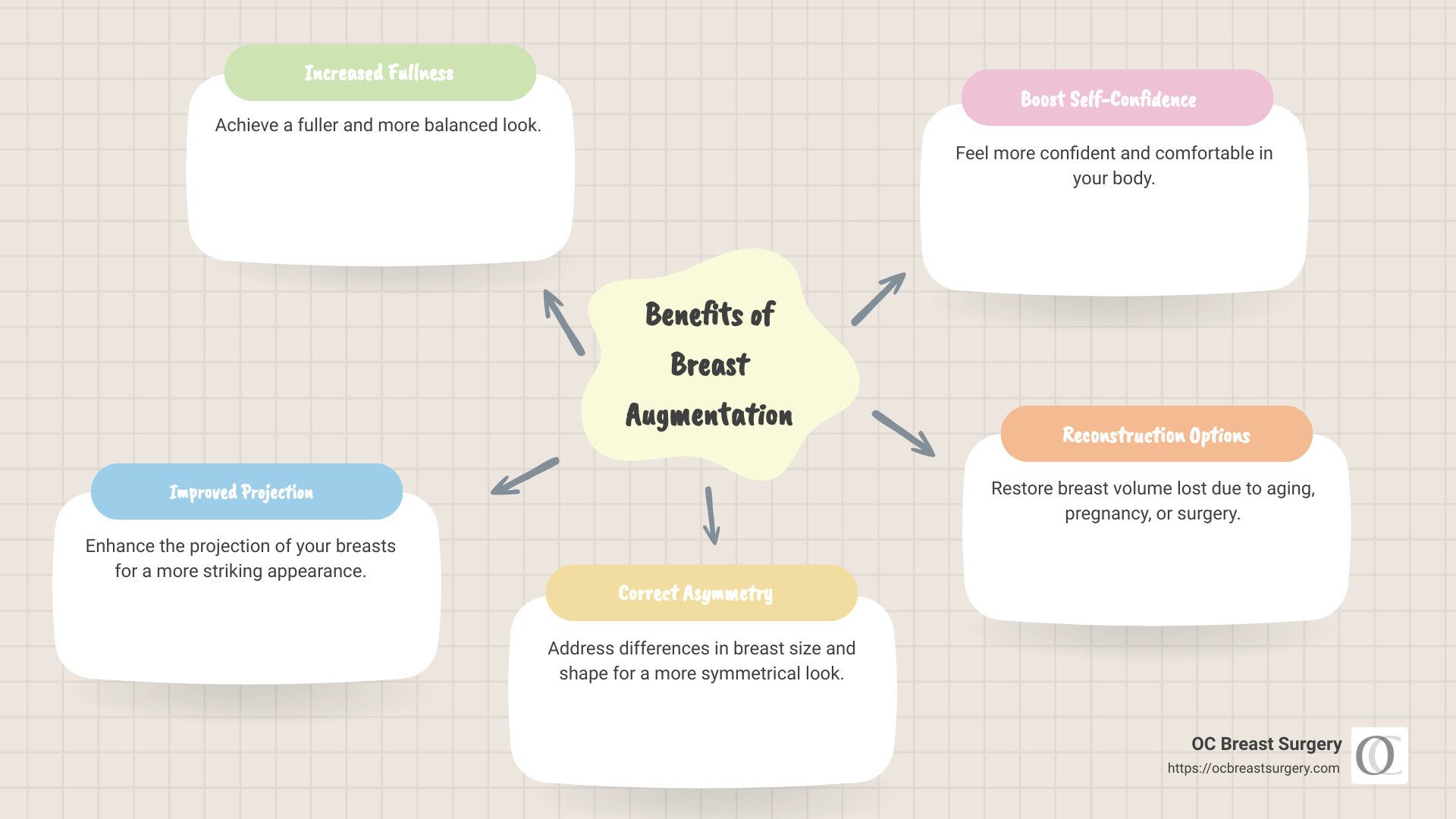
Benefits of Breast Augmentation
Breast augmentation offers numerous benefits:
- Fullness and Projection: Implants can add fullness to the upper part of the breasts, enhancing their overall projection.
- Balance and Symmetry: It can correct asymmetry, making both breasts look more balanced.
- Improved Self-Image: Many women report feeling more confident and satisfied with their appearance after the procedure.
- Breast Reconstruction: It can be a crucial part of reconstructive surgery for those who have had mastectomies or other breast surgeries.

Breast augmentation is not just about enlarging the breasts; it’s about achieving a more balanced and aesthetically pleasing figure. By choosing the right type of implant and working with an experienced surgeon, you can achieve natural-looking results that enhance your body and boost your confidence.
Next, we will delve into the detailed steps of the breast augmentation procedure, including pre-surgery preparation, surgical techniques, and post-surgery recovery.
The Breast Augmentation Procedure
Pre-Surgery Preparation
Preparing for breast augmentation involves several key steps to ensure a safe and successful procedure.
Medical Evaluation: Your journey begins with a comprehensive medical evaluation. This includes discussing your goals, examining your breast tissue, and reviewing your medical history.
Medication Adjustments: Your surgeon may advise you to stop taking certain medications a few days or weeks before surgery. For example, avoid aspirin and other medications that can increase bleeding.
Outpatient Procedure: Most breast augmentations are outpatient procedures, meaning you can go home the same day. Arrange for someone to drive you home and stay with you for at least the first night.
General Anesthesia: Typically, the surgery is performed under general anesthesia, so you’ll be asleep and pain-free during the procedure. Your surgeon will discuss anesthesia options with you.
Surgical Techniques
The surgical technique for breast augmentation varies based on your individual needs and the type of implants used.
- Incision Options:
- Inframammary Incision: Made in the crease under your breast. This is the most common method as it offers good access for implant placement and hides scars well.
- Peri-Areolar Incision: Made around the edge of the areola. This method can be less noticeable but might affect breastfeeding.
- Trans-Axillary Incision: Made in the armpit. This avoids scarring on the breast itself but can be more challenging for precise implant placement.
Transumbilical Incision: Made through the navel. This is the least common due to its complexity and limited implant options.
Implant Placement:
- Subglandular Placement: The implant is placed behind the breast tissue but in front of the chest muscle. This method can be less painful but might look less natural in thinner women.
- Submuscular Placement: The implant is placed behind the chest muscle. This method often looks more natural and has a lower risk of capsular contracture (scar tissue forming around the implant).
Post-Surgery Recovery
Recovery from breast augmentation requires careful attention to post-operative care instructions.
- Initial Care:
- Your breasts will be covered with gauze and you may have drainage tubes to remove excess fluid. These will be removed in a few days.
You might need to wear a surgical bra to support your breasts as they heal.
Pain Management:
- Over-the-counter pain relievers like acetaminophen can help with discomfort. Your doctor may also prescribe stronger pain medication if needed.
Swelling and bruising are common and should subside over a few weeks.
Activity Restrictions:
- Avoid heavy lifting and strenuous activities for up to six weeks.
Follow your surgeon’s instructions for returning to normal activities and exercise.
Monitoring for Complications:
- Watch for signs of infection, such as warmth, redness, or fever, and contact your surgeon if these occur.
- Attend all follow-up appointments to ensure proper healing and implant positioning.

By following these steps and maintaining good communication with your surgeon, you can achieve a smooth recovery and enjoy the results of your breast augmentation.
Next, we will explore the potential risks and complications associated with breast augmentation to help you make an informed decision.
Risks and Complications
While breast augmentation can enhance your appearance and boost your confidence, it’s important to be aware of the potential risks and complications. Here’s what you need to know:
Breast Pain
It’s common to experience some degree of pain after surgery. This discomfort typically subsides within a few weeks. However, some women may experience chronic pain, which should be discussed with your surgeon.
Sensation Changes
Changes in nipple and breast sensation can occur. Some women report increased sensitivity, while others may experience numbness. These changes can be temporary or, in some cases, permanent.
Scar Tissue
Scar tissue, known as capsular contracture, can form around the implant. This can distort the shape of the breast and may cause discomfort. In severe cases, additional surgery might be required to remove or replace the implant.
Bleeding
Bleeding during or after the surgery is a potential risk. If significant bleeding occurs, another surgical procedure may be needed to control it.
Infection
Infections can develop after surgery. Signs include warmth, redness, and fever. If you suspect an infection, contact your surgeon immediately. Infections might require antibiotics or further surgical intervention.
Asymmetry
While the goal is to achieve symmetry, perfect symmetry is not always possible. Some women may notice differences in the size or shape of their breasts post-surgery.
Anaplastic Large-Cell Lymphoma (AALCL)
AALCL is a rare type of cancer associated with breast implants, particularly those with textured surfaces. The FDA has identified this potential risk, although it remains very low. Regular follow-ups with your surgeon are crucial for early detection.
Breast Implant Illness
Some women report systemic symptoms such as fatigue, memory loss, skin rash, and “brain fog” after getting breast implants. This condition, known as breast implant illness, is not fully understood, but removing the implants may alleviate the symptoms.
Rupture and Silent Rupture
Implants can rupture. If saline implants rupture, the saline is safely absorbed by the body, causing the implant to deflate. Silicone implants, however, may experience a “silent rupture,” where the silicone gel leaks slowly without noticeable symptoms. Regular MRI or ultrasound scans are recommended to detect silent ruptures.
Understanding these risks and complications can help you make a more informed decision about breast augmentation. Always discuss any concerns with your surgeon and follow their advice for the best outcomes.
Next, we will discuss the importance of breast implant maintenance and the steps you can take to ensure your implants remain in good condition.
Breast Implant Maintenance
Maintaining your breast implants is crucial for long-term success and health. Here are the key steps:
Regular Checkups
After your breast augmentation, you’ll need regular checkups with your surgeon. These visits help monitor the condition of your implants and catch any potential issues early. Typically, you’ll have an initial follow-up a few weeks after surgery, then annually.
Mammograms
It’s safe to have mammograms with breast implants. Regular screenings are essential, especially as you age. Inform the technician about your implants so they can adjust the procedure to get clear images without damaging the implants.
MRI and Ultrasound
For silicone implants, the FDA recommends an MRI or ultrasound five to six years after your surgery, then every two to three years. These scans help detect silent ruptures, where the implant leaks without noticeable symptoms. Early detection allows for timely intervention.
Implant Replacement
Breast implants are not designed to last a lifetime. On average, they last 10-20 years, but this can vary. Regular checkups and imaging help determine if your implants need replacing. If you experience complications like rupture or capsular contracture, your surgeon may recommend replacement sooner.
Breastfeeding Challenges
Some women with implants may face challenges with breastfeeding. Although many can breastfeed successfully, discuss your plans with your surgeon beforehand. They can use techniques that minimize impact on milk production and ducts.
Maintaining your breast implants involves regular medical checkups, imaging, and being aware of potential complications. Next, we’ll answer some frequently asked questions about breast augmentation.
Frequently Asked Questions about Breast Augmentation
What is the difference between breast implants and breast augmentation?
Breast augmentation is a surgical procedure designed to enhance the size and shape of the breasts. This procedure can involve breast implants or fat transfer.
Breast implants are medical devices placed under the breast tissue or chest muscles. They come in various types like saline, silicone, and structured saline implants. The augmentation procedure uses these implants to achieve the desired breast volume and shape.
Is breast augmentation forever?
No, breast augmentation is not a permanent solution. Breast implants have a lifespan of 10-20 years on average. They don’t have an expiration date, but they may need to be replaced due to complications or changes in personal preference.
Regular checkups and imaging tests like MRI or ultrasound help monitor the condition of the implants. If issues like rupture or capsular contracture occur, replacement might be necessary sooner.
Is it OK to get breast augmentation?
Breast augmentation is generally safe when performed by a qualified plastic surgeon. However, like any surgery, it comes with risks and potential complications.
BIA-ALCL: The U.S. FDA has identified a possible link between breast implants with textured surfaces and a rare cancer called Breast Implant-Associated Anaplastic Large Cell Lymphoma (BIA-ALCL). The risk is low, but it’s important to discuss with your surgeon.
Breast Implant Illness: Some women report systemic symptoms like fatigue, memory loss, and joint pain, known as Breast Implant Illness. The exact cause is not well-understood, and symptoms may improve after implant removal.
BIA-SCC: Recently, a new concern has emerged around Breast Implant-Associated Squamous Cell Carcinoma (BIA-SCC), though it is extremely rare.
Always discuss the potential risks and benefits with your surgeon to make an informed decision.
Next, we will conclude our guide by highlighting the expertise and services offered by OC Breast Surgery.
Conclusion
At OC Breast Surgery in Newport Beach, we are dedicated to providing the highest quality care for patients considering breast augmentation. Our team, led by the esteemed Dr. Mark Anton, offers extensive experience and expertise in cosmetic and reconstructive breast surgery.
Dr. Anton has performed thousands of breast surgeries and has received top honors from several prestigious organizations. His mission is to educate patients thoroughly, ensuring they make informed decisions about their procedures. Whether you’re looking for breast augmentation, breast revision, reconstruction, or reduction, Dr. Anton’s commitment to natural-looking results sets us apart.
Breast augmentation can be a transformative procedure, enhancing your self-confidence and body image. Our approach is tailored to each individual’s needs, ensuring that every patient achieves their desired outcome. We use advanced surgical techniques and prioritize patient safety and satisfaction.
If you’re considering breast augmentation or any other breast surgery, we invite you to schedule a consultation with OC Breast Surgery. Our team will provide you with all the information you need to make the best decision for your body and your goals.
Feel free to explore our services and read about real patient experiences. We’re here to help you achieve the look you’ve always wanted, with care and expertise you can trust.
Ready to take the next step? Contact us today to schedule your consultation and learn more about how we can help you achieve your breast surgery goals.