
Fat Transfer Breast Augmentation Price: Top 5 Costs in 2024
Why Fat Transfer Breast Augmentation Might Be Right for You
If you’re curious about fat transfer breast augmentation price and how it can bring natural results through a cosmetic procedure, you’re in the right place. Fat transfer breast augmentation is increasing in popularity for those looking for a more organic way to enhance breast size.
Here’s a quick overview to address your search intent right away:
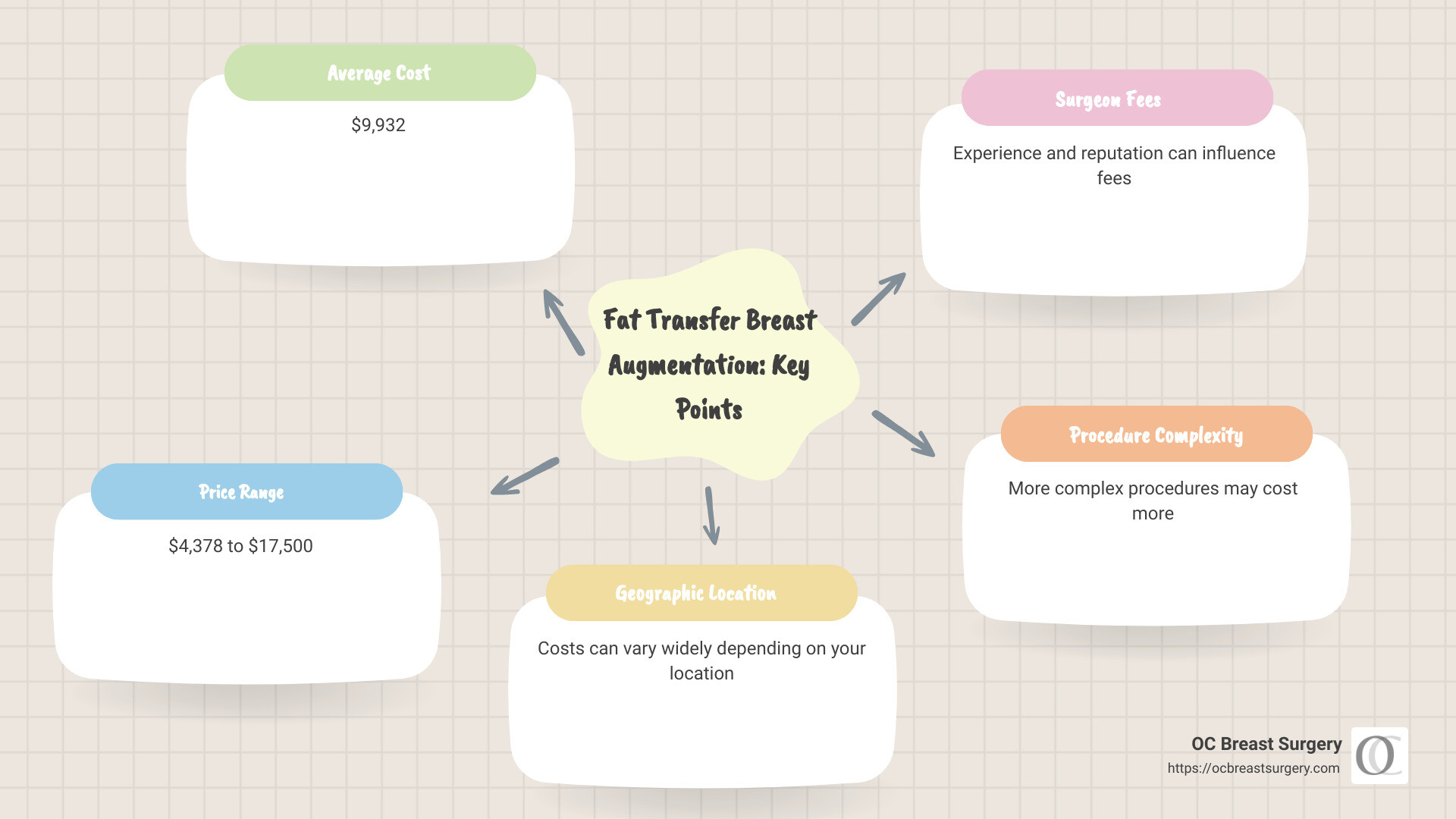
- Average Cost: $9,932
- Price Range: $4,378 to $17,500
- Factors Influencing Price: Geographic location, surgeon fees, anesthesia, and procedure complexity
Understanding these details can guide you when considering this procedure.
Hello, I’m Dr. Mark Anton, a seasoned expert in fat transfer breast augmentation price analysis and head of OC Breast Surgery. With decades of experience in breast surgeries, my aim is to educate and guide you through this transformative process. Let’s dive in to understand more about how you can achieve natural-looking results.
What Is Fat Transfer Breast Augmentation?
Fat transfer breast augmentation is a cosmetic procedure that offers a natural way to enhance breast size and shape. Unlike traditional breast augmentation that uses implants, this method uses your own body fat to achieve a more natural look and feel.
How It Works
The procedure involves three main steps:
- Liposuction: Fat is removed from areas of your body where you have excess fat, such as the thighs, abdomen, or flanks.
- Fat Processing: The extracted fat is then purified to remove any impurities like blood or other fluids. This is done using a centrifuge or a filtration process.
- Fat Injection: The purified fat is carefully injected into your breast tissue to create the desired shape and size.

Benefits
Fat transfer breast augmentation offers several benefits:
- Natural Look: Since the procedure uses your own fat, the results tend to look and feel more natural compared to implants.
- Minimal Scarring: No large incisions are made on the breasts. The only marks are tiny punctures from the liposuction and fat injection, which usually heal with minimal scarring.
- Dual Benefits: You get the added advantage of liposuction, which helps contour other parts of your body while enhancing your breasts.
- Reduced Risks: This method eliminates the potential risks associated with implants, such as rupture or capsular contracture.
By understanding these aspects, you can make an informed decision about whether this procedure is right for you.
Fat Transfer Breast Augmentation Price
Cost Breakdown by Region
The cost of fat transfer breast augmentation can vary widely depending on where you live. In large cities like New York, Los Angeles, and Atlanta, prices tend to be higher due to the high demand and cost of living. On average, the price range for this procedure is between $10,000 and $15,000. However, this is just an estimate and can change based on several factors.
For example, in Atlanta, the average cost ranges from $2,000 to $4,000 for the surgeon’s fees alone. This does not include hospital or anesthesia fees, which can add significantly to the total cost.
Factors Influencing the Cost
Several factors can influence the fat transfer breast augmentation price:
Geographic Location: Costs vary by region. For instance, procedures in San Francisco or New York are generally more expensive compared to smaller cities or towns.
Surgeon Experience: Highly experienced and reputable surgeons tend to charge more. Their expertise often results in better outcomes, which is why many people are willing to pay a premium.
Procedure Complexity: The more complex the procedure, the higher the cost. If extensive liposuction is required to harvest the fat, this will add to the overall expense.
Anesthesia Type: General anesthesia is more expensive than local anesthesia. Most fat transfer breast augmentations use general anesthesia, which increases the cost.
Facility Fees: The type of facility where the surgery is performed also affects the price. Accredited hospitals and specialized surgical centers charge for the use of their space, equipment, and staff. The longer you are in the operating room, the higher these fees will be.
Understanding these factors can help you get a clearer picture of what to expect when planning for your procedure.
Comparing Fat Transfer to Traditional Implants
Size and Shape
Fat transfer breast augmentations offer a modest size increase, typically between half to one full cup size. In contrast, traditional breast implants can achieve more significant changes, ranging from 125 cubic centimeters (cc) up to 1,200 cc. This makes implants a better option for those looking for a dramatic size increase.
Fat transfer primarily uses your own fat cells, providing a natural look and feel. However, it can’t drastically change the shape of your breast as implants can. Implants can be shaped to provide more fullness and lift, which fat transfer alone cannot achieve.
Longevity and Maintenance
The results from a fat transfer breast augmentation can be long-lasting but are not entirely predictable. Some fat cells may be reabsorbed or die over time, which can alter the final appearance. On the other hand, breast implants are more predictable in their results but come with their own set of maintenance issues. Implants need to be replaced every 10 to 15 years due to the risk of hardening or rupturing.
Fat transfer is considered permanent, but factors like weight loss can impact the results. Multiple sessions might be needed to achieve the desired look, whereas implants generally require only one surgery but will need future replacements.
Safety and Risks
Both procedures come with risks. Fat transfer uses your own fat cells, eliminating the risk of allergic reactions or rejection. However, there are still potential complications like infection at the liposuction or injection sites, breast cysts, or fat cells migrating or dying.
Implants, being foreign objects, carry risks of rupture, leakage, and capsular contracture (hardening of the breast). Implants also have a higher chance of causing complications that might require additional surgeries.
In summary, both fat transfer and traditional implants have their pros and cons. Your choice will depend on your goals, the desired size increase, and how much maintenance you’re willing to consider in the future.
Frequently Asked Questions about Fat Transfer Breast Augmentation
How Long Does Fat Transfer to Breasts Last?
One common question is about the longevity of fat transfer breast augmentation. The results are considered permanent. The relocated fat cells establish themselves in their new positions, typically becoming stable after about six months.
However, it’s important to note that some fat cells may be reabsorbed by the body over time. This process can affect the final volume, but the majority of the fat cells will remain in place for a lifetime. Factors like weight fluctuations and aging can also impact the long-term appearance of your breasts.
How Much Does Fat Transfer Breast Augmentation Cost in Different Locations?
The cost of fat transfer breast augmentation can vary widely depending on where you live. For example:
- In larger cities like New York or Los Angeles, the price can range from $8,000 to $12,000.
- In locations like Atlanta, the average cost is between $2,000 and $4,000 for the doctor’s fees alone. This does not include hospital and anesthesia fees.
Other factors influencing the cost include the surgeon’s experience, the complexity of the procedure, and the type of anesthesia used. Hospitals and professional surgical facilities will also charge for the use of their space, equipment, and materials.
What Are the Risks of Fat Transfer to Breasts?
While fat transfer breast augmentation is generally considered safe, there are some risks and potential complications. These can include:
- Infection at the liposuction or injection sites.
- Bleeding and bruising.
- Fat necrosis, where fat cells die.
- Breast cysts or microcalcification, which are small calcium deposits.
- Migration of fat cells to other areas of the body.
It’s also worth noting that some resorption or dispersion of the grafted fat over time is expected. This might require touch-up injections to maintain the desired shape.
By understanding these risks, you can better prepare for the procedure and discuss any concerns with your surgeon.
For more detailed information, schedule a consultation with our experts at OC Breast Surgery.
Conclusion
At OC Breast Surgery, we prioritize your well-being and satisfaction. Our expert team in Newport Beach, California, is dedicated to providing natural-looking results through fat transfer breast augmentation. This innovative procedure uses your own body fat to enhance your breasts, offering a more natural feel and appearance compared to traditional implants.
When considering a fat transfer breast augmentation, it’s crucial to consult with a board-certified plastic surgeon. Our specialists will guide you through the process, ensuring you understand every aspect of the procedure, from the benefits to the potential risks. We believe in transparency and providing you with all the information you need to make an informed decision.
By choosing OC Breast Surgery, you are opting for a team with extensive experience and a commitment to excellence. Our goal is to help you achieve the look you desire while ensuring your safety and comfort throughout the process.
Ready to explore your options? Schedule a consultation with our team today and take the first step towards achieving your desired breast enhancement. We look forward to helping you feel more confident and satisfied with your appearance.