
Fat transfer safe: Ultimate Guide 2025
Understanding Fat Transfer Safety: What Research Shows
Fat transfer safe procedures have gained significant popularity as a natural alternative to traditional breast implants, but understanding the real safety profile is crucial for making informed decisions.
Key Safety Facts About Fat Transfer:
- Overall major complication rate: 10.9%
- Most common issue: Asymmetry (14.4% of cases)
- Fat necrosis occurs in: 2.5% of procedures
- Infection risk: Only 1.8% of cases
- No life-threatening complications reported in major studies
- Up to 50% of transferred fat may be naturally reabsorbed by your body
Fat transfer, also known as fat grafting or lipofilling, involves a three-step process: removing fat from one area of your body through liposuction, purifying it, and then carefully re-injecting it into your breasts. While research shows that fat transfer is generally safe when performed correctly, the success and safety largely depend on proper surgical technique and choosing an experienced surgeon.
The procedure offers several advantages over traditional implants – it uses your own tissue, creates natural-looking results, and eliminates risks associated with foreign materials. However, like any surgical procedure, it comes with specific risks and considerations that every patient should understand before moving forward.
I’m Dr. Mark Anton, and after 33 years specializing in breast surgery, I’ve seen how proper technique makes fat transfer safe and effective for the right candidates. My experience has taught me that patient education is the foundation of successful outcomes, which is why understanding both the benefits and limitations of this procedure is essential for your peace of mind.
The Primary Risks and Complications of Fat Transfer
Let’s be honest about something important – no surgical procedure is completely risk-free, and fat transfer is no exception. However, the good news is that when performed by an experienced surgeon, fat transfer safe procedures have a reassuring safety profile that should give you confidence in your decision.
Recent research shows an overall major complication rate of 10.9% for fat grafting procedures. Before you let that number worry you, here’s what’s really encouraging: most of these complications are minor and easily manageable. Even more reassuring is that studies of nearly 400 fat grafting procedures found no life-threatening complications. That’s a safety record we can all feel good about.
The key to keeping your fat transfer safe lies in choosing a surgeon with the right experience and technique. After three decades of performing these procedures, I can tell you that fat transfer is truly an art form – it requires understanding how delicate fat cells behave and knowing exactly how to handle them for the best results.
If you’re interested in diving deeper into the research, you can review this scientific research on fat grafting safety to see what the latest studies reveal.
Fat Necrosis and Lumps
Fat necrosis sounds scary, but it’s actually a predictable part of how your body responds to transferred fat. When some fat cells don’t get enough blood supply in their new location, they simply don’t survive – and that’s completely normal in any tissue transplant procedure.
You’ll notice fat necrosis as firm lumps or nodules under your skin. I know this can be alarming, especially since these lumps might make you worry about more serious conditions. The good news is that experienced radiologists can easily tell the difference between fat necrosis and other concerns on imaging studies.
Here’s what the numbers tell us: fat necrosis occurs in about 2.5% of cases, and in every reported case, these lumps resolved on their own. We use a special technique called fanning where we inject tiny droplets of fat in multiple directions, which dramatically improves fat survival and reduces your risk of developing these lumps.
Fat Reabsorption and Asymmetry
Here’s something every patient needs to understand upfront: your body will naturally reabsorb some of the transferred fat. It’s not a complication – it’s just how your body works. Studies show that up to 50% of transferred fat may be reabsorbed within the first few months as your body processes the cells that didn’t establish a good blood supply.
This natural reabsorption process can lead to asymmetry, which shows up in 14.4% of cases and is actually the most common issue we see. Think of it this way – if one breast retains more fat than the other, you might notice they look slightly different in size.
We plan for this reality by slightly overcorrecting during your initial procedure, injecting a bit more fat than your final desired volume. However, since fat survival can be unpredictable, some patients do need touch-up procedures to achieve perfect symmetry. This is completely normal and something we discuss thoroughly during your consultation.
For more detailed information about what to expect with fat reabsorption, you can learn more at this resource on fat reabsorption rates.
Infection and Other Potential Issues
Infection is always a concern with any surgery, but with fat transfer safe procedures, the risk is remarkably low at just 1.8%. We maintain strict sterile conditions throughout every step – from harvesting your fat to purifying it to the final injection. Following your post-operative care instructions, especially keeping your incision sites clean and dry, plays a huge role in preventing any issues.
Beyond infection, there are a few other potential complications worth knowing about, though they’re generally uncommon. Hematomas and seromas are collections of blood or fluid that can form under your skin – they usually resolve on their own but occasionally need to be drained.
Scarring is minimal since we only make tiny incisions just a few millimeters long for both the liposuction and injection sites. We’re careful to place these in areas where they’ll be as inconspicuous as possible.
Fat embolism is extremely rare in breast fat transfer, where fat particles could potentially enter your bloodstream. We use blunt cannulas and specific techniques to avoid blood vessels, making this risk virtually negligible for breast procedures.
Pneumothorax, where air leaks into the space around your lungs, is also very rare and typically only associated with aggressive liposuction techniques near the chest area – something we carefully avoid.
During your consultation, we’ll go through each of these potential risks in detail so you feel completely informed and confident about your decision.
Procedure-Specific Safety: Breast Augmentation vs. BBL
Not all fat transfer procedures are created equal. While the basic technique remains the same, the safety profile can vary dramatically depending on where you’re having fat injected. The anatomy of different body areas and the volume of fat required play crucial roles in determining your risk level.

Is a fat transfer safe for breast augmentation?
The good news is that fat transfer safe breast augmentation has an excellent safety record when performed correctly. The key lies in our technique – we inject tiny amounts of purified fat throughout your breast tissue in what we call “micro-fat grafting.” Think of it like planting seeds in a garden – each small droplet needs space to establish its own blood supply and grow.
This careful approach does more than just keep you safe. It creates smooth, natural-looking results that feel just like your own breast tissue. Because we’re using your body’s own fat, the results integrate seamlessly with what nature gave you.
One concern that often comes up is whether fat transfer might interfere with mammograms or breast cancer detection. Here’s what you need to know: while fat necrosis can sometimes create calcifications that show up on imaging, experienced radiologists can easily tell the difference between these benign changes and concerning findings. We always recommend having a baseline mammogram before your procedure and staying current with your regular screenings afterward.
The American Society of Plastic Surgery has confirmed that there’s no increased cancer risk associated with breast fat grafting, and it doesn’t significantly interfere with cancer detection when proper protocols are followed.
Perhaps most importantly, breast fat transfer carries virtually no risk of the serious complications we see with other fat grafting procedures. The breast’s anatomy and blood supply make it one of the safest areas for fat injection. For detailed research on breast augmentation complications, you can review this systematic review of breast augmentation complications.
Understanding the High Risks of Brazilian Butt Lifts (BBL)
While breast fat transfer has an excellent safety profile, I need to be completely honest about Brazilian Butt Lifts – they’re in a different category entirely. BBL procedures unfortunately have the highest death rate of all cosmetic surgeries, and understanding why is crucial for anyone considering this procedure.
The primary danger comes from fat embolism – when fat accidentally enters large blood vessels and travels to your lungs or heart. This can happen when fat is injected into or beneath the gluteal muscle, where major blood vessels run. What makes this particularly dangerous is that it can be fatal within minutes.
For years, some surgeons injected fat deep into the muscle, thinking it would give better results. We now know this technique puts patients at extreme risk. The anatomy of the buttocks, with its large veins and complex muscle structure, makes precise injection placement absolutely critical.
Recognizing these serious risks, plastic surgery organizations worldwide have issued strict safety guidelines. The most important rule is that fat should only be injected into the subcutaneous layer – the fat layer just under your skin, above the muscle. This keeps the injection away from dangerous blood vessels.
Modern safety protocols also require ultrasound guidance during BBL procedures. This allows surgeons to see exactly where the injection tip is located in real-time, ensuring fat stays in the safe zone. Some professional organizations have even recommended against performing BBLs without this ultrasound technology.
At OC Breast Surgery, patient safety always comes first. While we don’t perform BBL procedures, understanding these risks helps illustrate why choosing an experienced, board-certified plastic surgeon is so important for any fat transfer procedure. The techniques that make fat transfer safe require both knowledge and experience to execute properly.
How to Ensure Your Fat Transfer is Safe
Making your fat transfer safe starts with understanding that this is a partnership between you and your surgical team. While we maintain the highest standards of care at our practice, your active participation in research and preparation is equally important. Think of it as building a foundation together – the stronger that foundation, the better your results and peace of mind.
The best outcomes happen when patients come to us well-informed and ready to ask the right questions. This isn’t just about checking boxes; it’s about creating an environment where everything aligns for your safety and success.
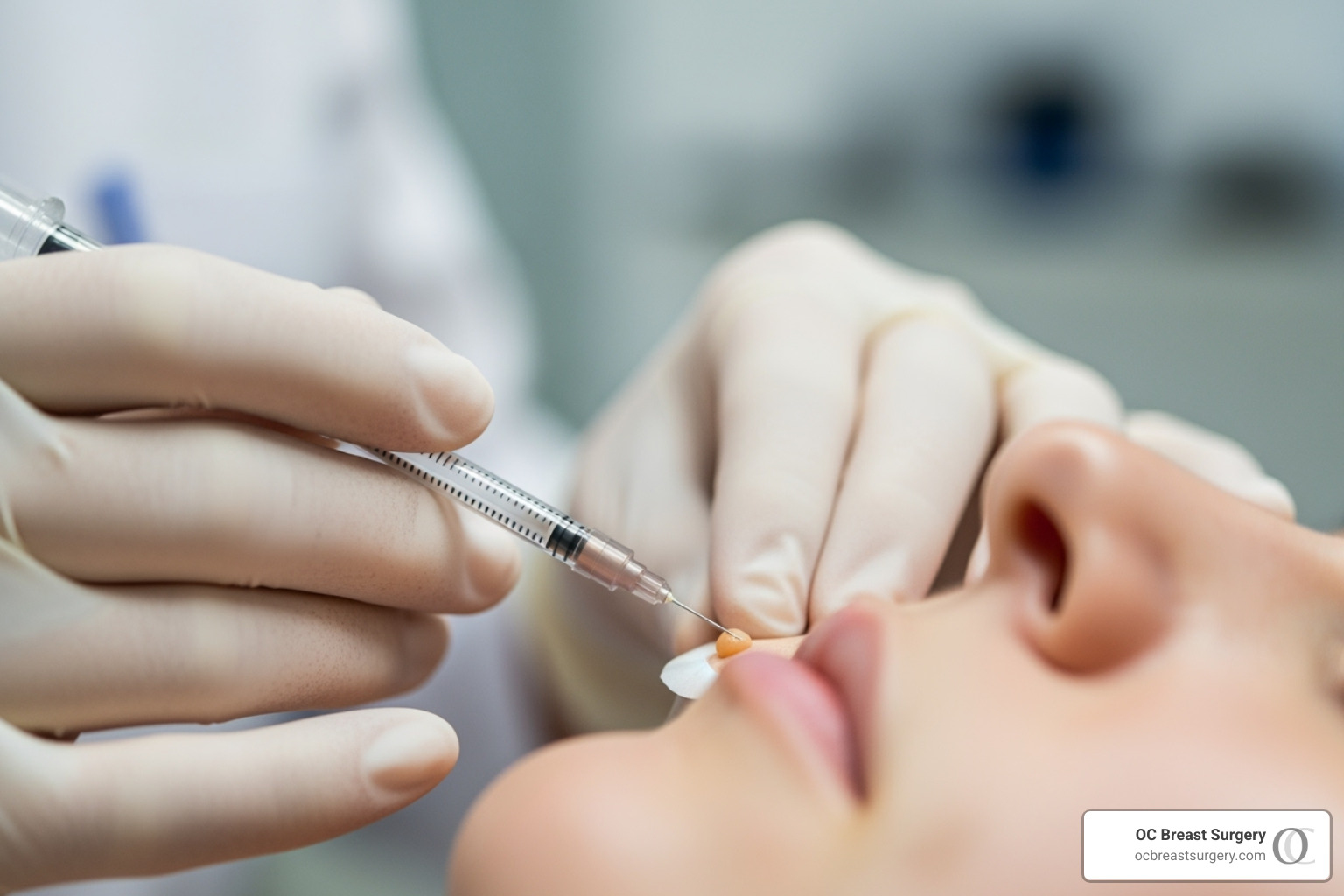
Choosing a Board-Certified Plastic Surgeon
This decision will make or break your entire experience. A board-certified plastic surgeon has completed years of specialized training, passed rigorous examinations, and continues to meet strict ethical standards. It’s not just a credential – it’s your assurance that your surgeon understands the complex anatomy and precise techniques that make fat transfer safe.
Verifying credentials should be your first step. Look for certification by the American Board of Plastic Surgery, which is the gold standard in our field. You can easily verify any surgeon’s certification through their official database.
Experience with fat grafting matters tremendously because this procedure requires an artistic eye combined with technical precision. During your research, ask potential surgeons about their specific training in fat transfer, how many procedures they perform annually, and what their complication rates are. Don’t be shy about these questions – any qualified surgeon will be happy to discuss their experience openly.
Reviewing before-and-after photos gives you insight into a surgeon’s aesthetic style and consistency. Look for results that appear natural and match the kind of outcome you’re hoping for. This also helps set realistic expectations for your own journey.
Asking the right consultation questions can reveal a lot about your surgeon’s approach. Ask about their specific techniques, how they handle potential complications, what kind of follow-up care they provide, and what results you can realistically expect. A good surgeon welcomes detailed questions and provides clear, honest answers without making you feel rushed.
You can find qualified surgeons through the official directory: Find a Board-Certified Plastic Surgeon.
What makes a fat transfer safe?
Beyond choosing the right surgeon, several key factors work together to ensure your procedure is as safe as possible.
Your health status plays a crucial role in both safety and results. The ideal candidate is in good overall health, maintains a stable weight, and doesn’t smoke. Smoking is particularly problematic because it impairs healing and can significantly compromise fat graft survival. We typically require patients to stop smoking well before their procedure to optimize outcomes.
Surgical technique is where experience truly shows. The way fat is harvested, purified, and injected requires precision and artistry. Using blunt cannulas, injecting small volumes in multiple passes, and avoiding muscle or deep vessel penetration are all critical safety measures that experienced surgeons follow religiously.
The surgical facility should be fully accredited, meaning it meets stringent safety standards for equipment, sterilization, and emergency protocols. This creates a controlled, safe environment for your procedure.
Anesthesia expertise ensures your comfort and safety throughout the surgery. A board-certified anesthesiologist should handle your anesthesia, monitoring you carefully from start to finish.
Realistic expectations might seem like a soft factor, but they’re actually crucial for your overall satisfaction and peace of mind. Understanding that fat transfer provides natural-looking, gradual improvements rather than dramatic changes helps ensure you’ll be thrilled with your results.
When all these elements come together – an experienced surgeon, a healthy patient, proper facilities, and clear communication – we create the optimal conditions for a fat transfer safe procedure with beautiful, natural results.
Recovery and Long-Term Outlook
Your fat transfer safe journey doesn’t end when you leave the operating room. In fact, the recovery phase is where your newly transferred fat cells either thrive or struggle, making proper post-operative care absolutely essential for your success.
Right after your procedure, you’ll notice some swelling and bruising – this is completely normal and expected. Think of it as your body’s natural response to the healing process. The donor areas where we harvested fat through liposuction will feel tender, and the recipient areas where we carefully placed your new fat will also need some TLC.
Swelling typically peaks within the first few days and then gradually subsides over several weeks. Don’t be alarmed if you look a bit puffy initially – this is part of the process, and patience is key.
We’ll provide you with compression garments for the donor sites, which might not win any fashion awards but are incredibly important for your healing. These garments help reduce swelling and support your tissues as they recover. For the grafted areas, avoiding pressure is crucial – those delicate fat cells need space to establish their new blood supply.
This means we’ll give you specific guidance on sleeping positions and daily activities. Most patients can return to desk work within one to two weeks, but we’ll need to hold off on that spin class or heavy lifting for a bit longer. Your fat cells are still getting settled in their new home, and we want to give them every chance to succeed.
How Weight Fluctuation Affects Your Results
Here’s something fascinating about fat transfer that sets it apart from implants: the transferred fat is living tissue that responds to your body’s changes. This means your results can evolve with you over time.
When you gain weight, those transferred fat cells can grow larger, just like the rest of your body fat. When you lose weight, they can shrink too. It’s like having a built-in adjustment system, but it also means your results depend on maintaining a stable weight.
This is why we strongly emphasize reaching and maintaining your ideal weight before your procedure. Significant weight swings after your fat transfer can dramatically affect your results. If you lose 20 pounds after breast augmentation with fat transfer, your breasts will likely get smaller too. Gain weight, and they might grow beyond what you originally wanted.
The good news? When you maintain a stable, healthy weight, your fat transfer results can last for many years. The fat cells that successfully establish themselves in their new location become permanent residents, aging naturally along with the rest of your body. This longevity is one of the reasons many patients choose fat transfer over other options – it grows old gracefully with you.
Conclusion: Making a Confident, Safe Choice
After 33 years of specializing in breast surgery, I’ve learned that the most successful outcomes happen when patients feel truly informed and confident about their choices. If you’ve made it this far in your research, you’re already taking the most important step toward a safe, successful procedure.
The evidence is clear: fat transfer safe procedures, especially for breast augmentation, offer remarkable benefits when performed correctly. You’re using your own tissue, achieving natural-looking results, and avoiding the complications that can come with foreign materials. Yes, there are considerations like fat reabsorption and the possibility of asymmetry, but these are predictable challenges that experienced surgeons plan for and manage effectively.
What I want you to remember most is this: your safety depends on two things working together. First, your commitment to being a good candidate – maintaining stable weight, not smoking, and following post-operative instructions carefully. Second, and perhaps most importantly, choosing a surgeon with the right training and experience.
The difference between a good outcome and a great one often comes down to technique. At OC Breast Surgery here in Newport Beach, CA, we’ve built our practice around understanding the nuances of breast surgery. Whether you’re considering your first augmentation or need revision work from a previous surgery, our focus remains the same: achieving results that look and feel completely natural.
I’ve seen too many patients who rushed into decisions without doing their homework. Take your time. Ask questions. Make sure your surgeon is board-certified and has extensive experience specifically with fat grafting. Look at their before-and-after photos, and don’t be afraid to ask about their complication rates.
Your body deserves the best care possible, and you deserve to feel completely confident in your decision. Fat transfer safe procedures are not just possible – they’re the standard when you work with the right team in the right facility.
Ready to explore how fat transfer might work for you? I’d love to discuss your goals and help you understand all your options. Learn more about your breast augmentation options and let’s start this journey together.