
Getting the Silicone Out for Good
What Is Explant Surgery? A Quick, Clear Answer
What is explant surgery is one of the most common questions we hear from women who are reconsidering their breast implants. Here’s the short answer:
Explant surgery is the surgical removal of breast implants — silicone or saline — from the body. It may also include removing the scar tissue (called a “capsule”) that forms naturally around every implant after it’s placed.
At a glance:
- What it removes: Breast implants, and sometimes the surrounding scar tissue capsule
- Why it’s done: Complications (pain, rupture, hardening), health concerns, or personal choice
- Who performs it: A board-certified plastic surgeon
- How long it takes: Typically 1–3 hours
- Recovery: Generally 2–6 weeks
It’s not a simple “pop it out” procedure. Depending on your situation, it can range from a straightforward removal to a more complex surgery involving capsule removal, muscle repair, and breast reshaping.
Breast implants are not lifetime devices. Most need to be removed or replaced after 10–15 years — and sometimes sooner if complications arise.
I’m Dr. Mark Anton, a board-certified plastic surgeon with over 33 years of experience specializing in breast surgery, including thousands of procedures that directly inform my understanding of what is explant surgery and how to approach it safely. In this guide, I’ll walk you through everything you need to know — from surgical techniques to recovery — so you can make a confident, informed decision.

Relevant articles related to what is explant surgery:
Understanding What is Explant Surgery and Why It’s Performed
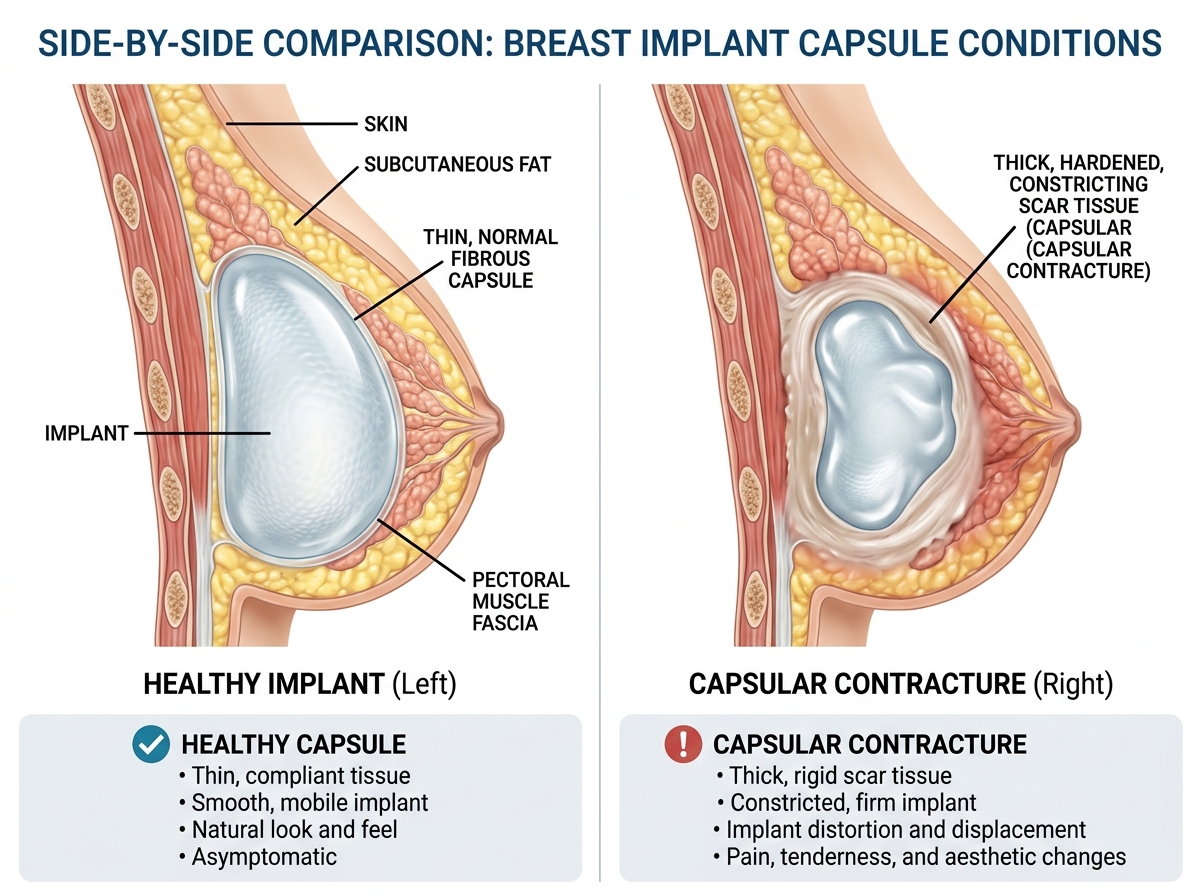
While many women enjoy their breast implants for years, it is a medical fact that these devices are not designed to last a lifetime. In our Newport Beach, CA practice, we often explain that the body naturally reacts to any foreign object by creating a layer of scar tissue around it. This is known as the “capsule.”
Over time, this capsule or the implant itself can change. Statistics show that most implants should be evaluated for exchange or removal every 10 to 15 years. As the implant shell ages, the risk of silicone leakage or saline deflation increases. According to the most recent statistics from the American Society of Plastic Surgeons, the average cost of breast implant removal is several thousand dollars, though this varies significantly based on the complexity of the capsule removal.
If you are beginning to research your options, the definitive guide to breast implant removal can provide a deeper dive into the financial and physical considerations of the procedure.
Common Reasons for Breast Implant Removal
The most frequent medical reason we perform explant surgery is capsular contracture. This occurs when the scar tissue capsule tightens and squeezes the implant, making the breast feel hard, look distorted, and often causing chronic pain.
Other common reasons include:
- Implant Rupture: A tear in the shell of a silicone or saline implant.
- Saline Leak: A valve failure or shell tear that causes the breast to deflate quickly.
- Chronic Pain: Discomfort in the chest wall, neck, or shoulders.
- Dynamic Distortion: The implant moving unnaturally when the chest muscles flex.
For those experiencing these issues, you can find more info about breast implant removal on our dedicated service page.
What is Explant Surgery for Aesthetic Changes?
Not every explant is medically “required.” Many of our patients in Newport Beach, CA simply reach a point where their implants no longer fit their lifestyle. You might find that larger breasts make exercise difficult, or you may simply prefer a more natural, athletic silhouette.
Some patients choose to “go flat,” opting for an aesthetic flat closure. This is a specialized technique where the surgeon ensures the remaining skin is smooth and contoured against the chest wall. Whether you want to downsize or remove them entirely, we offer more info about explant surgery in Newport Beach to help you visualize your new look.
Surgical Techniques: Capsulectomy and En Bloc Removal
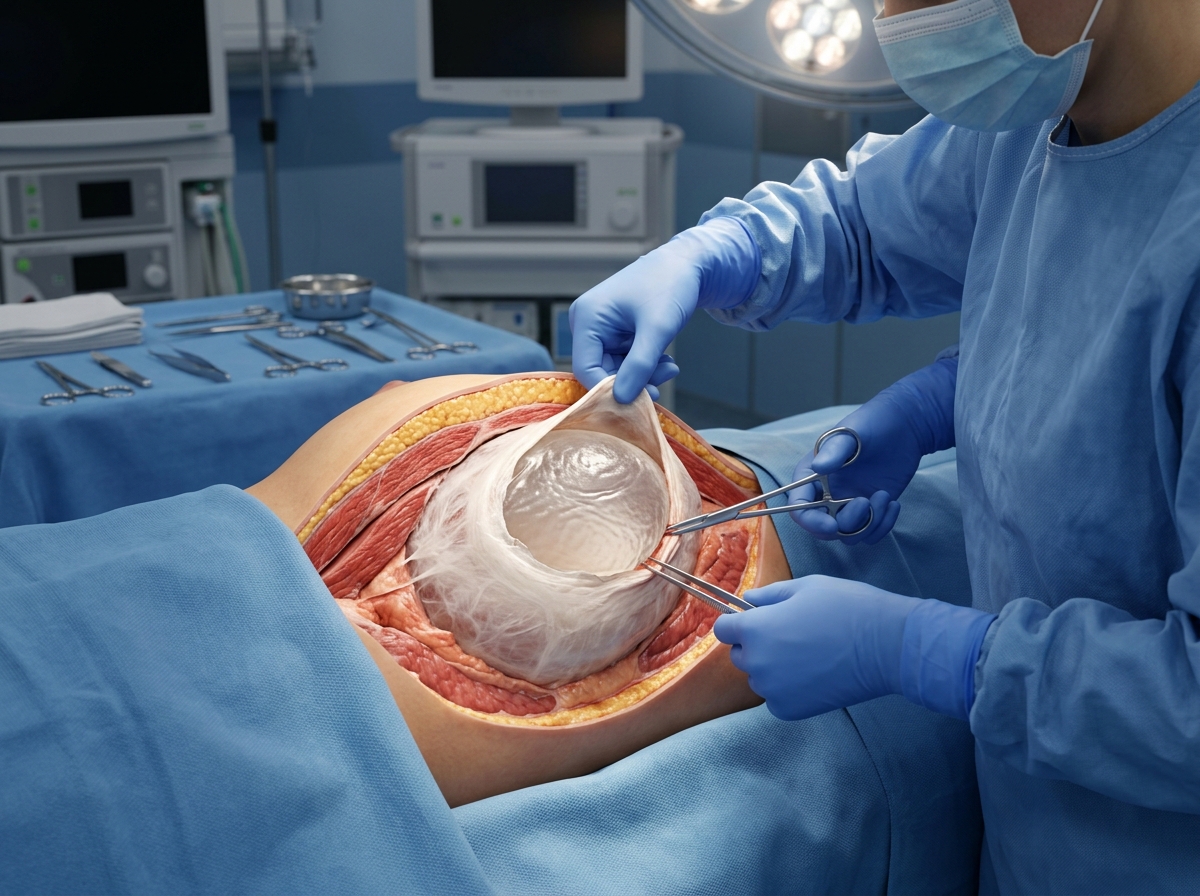
When discussing what is explant surgery, the conversation must include the “capsule.” The capsule is the envelope of scar tissue your body built around the implant. In some cases, leaving the capsule behind is fine. In others—especially if there is a rupture or concern about inflammation—removing the capsule is vital.
The FDA has issued safety communications regarding rare lymphomas (BIA-ALCL) that can develop in this capsule tissue, particularly with textured implants. Because of this, many patients request a specific type of removal. For a deep dive into these methods, see our detailed explant surgery information.
Total vs. Partial vs. En Bloc Capsulectomy
Choosing the right technique is a balance between thoroughness and safety. Below is a comparison of the three primary methods:
| Technique | Description | Best For | Risks/Considerations |
|---|---|---|---|
| En Bloc | Removing the implant and the entire capsule together as one sealed unit. | Ruptured silicone, BIA-ALCL, or BII concerns. | Requires a larger incision; higher risk of pneumothorax (collapsed lung) if the capsule is thin. |
| Total | Removing the entire capsule, but it may be taken out in pieces after the implant is removed. | Capsular contracture or suspected biofilm/infection. | Very effective for removing all scar tissue with slightly less tissue disruption than en bloc. |
| Partial | Removing only the thickened or problematic parts of the capsule. | Thin, healthy capsules in patients with no systemic symptoms. | Fastest recovery; least invasive. |
At OC Breast Surgery, we prioritize muscle repair if the implants were placed under the pectoralis muscle. When the implant is removed, the muscle may need to be tacked back down to the chest wall to restore strength and function.
The Procedure: What is Explant Surgery Like in the OR?
The surgery is performed under general anesthesia and typically lasts between one and three hours. We make every effort to use your original incisions (usually in the crease under the breast) to avoid creating new scars.
In many cases, we place temporary surgical drains to prevent fluid (seroma) or blood (hematoma) from building up in the space where the implant used to be. These are usually removed within a week. For more on the local surgical experience, check out more info about Orange County explant options.
Addressing Breast Implant Illness (BII) and BIA-ALCL
For many women, the question of what is explant surgery is tied directly to systemic health. While “Breast Implant Illness” (BII) is not yet a formal medical diagnosis, the patient community and many surgeons recognize a cluster of symptoms that often improve after the implants and capsules are removed.
Understanding Breast Implant Illness (BII)
Patients with BII often report a wide range of symptoms, including:
- Chronic fatigue and “brain fog”
- Joint and muscle pain
- Hair loss and skin rashes
- Anxiety and sleep disturbances
Research, including US FDA Breast Implant Postapproval Studies, has looked into long-term outcomes for nearly 100,000 patients. Small studies have found that anywhere from 70–96% of people with BII report feeling better after having their implants and capsule scar tissue removed. Most report significant relief within six months. If you feel your health is being impacted, we provide specialized BII surgery information to help address these concerns.
BIA-ALCL and Textured Implants
BIA-ALCL (Breast Implant-Associated Anaplastic Large Cell Lymphoma) is a rare but serious cancer of the immune system that develops in the fluid or scar tissue around the implant. As of early 2025, there were approximately 460 suspected or known cases in the U.S.
This condition is most commonly linked to textured implants, leading to major recalls, such as the Allergan Biocell products. Symptoms usually appear 8–10 years after placement and include sudden swelling or a lump. When BIA-ALCL is suspected, an en bloc capsulectomy is mandatory, and the tissue must be sent for CD30 testing to confirm the diagnosis. You can read the official FDA reports on BIA-ALCL for the latest data.
Recovery, Results, and Aesthetic Options After Removal
Recovery from explant surgery is often described as “easier” than the initial augmentation, but it still requires patience. You can expect to return to light activities in 1–2 weeks, but strenuous exercise should be avoided for 4–6 weeks.
Restoring Shape: Lifts and Fat Transfer
One of the biggest worries women have is: “Will my breasts look deflated?” While there will be a loss of volume, we have several tools to restore a beautiful, natural shape.
- Breast Lift (Mastopexy): This removes excess skin and repositions the nipple to a more youthful height. It is the gold standard for correcting “deflation.” You can learn more about a breast lift after implant removal here.
- Fat Transfer: We can harvest fat from areas like the abdomen or thighs via liposuction and inject it into the breasts to restore soft, natural volume. See our breast explant with fat transfer before and after page for examples.
To see the variety of outcomes possible, we invite you to view our explant before and after gallery.
What is Explant Surgery Recovery Like?
During the first few days, you’ll focus on pain management and resting with your upper body elevated. You will likely wear a supportive surgical bra or compression garment 24/7 for the first month.
- Drains: If used, these require simple daily monitoring.
- Soreness: This typically fades significantly after the first week.
- Support: We recommend a “flat-friendly” or supportive post-surgical bra to help the skin adhere to the chest wall.
For a breakdown of the investment involved in this process, visit our page on explant surgery cost.
Frequently Asked Questions about Explant Surgery
Does health insurance cover explant surgery?
This is a complex question. Generally, health insurance does not cover the removal of implants placed for cosmetic reasons. However, there are exceptions:
- WHCRA of 1998: The Women’s Health and Cancer Rights Act (WHCRA) requires plans to pay for surgeries that are medically necessary to fix problems with implants used in post-mastectomy reconstruction.
- Medical Necessity: If you have severe (Grade III or IV) capsular contracture, a proven rupture, or BIA-ALCL, some insurers may cover the removal. Most insurers do not yet recognize BII as a reason for coverage, so we recommend focusing on functional impairments (like pain) when communicating with your provider.
How long do breast implants last?
As mentioned, 10–15 years is the standard recommendation for replacement or removal. Over time, the silicone shell degrades and becomes more permeable. Even if you feel fine, routine monitoring with ultrasound or MRI is recommended by the FDA to check for “silent ruptures.”
What testing is done on removed implants and capsules?
We believe in being thorough. When we remove a capsule, we often send samples to a pathology lab to check for:
- CD30 Markers: To screen for BIA-ALCL.
- Bacterial Cultures: To check for biofilm or chronic infection.
- Silicone Microscopy: To see if silicone has migrated into the tissue.
If you are dealing with a suspected infection, you can find more info about breast implant infection removal on our site.
Conclusion
Deciding to remove your breast implants is a deeply personal journey. Whether you are seeking relief from physical pain, addressing health concerns like BII, or simply ready to return to a more natural look, the most important step is choosing a qualified, board-certified surgeon.
At OC Breast Surgery in Newport Beach, CA, Dr. Mark Anton and our team specialize in these complex revisions. We don’t just “remove” implants; we work to restore your body’s natural beauty and your peace of mind.
Ready to take the next step? Schedule a breast implant removal consultation with us today, and let’s discuss how we can help you feel like yourself again.