
If you're reading this, you're probably in one of two places. Your surgery is already on the calendar and you're wondering what recovery will feel like, or you're still deciding whether implant removal is the right next step and want a realistic picture before you commit.
Both are reasonable. Breast implant removal is rarely just a technical procedure. It usually comes with practical questions, aesthetic concerns, and a surprisingly emotional adjustment period. The physical recovery is often more manageable than patients expect, but the full journey includes more than swelling and incision care. It also includes how your breast shape settles over time, whether you may want a lift, and how to prepare for the changes you'll see in the mirror.
Table of Contents
- Planning Your Journey to Breast Implant Removal
- The First 48 Hours After Your Explant Surgery
- Your Week by Week Recovery Timeline
- Caring for Yourself After Implant Removal
- Potential Complications and When to Call Your Surgeon
- Achieving Your Best Shape After Implant Removal
- Frequently Asked Questions About Explant Recovery
Planning Your Journey to Breast Implant Removal
A common starting point sounds like this: “I've had my implants for years. I don't feel like myself anymore.” For some women, that feeling comes from a change in style or lifestyle. For others, it comes from firmness, asymmetry, visible rippling, rupture concerns, or discomfort from capsular contracture.
That decision is far from unusual now. Breast implant removal surgery has become increasingly common, with worldwide procedures nearly doubling from 2017 to 2022 to over 320,000 annually, and the U.S. recorded approximately 37,679 explant procedures in 2022, a 12% increase from 2019 according to this review of breast implant removal trends. Those numbers don't make the choice easier, but they do reassure many patients that they are not alone.
Why preparation changes recovery
The smoother recoveries usually begin before surgery. Patients who arrange help at home, understand their restrictions, and write down their questions tend to feel less overwhelmed in the first week.
If you want a practical way to organize that appointment, this guide on how to optimize medical visits with Patient Talker can help you prepare the right questions in advance. It's especially useful if you're trying to compare implant removal alone with implant removal plus reshaping.
The best consultation is not the one with the longest list of promises. It's the one where you leave knowing what your anatomy will and won't do.
The questions worth asking early
Not every explant is the same. Some surgeries involve straightforward implant removal. Others require capsulectomy, correction of asymmetry, or a lift to manage stretched skin and nipple position.
A focused revision specialist should explain trade-offs clearly. These are the issues that deserve a direct answer:
- Your main reason for removal: Are you prioritizing relief from discomfort, a smaller natural look, or correction of a complication?
- Your likely breast shape after removal: Will your tissue contract well on its own, or is sagging likely?
- Whether capsule treatment is needed: This affects contour, firmness, and comfort.
- Whether a lift should be done at the same time: In the right patient, that can reduce the mismatch between emotional relief and aesthetic disappointment.
For a deeper look at what to evaluate in a specialist, review this article on choosing your revision surgeon carefully.
The First 48 Hours After Your Explant Surgery
You're home a few hours after surgery, the anesthesia is wearing off, and your chest feels tight, heavy, and unfamiliar. That first evening often feels more emotional than patients expect. Relief is common. So is soreness, fatigue, and a moment of doubt when the breasts look flatter, higher, or uneven than you pictured. In my practice, I tell patients to judge these first two days by comfort and safe healing, not by appearance.
If your explant was done as an outpatient procedure, you will go home the same day with written instructions. Expect grogginess, pressure across the chest, and limited energy. Sharp pain is less common than a bruised, restricted feeling, especially if a capsulectomy or lift was done at the same time. That added procedure can improve your long-term shape, but it usually makes the first 48 hours feel more demanding.
What to do when you get home
A simple routine works best. Take your medications as directed, sip fluids regularly, eat light meals if your stomach is settled, and rest with your upper body propped up. Short walks to the bathroom or around the room are helpful. Long periods of complete bed rest are not.
Support matters during this stage. Many surgeons recommend wearing the surgical bra continuously to limit swelling and support the healing breast tissue, a standard postoperative measure also described by the American Society of Plastic Surgeons. Keep it on unless your own instructions say otherwise.
Sleep on your back with pillows or a wedge behind you. That position reduces strain on the chest and usually makes it easier to get in and out of bed.
If you had poor shoulder posture or chest tightness before surgery, gentle walking and later-guided mobility can help you regain comfort. In select cases, physical therapy for recovery can be part of that process, but the first two days are for protection, not stretching or exercise.
What to avoid in the first two days
Patients usually run into trouble by doing ordinary things too soon. Reaching into high cabinets, lifting a child, pushing up from bed with both arms, carrying groceries, or cleaning the house can all increase swelling and discomfort.
Use this rule instead: if the movement causes pulling across the chest, bouncing, or a sharp increase in pressure, stop.
If drains are present, secure them and empty them exactly as instructed. If no drains were used, that does not mean the tissue is ready for full activity. The internal space still needs time to seal, and the skin envelope is beginning to settle into a new shape.
Driving is another common question during this window. Safe driving depends on arm mobility, reaction time, and whether you are still taking prescription pain medication. I explain the timing in more detail in this guide on when you can safely drive after breast implant removal.
The emotional side deserves attention too. Some patients feel immediate relief after explant. Others feel startled by the temporary shape change, especially if they chose removal without a lift. Both reactions are normal in the first 48 hours. Your early result is swollen, compressed by the bra, and far from final.
Your Week by Week Recovery Timeline
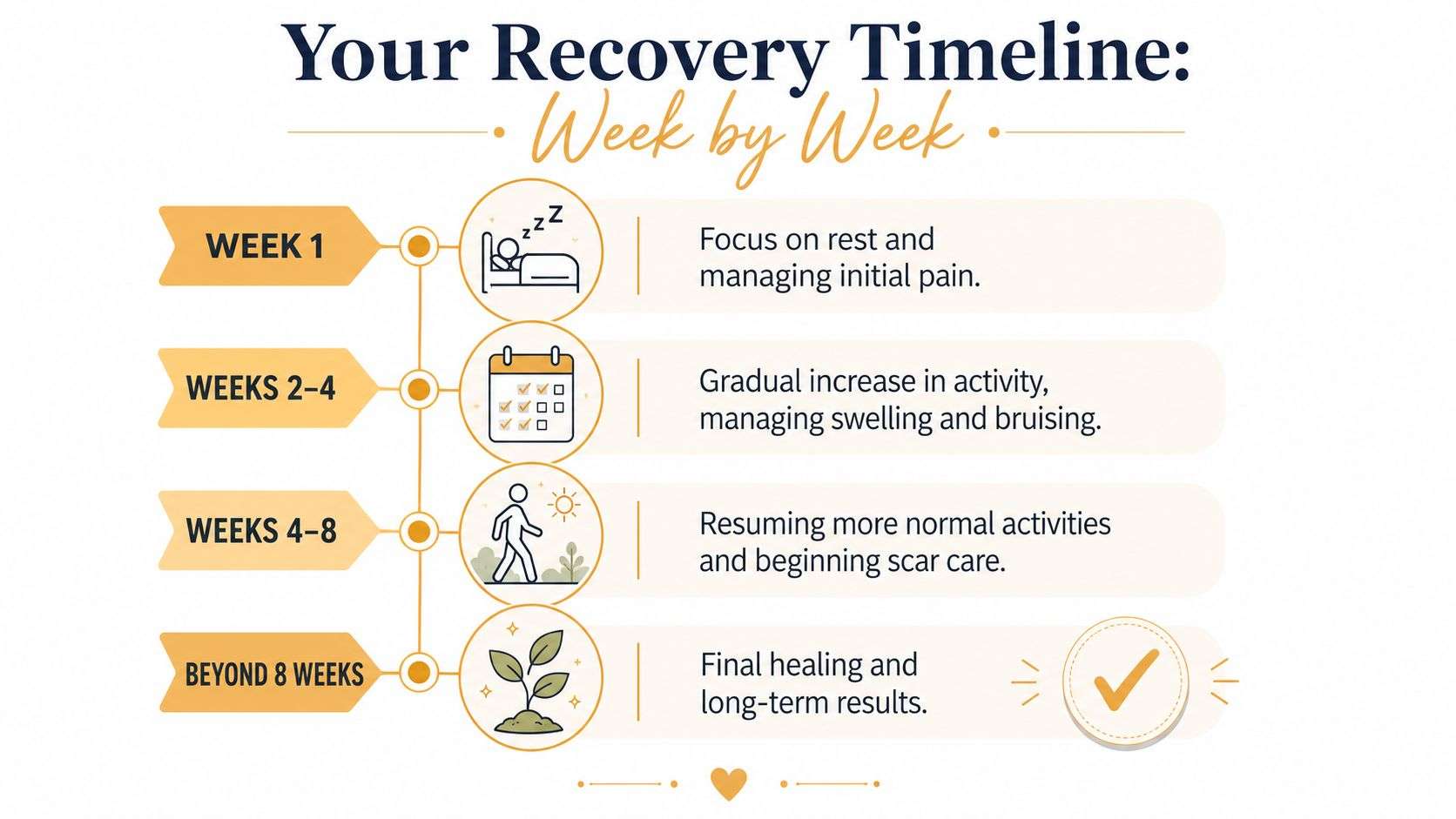
A common recovery pattern looks like this. The first week is about swelling, soreness, and protecting the chest. By the second and third weeks, many patients are more comfortable and can handle light daily activity. By weeks four to six, the body usually feels ahead of the mirror. You may function fairly normally while the breasts are still settling into their new shape.
Week 1
Week 1 is still active recovery. Fatigue, tightness, swelling, bruising, and a pulling sensation across the chest are common, especially after capsulectomy or implant removal combined with a lift.
Appearance can be unsettling during this stage. The breasts may look flat, high, uneven, or temporarily collapsed in the upper pole. If a lift was not performed, the skin envelope often needs time to contract, and that process is gradual rather than immediate.
The job this week is simple. Protect the repair, keep swelling under control, and avoid movements that strain the chest.
What matters most in week 1
- Keep activity light: Short walks are helpful, but the focus stays on recovery rather than productivity.
- Follow garment and dressing instructions: Support changes how swelling settles and helps protect the tissues while they adjust.
- Use your arms carefully: Light daily tasks are usually fine at waist level. Reaching, lifting, pushing, and pulling can still aggravate the surgical area.
Weeks 2 to 3
This is often the point when patients tell me, "I feel better, but I don't look better yet." That is a normal disconnect.
Energy usually improves before breast shape does. Bruising fades. Incisions begin to calm down. Many patients can return to desk work once they are off prescription pain medication and can move comfortably, but chest tightness and swelling often remain. If your surgery included more extensive scar tissue removal, recovery can feel slower. My guide to healing after implant removal with capsulectomy explains why.
Here is what typically changes during this phase:
| Recovery area | What often improves | What may still feel unfinished |
|---|---|---|
| Comfort | Less bruising and day-to-day soreness | Tightness with certain arm movements |
| Routine | Easier walking, basic errands, desk work | Lifting restrictions and exercise limits |
| Appearance | Early swelling starts to settle | Lower pole shape, symmetry, and skin rebound |
Posture also matters more than patients expect. Guarding the chest can leave the shoulders rounded and the upper back stiff. General resources on physical therapy for recovery can help with safe walking, posture, and gradual movement habits during this stage.
Weeks 4 to 6
By now, many patients feel substantially more normal in daily life. That does not mean the final result has arrived.
Residual swelling can still blur breast shape. The skin is still adapting to less volume. If the implants were large or had been in place for many years, the breast envelope may take longer to contract, and some looseness may remain. This is one reason I discuss long-term contour goals before surgery, including whether removal alone is likely to leave a shape you will feel comfortable with or whether a concurrent lift makes better sense.
Exercise usually returns in stages, not all at once. Walking is generally the first activity that feels easy. Higher-impact exercise, upper-body training, and heavy lifting should wait until your surgeon confirms the tissues are ready.
The emotional adjustment can become more noticeable here too. Early surgical discomfort is fading, so attention often shifts to appearance, clothing fit, and body image. Some patients feel relief and confidence quickly. Others need more time to adjust to a smaller, softer, or less projected breast shape. Both responses are normal.
Caring for Yourself After Implant Removal
The period after explant surgery is usually less about doing more and more about doing the right things consistently. Patients tend to feel best when they protect the chest, follow a simple routine, and give the breast tissues time to settle into their new shape.

Daily care that matters
In my practice, the setbacks I see most often come from two patterns. Some patients stop supporting the breasts too early. Others feel better and return to normal activity before the tissues are ready. Both can increase swelling, soreness, and frustration with the early shape.
A steady home routine usually includes:
- Wear the support garment exactly as directed: This helps control swelling and supports the skin and breast tissue as they adjust to less volume.
- Take pain medication thoughtfully: Use prescription or over-the-counter medication according to your surgeon's instructions, then reduce it as comfort allows.
- Stay ahead of constipation and dehydration: Fluids, light meals, and bowel support if recommended can make the first several days much easier.
- Walk every day: Short walks improve circulation, reduce stiffness, and help you feel more like yourself without straining the chest.
- Sleep in a protected position: Many patients are more comfortable on their back with the upper body slightly raised until tenderness improves.
Small habits matter here. Getting up carefully, avoiding sudden reaching, and asking for help with heavy household tasks often makes recovery smoother than any product patients buy online.
Incisions, scars, and contour changes
Breast implant removal may involve total or partial capsulectomy, which means removing some or all of the scar capsule around the implant. The extent of capsule removal depends on your anatomy, implant history, symptoms, and what can be done safely at surgery. The Aesthetic Society's patient guidance on breast implant removal and capsulectomy options explains why the surgical plan is individualized rather than one-size-fits-all.
That distinction matters during healing. Breasts often feel firmer, higher, flatter, or more uneven than patients expected in the early weeks. That does not mean the final result is poor. It means the tissues are still settling, especially if the implants were large, the skin was stretched for years, or a capsule was removed along with the implant.
Scar care also requires timing. Early on, the priority is protecting the incision so the skin can seal and strengthen. Later, once the incision is fully closed, treatments such as silicone-based scar therapy may help improve how the scar matures.
Early scar care focuses on protection. Later scar care focuses on scar quality.
Useful principles include:
- Follow the wound-care instructions you were given: Do not add ointments, tapes, or dressings unless your surgeon has approved them.
- Reduce rubbing on the incision line: Rough seams, underwire pressure, and tight clothing can irritate healing skin.
- Start scar treatment only after clearance: Beginning too soon can inflame the incision instead of helping it.
- Watch shape changes over time: Softening, settling, and mild asymmetry are common during recovery and often improve gradually.
Patients also need honest preparation for the emotional side of this phase. Once the implants are gone, some feel immediate relief. Others need time to adjust to a smaller breast, a different upper-pole contour, or more skin laxity than they expected. That is one reason I discuss contour goals before surgery, including whether removal alone is the right choice or whether a lift at the same operation would better match the patient's long-term goals.
If you want a more detailed look at healing after capsule removal, this article on capsulectomy recovery after implant removal is worth reviewing.
Potential Complications and When to Call Your Surgeon
Most patients recover without major problems, but the safest recoveries happen when patients know what's normal and what isn't. Waiting too long because you don't want to “bother the office” is never a good strategy.
What deserves a same-day call
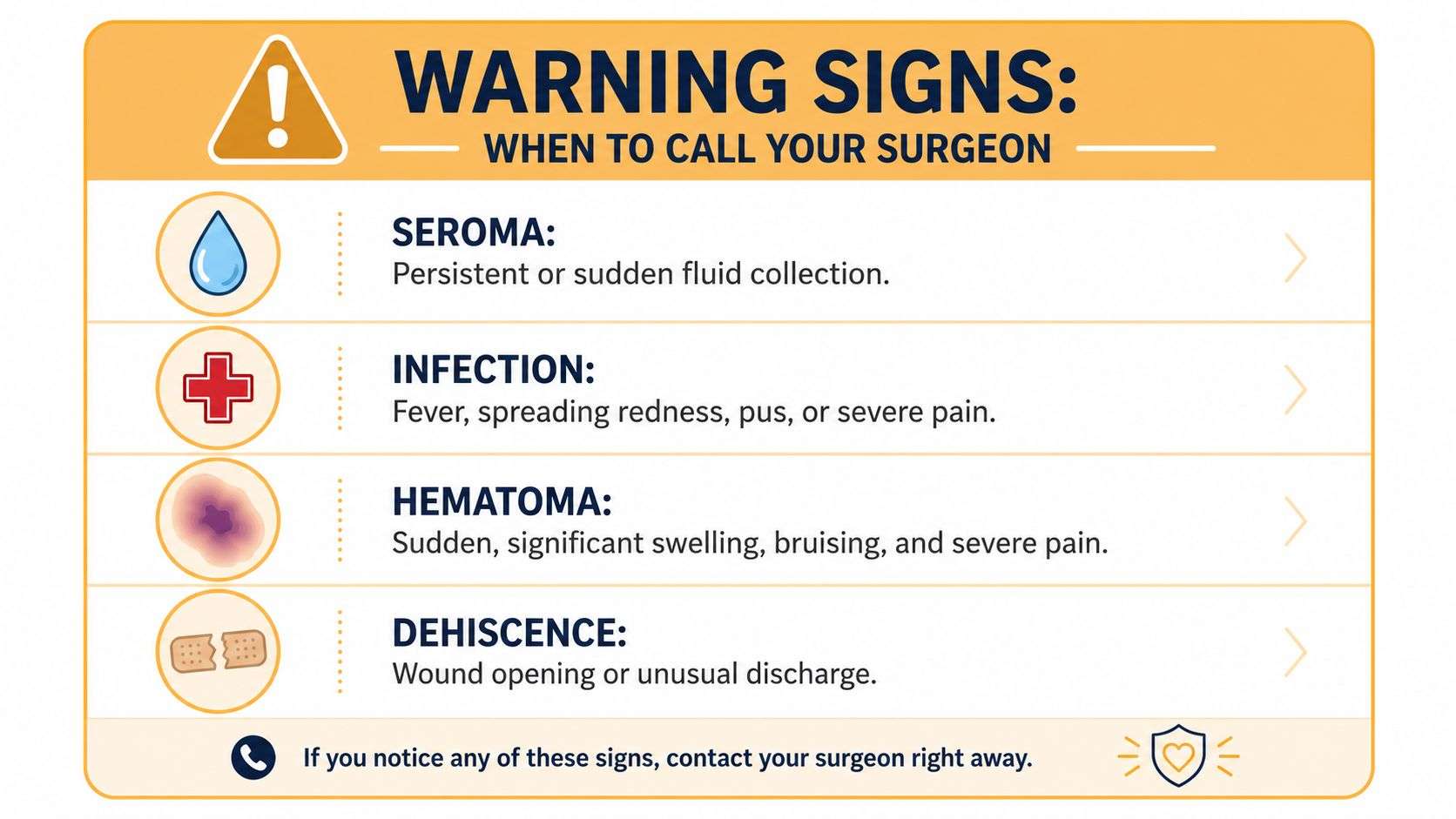
Some post-operative symptoms are expected. Mild swelling, bruising, fatigue, and tenderness usually are. Other changes need prompt attention.
Call your surgeon if you notice:
- Sudden swelling on one side: This can suggest a fluid collection or bleeding.
- Spreading redness or warmth: Especially if it continues to expand rather than fade.
- Fever, pus, or foul drainage: These raise concern for infection.
- Severe or escalating pain: Pain that sharply worsens instead of slowly improving should be reported.
- Incision separation: If the wound appears to open or drain unexpectedly, don't wait.
Why early contact matters
Some patients assume they should “watch it for a few days.” That usually creates more anxiety and can delay treatment if something needs intervention.
A surgeon with focused experience in revision and complication-related breast surgery understands how to sort routine healing from a real problem. OC Breast Surgery, led by Medical Director Dr. Mark Anton, specializes in correcting capsular contracture and ruptured implants through surgical capsulectomy and strategic implant replacement or removal, according to Dr. Mark Anton's professional profile. That kind of specialty focus matters when symptoms change quickly and decisions need to be made carefully.
If something feels off, calling early is part of good recovery. It's not overreacting.
Achieving Your Best Shape After Implant Removal
A common moment happens a few weeks after surgery. The chest feels lighter, recovery is progressing, and then the mirror raises a new question: “Is this my final shape?”
For many patients, the hardest part at this stage is adjusting to the breast contour after the implant volume is gone. Smaller size is usually expected. What surprises patients more often is upper-pole emptiness, looser skin, or nipples that sit lower than they did with implants in place.

Removal alone versus removal with a lift
Some breasts settle well after implant removal alone. That is more likely when skin tone remains good, the natural breast tissue still has enough volume, and sagging was limited before surgery.
Other patients are left with a flatter, lower, or deflated shape that bothers them more than they expected. In those cases, combining explant surgery with a lift can give better control over breast position, nipple height, and skin tightening. The trade-off is straightforward. A lift improves contour, but it also adds incisions, scar care, and a more involved recovery plan.
A simple comparison:
| Approach | Best suited for | Trade-off |
|---|---|---|
| Implant removal alone | Patients with good tissue tone and limited sagging | Shorter operation and fewer incisions, but less control over loose skin and breast position |
| Implant removal with Super Breast Lift | Patients with laxity, nipple descent, or a deflated look | More shaping and better nipple positioning, but more scars and a broader recovery |
This choice is best made before surgery, not after disappointment sets in. Compression bras and patience help swelling settle. They do not lift stretched skin or move the nipple to a higher position.
The long view on shape changes
Early shape can be misleading. Breasts often look flattened, swollen in odd areas, or uneven during the first phase of healing. Then the tissues soften, swelling improves, and the skin contracts to the degree that your biology allows.
That process takes time.
In my practice, I encourage patients to judge progress in stages rather than day by day. Functional recovery comes first. Cosmetic settling takes longer. If skin was significantly stretched by large implants, pregnancy, weight changes, or years of implant weight, some looseness may remain even after full healing.
The emotional adjustment deserves the same honesty. Some patients feel immediate relief and still grieve the loss of fullness they had become used to. Others are pleased they removed the implants but need time to feel feminine or balanced in clothing again. Both responses are normal.
The best result is not just about getting through the operation. It is about choosing a plan that matches your anatomy, your scar tolerance, and the look you want to live with long term. For some women, that means accepting a smaller, softer natural breast. For others, it means pairing explant surgery with a lift so the final shape aligns more closely with their goals.
Frequently Asked Questions About Explant Recovery
Can insurance cover breast implant removal
Sometimes. Coverage usually depends on why the surgery is being done and what documentation supports it.
Removal tied to a rupture, capsular contracture, pain, or another documented medical problem has a better chance of at least partial coverage. Removal based on preference alone is often treated differently. I tell patients to verify benefits before setting expectations, because approval can change based on diagnosis codes, imaging, symptoms, and whether any added procedure, such as a lift, is considered cosmetic.
Ask both your insurer and your surgeon's office what records are needed before surgery.
When can I wear a regular bra again
Regular bras come back in stages. Early on, most patients do best in the surgical bra or a soft, supportive bra without underwire.
The timing depends on swelling, incision position, and whether the surgery included a lift. Underwire can rub directly on healing tissue and create irritation that slows your comfort. A soft bra that fits well is usually the safer transition before you return to your usual wardrobe.
If a bra leaves pressure marks along the incision line, wait longer.
Will breast sensation return to normal
Changes in sensation are common after explant surgery. Some patients notice numbness. Others feel tingling, burning, or areas that are unusually sensitive.
That usually improves as swelling settles and irritated nerves recover, but the pace is unpredictable. In practice, I encourage patients to judge sensation over months, not days. Surface healing happens first. Nerve recovery often lags behind it.
How long until my final shape settles
Longer than many patients expect. You may feel physically much better before your breasts look settled in clothing or in the mirror.
Shape changes continue as swelling fades, tissues soften, and scars mature. That process can keep evolving for many months. Patients who had large implants for years, stretched skin, weight changes, or a concurrent lift often need more patience because the breast envelope has more to readjust to.
If your explant was done for systemic symptoms you associated with your implants, symptom relief can also follow its own timeline. Some women feel better quickly. Others improve more gradually and notice changes over the first several weeks and months.
Recovery has two finish lines. One is returning to normal life. The other is seeing your long-term shape and feeling at home in your body again.
If you're considering implant removal, revision, or whether a lift should be done at the same time, schedule a consultation with OC Breast Surgery in Newport Beach to learn which breast surgery option may be right for your goals.